Showing posts with label devon sproule. Show all posts

03 November 2013

Review Round-Up: October 2013

Cass McCombs
Big Wheel and Others


Two years ago, Cass McCombs gave us two distinct, intriguing but oddly opaque albums; each a mere eight songs long.  At twenty-two tracks and eighty-five minutes, Big Wheel and Others (note the typically coy titular understatement) feels like a deliberate reaction against those records' mincing concision, although, as double-sets go, it's loose but hardly ragged.  Neither a conceptual epic nor a sprawling White Album-style smorgasbord, but a genial stretching-out a la Exile and Blonde on Blonde; an album to put on and just live in for a while.  Stylistically, it's somewhere in that ballpark as well; a rootsy ramble from the truckdrivin' title track's musclebound motorik to the dusty folk surrealism of "Unearthed," via pretty pedal-steel ballads, slinky beatnik blues, and jazzy yacht-country instrumentals – all gorgeously performed – plus three slightly bewildering interview clips (taken from the 1969 documentary Sean) with a four-year-old who probably could've penned off-color nursery-rock goof-off "Satan is My Toy."  Throughout, McCombs hits a brilliantly unpredictable songwriting stride, like a wry, wandering Silver Jew, peppering his romantic and socio-political ruminations with twisted neo-hippie logic ("I believe in littering: waste should not be hidden but seen") and tersely quirky quips ("what's it like to shit in space?") [8/10]

Kwes.
ilp


Now here's what I call a kaleidoscope dream.  Like a bookish limey Miguel with zero of the bravado and a flair for woozy, Floydian whirr, Kwes is a man of modest but nostalgia-rich pleasures.  The first vocal appearance on his long-simmering Warp debut (which comes ninety seconds in, once the sound-dust settles from the album's startlingly queasy initial eruption) finds the low-key Londoner listlessly "walkin' in the park, chuckin' bread to swans, hearin' em honk."  Soon he's picking berries while fending off butterflies; later he's reminiscing about a lover who once invited him rollerblading ("back in '93"), and someone else who suggested riding a cable car ("today," though the time difference feels somehow negligible.)  Words are feeble, fleeting things on ilp, but these at least offer some tangible, redolent images amid the album's hazy, paisley swirl.  Likewise, despite the occasional gummy refrain – like the burbling stutter-soul of previously aired highlight "b_shf_l" – Kwes' pop instincts typically prove incidental to his synaesthete's bent for structureless head-trip meanderings.  But it's hard to mind once they've gotten you in the door: rarely does one stumble into a world so richly realized and so warmly, curiously inviting. [7.5/10]

Schneider TM
Guitar Sounds


Dirk Dresselhaus is a man of surprises.  He slyly prefigured the micro-house boom with his 1998 Schneider TM debut LP, Moist, before shifting gears entirely to the (similarly prescient) Beach Boys-infused lap-pop of 2002's Zoomer.  Last year's Construction Sounds returned to the alias for an unprecedentedly abstract and experimental effort incorporating field recordings from building sites.  And while it bears substantial common ground with that work, Guitar Sounds essentially finds the Berliner broaching yet another new genre: per the title, it's a set of guitar-based electro-acoustic improvisation (or as he'd have it, "instant composition.")  It's a far cry from the playful humorousness of his early days (unless, arguably, you squint at just the right moments – say, the gently sputtering "explosions" toward the end of "Landslide.")  But his curiously organic approach to electronica and close attention to sonic detail remain, somewhere, among these meandering drones and tones, grindings and scrapings (and brief, occasional bouts – as on "First of May" – of actual guitar playing), which are warmly enveloping in many stretches and, even at their least palatable, still rather pleasantly unpleasant. [6/10]
originally published in Magnet Magazine

Dirtbombs
Ooey Gooey Chewey Ka-Blooey!
[Rock/Pop]


It's not every garage-punk band that follows up their Detroit techno covers record with an exuberant, party-starting homage to vintage bubblegum.  Okay, The Dirtbombs are probably the only one – but they're also the best.  Not just any ol' '60s pop re-hash, Ooey Gooey Chewy Ka-Blooey (In The Red) stomps and shimmies, sugar-shocks and sha-la-las like the Archies gone pleasantly feral.  While these ten three-minute wonders are technically all Mick Collins originals, he's not above bolstering the project's authenticity by lifting a lick (or an entire vocal melody) from the classics: "Mony Mony," "Yummy Yummy Yummy," even "Good Vibrations."  Remember kids, only the greats steal.

Haim
Days Are Gone
[Pop/Rock]


Notwithstanding the Haim sisters' long-haired, shade-sporting LA rockstar image, their duly touted instrumental chops, legitimately ass-kicking live show and ample use of twitchy, palm-muted guitar licks, the songs on their long-awaited debut LP are no less technologically-abetted studio creations than those of that other red-hot hype-riding trio of the moment, Chvrches – though neither are they any less perfectly-formed pop.  And despite the Fleetwood Mac RIYLs that have been persistently trailing them, Days Are Gone (Columbia) lands a good deal closer to Thriller than Rumours.  Just remember which one of those had Van Halen on it.

Devon Sproule + Mike O'Neill
Colours
[Singer-Songwriter]


Devon Sproule and Mike O'Neill met singing Beach Boys duets on Youtube – like you do in the twenty-teens – and crafted the collaborative Colours (Tin Angel) long-distance, between Austin and Halifax.  But there's nothing new-fangled or logistically strained about the topics traversed here – family life, human goodness, ceiling fans, a minor boating accident, love – nor the album's unhurried, loosely jazzy folk-pop.  All of this reflects Sproule's usual open-hearted, modestly idiosyncratic milieu, which O'Neill slots neatly and effortlessly into.  His voice is high and pure like hers, and the results, colored by Sandro Perri's sympathetic, synth- and horn-flecked production, are rarely dazzling but consistently comforting.  The Wilsons should be proud.

Glasser
Interiors
[Electronic/Art-Pop]


Cameron Mesirow's gonna have a tough time shaking those chronic, facile-seeming Björk comparisons with her second LP as Glasser, and not just because of certain heavily reminiscent contours in the soaring, otherworldly acrobatics of her voice (which, to be fair, shares at least as much with the sweet, artful detachment of St. Vincent's Annie Clark.)  Even while Interiors (True Panther) remains undeniably Mesirovian, its architecturally inspired yet organically fluid techno-pop shapes evoke the exploratory, hypercolor digitalia of Homogenic more than anything Björk herself has touched in well over a decade.

VV Brown
Samson & Delilah
[Electronic/Pop]


VV Brown emerged in 2009 as a perky, playful retro-pop songbird, but we've barely heard from her since, as the intended follow-up to her delightful debut was first delayed, then permanently shelved for artistic reasons.  Her actual sophomore release may offer some explanations: Samson and Delilah (YOY) represents an almost complete aesthetic overhaul; a dramatic left turn into gothic, quasi-operatic electronica that's as magnificent as it is unexpected.  Brown's voice, all but unrecognizable, weaves across frosty industrial synthscapes, deep distorted machine grooves and imaginative, darkly glistening dance-pop, compensating for its somewhat diminished personality through sheer emotive potency.

Machinedrum
Vapor City
[Electronic]


Much as Machinedrum's 2011 breakthrough, Room(s), refitted and streamlined the frantic antics of Chicago footwork, Vapor City (Ninja Tune) appropriates the floor-friendly architecture of drum'n'bass and skittering digital dancehall for much more shadowy, diffuse, wistfully atmospheric purposes, loading on the sonic detail – sleepy/spectral vocal fragments, brooding synth pads, infinitely divisible rhythmic tracery – to render a meticulously misty, greyscale urban moodscape.  (The title scans as flatly, almost blandly descriptive.)  Barring passable detours into chillwave, dappled Boards of Canada-isms and abstract ambient fuzz, the results tend toward theoretically danceable tracks which in practice are more ideally suited for deep, sullen vibing.

Trentemøller
Lost
[Electronic/Eclectic]


Unerringly proficient, if increasingly inscrutable, Anders Trentemøller continues to distance himself from the coffee-table tech-house and elegantly tailored club fare on which he made his name.  The Danish producer's third full-length, Lost (In My Room), is split evenly between instrumental curios – everything from noir-ish mood pieces to sludgy psych-rock to the occasional, dazzling display of programmed-synth kineticism – and mild, suggestible vocal features for assorted indie rock notables (members of The Drums, Blonde Redhead, Lower Dens, etc.)  It's an amiable mess strewn with captivating moments – plus, kicking things off with seven heavenly minutes of Low's unimpeachable Mimi Parker is gonna win you plenty of points around these parts.

Diplo
Revolution EP
[Dance/Electronic]

Once upon a time, Diplo made an album.  It was 2004, and it was a pleasantly low-key, trip-hoppy affair entitled Florida.  Since then he's hardly even sat still long enough for anything so laidback or long-format – these days he keeps a feverish, turbo-boosted pace of 140-character blasts, 130 BPM, and (per Forbes' 2013 highest paid DJs list) a cool $13 million per annum.  We'll still claim him as a de facto local, but his jet-set lifestyle and restless, rootless musical m.o. are about pan-global as it gets.


Last year's Express Yourself EP was a rare dispatch from the hedonistic heart of that one-man whirlwind – his first (ostensibly) solo production jaunt in eons – offering a typically delirious but uncommonly focused burst of twitchy, ass-twirling equatorial ghetto-tech.  Hard at its heels comes Revolution (Mad Decent), re-upping with another six cuts (four originals, two workmanlike remixes) of gregarious gutter-funk abandon.  These 23 minutes are more hyper-stuffed than ever, flaunting two to four collaborators per track and cramming in buckets of stutter-step machine claps, bass-rattling horn blurts, twinkly rave synths, tacky pop'n'B diva warbling, EDM screw'n'grind and a slew of quick and dirty rap verses from the game's finest young turks.  And if you can keep pace with all that, there's another drop coming any second now.
Drake
[Hip-Hop/R&B]
concert preview


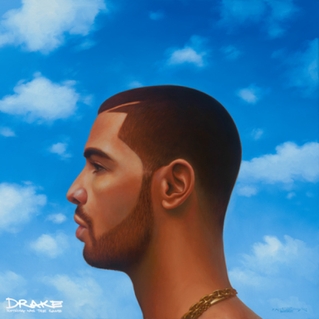
For what was effectively a coronation pageant, 2011's Take Care hardly felt like a joyous occasion; compared to Nothing Was The Same (Cash Money/Universal Republic), though, it's practically a party record.  "I'm on my worst behaviour," Drake snarls – Canadian spelling, of course – over ominous, disjointed rattles and synth throbs, and he's not kidding: he's rarely sounded as crass, petty and angrily, needlessly defensive as he is at certain points on his third full-length.  As for his persistent emotional ineptitude (and crippling nostalgia for past romantic failures), well, that's been covered before, and it remains as perversely compelling if increasingly tough to sympathize with.  Mostly though, he's just awfully, inexcusably morose.  Noah "40" Shebib keeps on building him these sumptuous luxury suites – weird, staggering, adventurously modern moodscapes – and all he wants to do is mope around in them.  But he's still got that nagging, hard-to-define charisma; a knack for absorbingly intimate confessionals, even if it clearly stems from some serious boundary issues.  Also, it must be said that to see Drake in concert is to witness Aubrey Graham in his element: he really is a born performer, and if we ever finally get sick of listening to his elegantly-appointed sulking, he can totally fall back on that acting career.

Deltron 3030
[Hip-Hop]
concert preview

It's been 13 years since the release of Deltron 3030, the sci-fi comic-book hip-hop concept opus which paved the way for the improbable sci-fi comic-book hip-hop crossover success of Gorillaz (involving many of the same key players) – although apparently only ten have passed in the album's peskily dystopian, technocratic futureworld: according to Joseph Gordon-Levitt's ponderous spoken intro to Event II (Deltron Partners), it is now "Stardate 3040."  But – despite the efforts of our trusty hero, renegade rap-battle freedom-fighter/disenchanted "mech soldier" Deltron Zero (alias Del the Funkee Homosapien) – not much has changed.  Narrative specificity and conceptual coherence still take a definite backseat to the generally bad-ass, swashbuckling atmosphere created by Del's twisty, jargon-flourishing raps, turntablist Kid Koala's skittering scratches and producer Dan the Automator's lavish, widescreen sample-sourcing and adrenalized breakbeats.  While it's almost certainly better than we had a right to hope, this guest-star-studded sequel is probably best taken as an overdue victory lap; a gleeful exercise in warp-drive retro-futurist nostalgia.  But even if it's no more than an excuse for the triumphant triumvirate to head out on tour, with a sixteen piece orchestra in tow no less – and if Kid Koala's deliriously fun Vinyl Vaudeville shows from last year are anything to judge by – justice will be served right here in the present.

Bill Callahan/Lonnie Holley
[Singer-Songwriter]
concert preview

Through his dozen or so albums as Smog and, especially, the handful he's made more recently under his own name, Bill Callahan has etched out a reliable, dependably unhurried furrow for his quietly affecting musings.  But it's rarely felt as cozy as his latest, Dream River (Drag City), which settles into a loose, surprising seventies soul-jazz vibe: Callahan's laconic, iconic baritone drifting overtop congas, claves and electric piano like Leonard Cohen moonlighting with Gil Scott-Heron's band; his roving ruminations sharing space with fragrant flute and fiddle leads and guitarist Matt Kinsey's subtle atmospheric heroics.  The title befits Callahan's typically cryptic, trancelike stream of cast-off observations, cock-eyed profundities, corny jokes and come-ons, which circle here around familiar themes but with a cautiously more sanguine outlook, finding mundane beauty and savage splendor in the natural world and solace in the smallness of human relationships.  Lonnie Holley – an Alabama-born African-American artist who has, arguably, actually lived the kind of outsider's perspective Callahan often adopts in his songs – arrives at a similarly thoughtful optimism amidst markedly stranger circumstances in the surreal pronouncements on Keeping A Record Of It (Dust-to-Digital), with a decidedly more dynamic, colorfully expressive voice and to considerably chintzier musical accompaniment.

John Vanderslice
[Indie/Singer-Songwriter]
concert preview


John Vanderslice is one of indie's surest bets; a steadfast, sure-footed songwriter who's never made a bad record, even if he's never turned out a clear masterpiece.  (I'd probably point to 2005's Pixel Revolt as his finest hour, but each entry in his discography has its partisans.)  All of his albums seem to create and inhabit their own private, often insular worlds, but Dagger Beach, his ninth full length, feels especially personal; less for its songs than its archetypical array of warm, gritty textures – overdriven acoustic guitars, woody synths, brightly chunky drums, free-floating analog dribbles of uncertain origin.  A crowd-funded, self-released project following a stint on Dead Oceans, it was recorded – computer-free – at his own Tiny Telephone studios, and particularly knowing that it came in the wake of a significant break-up, it's easy to imagine JV sitting alone at his Neve console, finding solace and focus in meticulously building up layers of atmospheric sonics.  As much of a studio rat as he is, though, the quintessential way to encounter Vanderslice is in person at his shows, where he flashes a legendary chatty affability at odds with his understated, often elusive songwriting.

Franz Ferdinand/Frankie Rose
[Rock/Pop]
concert preview


Franz Ferdinand have always been as much a dance band as a rock band, coaxing the sharp, jagged lurch of post-punk into the plumped basslines and signature crisp, feline strut that fueled both the deathless "Take Me Out" and an impressive string of worthy successors.  While the seedy nightclub trawl of 2009's Tonight was their most overt, mildly experimental dalliance with "proper" dance music, morality-teasing fourth album/reset button Right Thoughts Right Words Right Action (Domino) drafts in some of the finest minds in electro/pop – Hot Chip's Joe Goddard and Alexis Taylor; Scandinavian sooperproducers Todd Terje and Björn Yttling – yet results in the band sounding utterly like their own waggish, swooningly metrosexual selves.  It's their tightest, leanest effort since their debut, and it's great to have them back.  In the support slot is Brooklyn linchpin Frankie Rose, whose latest opus, Herein Wild (Fat Possum), weds the glorious layered-vocal luminosity and Cure-cribbing beat-beds of last year's great, quantum-leaping Interstellar to the spunkier garage-pop grit of her debut, and throws in the occasional string section.

The Dismemberment Plan
[Rock/Pop]
concert preview


The Dismemberment Plan were one of the most fiercely beloved bands around before their 2003 break-up, so it's understandable that there are a lot of feelings surrounding their recent return to the active column – a brief, triumphant tour in 2011, and now the curiously misspelled Uncanney Valley (Partisan), their first album since 2001's masterful Change.  A lot of excitement and eager anticipation, but also a lot of wariness and skepticism, especially surrounding the record – protectiveness, perhaps, toward the band's cherished memory and established catalog.  Well: the new disc doesn't sound much like, say, 1999's timeless Emergency & I.  But then again, neither did any of their other records.  They've always been a band in motion, and they return now evolved once more – as righteous emo diehards will be miffed to discover – into a looser, goofier, less existentially pensive and altogether more jovial (and synthesizer-happy) iteration of themselves.  But there's no mistaking Joe Easley and Eric Axelson's sparky, jittery math-funk grooves, nor Travis Morrison's densely geeky, reference-strewn lyrics; smirky and earnest in equal measure.  From the gorgeously whirring workaday introspection of "Invisible" to the sweetly unabashed affection of "Lookin'" to propulsive party starters like "White Collar White Trash," the band has never sounded so contented or so celebratory.  Truly, what's not to celebrate?

Saint Rich/Wild Belle
[Rock/Pop/Reggae]
concert preview

If post-rockers could talk, what would they say?  Here's your chance to find out: Monday's double-bill pairs two new song-oriented projects from musicians better known for their instrumental-only affairs.  Steve Marion makes curious, captivating wordless guitar-pop with/as Delicate Steve, but he's switched over to drum duties behind bandmate (and North Jersey high school buddy) Christian Peslak in the recently-minted duo Saint Rich.  Their debut Beyond the Drone (Merge) is a rollicking, rootsy, riff-tastic rip through '60s rock and '70s boogie that feels a bit like Foxygen without all the anxious posturing (and with notably witty lyrics.)  Meanwhile, jazz-steeped saxophonist/experimental tinkerer Elliot Bergman made his name fronting (too-long dormant) avant-afrobeat heroes NOMO, with whom his sister Natalie has occasionally featured as a touring member; now the siblings are slinging globally-conscious indie-pop as Wild Belle.  Their predictably groove-rich, sonically adventurous Isles (Columbia) sets them up as something like a worldbeat She & Him, pulling from African pop and Motown but with a particularly emphasis on Caribbean rhythms which make it well-suited to help pass the time before the reemergence of summertime, and/or Santigold.

Fuzz
[Rock]
concert preview


Ty Segall has made a lot of records – let's just say that's a significant understatement – but he's never made anything quite so epically colossal, and at the same time so lean and laser-focused, as Fuzz (In The Red)  The obliteratingly self-evident self-titled debut from the West Coast scene-leader's latest collaborative venture spotlights the amped-up blooze riffs and brain-scrambling solos of guitarist Charlie "Moonheart" Moothart and the appropriately hefty underpinnings of bassist Roland Cosio.  Segall's still singing lead, but he's jumped from strings to skins here to show off some breezily ferocious, Mitch Mitchell-style dexterity behind the kit.  While this is a new project, these dudes have also been playing and starting bands together since high school, and there's a purity of purpose here that seems to stem from the spirit of those days, channeling fellow San Francisco outfits like the Jimi Hendrix Experience and Blue Cheer.  Accordingly, Fuzz strips away the garage-bound shagginess and punkish snarl that typically characterize these guys' output to focus on heavy, heavily-Sabbath-indebted psychedelic proto-metal that makes this a power trio in the most classical, primal sense.  In other words: just what you'd expect from the awesome, fiery blue elemental space-demon on the cover.

Cayucas
[Indie-Pop/Rock]
concert preview

While obviously not as uncommon as the eponymous shaggy forest-dweller, it's still a rare and precious thing to encounter an indie-pop debut as sharp, succinct and perfectly formed as Bigfoot (Secretly Canadian), which breezes through eight great, unimpeachably summery tunes in just about a half hour.  The Santa Monica outfit, whose name is slightly modified from the beach burb of Cayucos, a little ways up the coast, have caught considerable flak for their nagging similarity to a certain East Coast band likewise beloved of 1950s archetypes, plaid button-downs and lilting, tropical-tinged guitar lines.  But while the Vampire Weekend-in-California call-outs are certainly apt – down to the literary details of their collegiate travelogues and sun-bleached romances, enthusiastic use of onomatopoetic yelps, and Futura-enabled album design – it's hard to see why that's much cause for complaint, especially now that Koenig and crew have moved on to decidedly less simple pleasures, and most especially when head Cayuca Scott Yudin can churn out something as instantly and persistently indelible as the snazzily syncopated "High School Lover," which I'd contend equals or betters anything on the first VW album.

Fuck Buttons
[Electronic]
concert preview

In theory, Pitchfork-annointed electro-noise auteurs Fuck Buttons make a reasonable fit for the Making Time demographic.  But its troubling to contemplate what might actually happen when the assembled party-ready masses at Voyeur encounter the Bristol duo's portentous, magisterial sound barrages.  Probably the best bet is to hope they bust out some of the old stuff: 2009's relatively populist Tarot Sport at least boasted appropriately movement-friendly four-on-the-floor underpinnings on most of its tracks, plus a twinkling, major-key bent to its awe-inducing anthemics that rendered them rapturously uplifting.  (Enough so that they served to score part of last year's Olympic opening ceremony.)  As for the stark, soul-crushing monoliths that make up most of this year's negative-inverse offering Slow Focus (ATP), they seem markedly less well-suited to soundtrack a scene of happy revelry than to accompany the queasy aftermath of rubble and devastation following, say, the invasion of a popular hipster dance night by an army of demonic, emotionless alien cyborgs.  Maybe if you escape to the basement "bear den" the haze of sweat and stoner rock jams will drown out the screams.

Raime
[Electronic]
concert preview


Raime – the British abstract electronic duo of Joe Andrews and Tom Halstead – record for a label called Blackest Ever Black, and it's hard to get around the aptness there: their music is just really damn dark.  The sounds they favored on last year's intoxicatingly potent full-length debut, Quarter Turns Over A Living Line, as well as several preceding EPs, include rumbling cavernous drones, gnawing, unblinking metallic tattoos,  and the occasional, muffled irruption of amorphous sonic violence.  But while it's easy enough to sum up their approach as purely and simply evocative of bleakness and dread, wholly subsumed by gloomy negatives, there's something oddly neutral about it too: a subjective, malleable emptiness.  There are shades within shades here: those creeping industrial heartbeats have a subtle, dubby, Burial-esque lilt that might be sensuous or sinister, depending on your angle.  Those churning streaks of cello could be savage or serene.  One person's gaping, ominous void may be another's womblike sanctuary.  After all, the blackest black is really no different from eternal, blinding sunshine once your eyes have time to adjust.

Holy Ghost!
[Electronic/Dance]
concert preview

Holy Ghost! don't do very much to justify that exclamation mark.  The NYC production duo are more apt to induce sly, slow-building smiles than sudden ecstatic surges; the pleasures to be found in their sleek, shiny updates of 1980s electro-disco are, perhaps unusually for a dancefloor-oriented act, those of comfort, familiarity and expertly executed craftsmanship.  The title of their second album, Dynamics (DFA), suggests a broadened range, and it is indeed a more varied, well-rounded affair than their rather same-sounding debut, but it delivers that breadth via a further smoothing and softening – an occasional uptick in melancholy emotionalism; a generally plusher sound palette (including a string arrangement from the great Kelly Polar) – rather than any great deviation from their standard-issue mid-tempo template.  The exception proving the rule is "Dumb Disco Ideas" – easily their best single to date – an extended, multi-part cowbell'n'clavinet dance-funk jam that solidly cements their DFA bona-fides and probably warrants at least a little punctuation.

originally published in Philadelphia City Paper


02 May 2012

SXSW 2012: Saturday


Justin Townes Earle, 1pm, Austin Convention Center Day Stage
In the interest of taking some advantage of the industry "trade show" part of the conference – in the convention center, where only really special people with badges (like me) are allowed – I rushed to try to catch an interview session with Norwegian hitmakers StarGate (the guys behind "Irreplaceable," "Firework" and about half of Rihanna's hits.) But it was cancelled. So instead I sat in on a couple of random panel sessions with assorted industry types talking about industry stuff (mobile apps, clickthrough conversions, the cloud, listening to N*SYNC in their car in high school...)

And then I wandered into a set by this Nashville songwriter guy – I'd heard the name, but don't they all have names like that? – which was phenomenal. Just, very obviously, the real deal: deft fingerpicking acoustic blues, richly gritty voice, witty poignant wryly observational songwriting, all that good stuff. Also, he has impossibly long legs. Put me in mind of Townes van Zandt (whom he reverentially quoted at one point) or a young Springsteen, but most of all Steve Earle. Come to find out, just now: Steve's his dad. Duh.


Beat Connection, 2pm, Hype Hotel
I came to Hype Hotel – magical blog-sponsored land of free vodka, free (well, for tips) chair massages and free weird, nasty Taco Bell tacos made out of Doritos (and also normal soft tacos, which I'm sheepish to report accounted for about 80% of my food intake today) – to see the super neat Canadian future-electro-pop duo New Look (one of six "New ____" artists listed in the booklet, though that's nothing next to the twelve "Young ___"s, plus three "Yung"s.) But apparently they were never even in Austin. So I got this extremely young-looking Seattle band instead. About what you'd expect from a band named after an LCD Soundsystem song, if on the sunnier end of that spectrum. Ironically, their beats were kind of disconnected – there were some issues with drummer/drum machine sync. Also their lyrics were lame. Pass.


THEESatisfaction, 2pm, Scoot Inn
Way more like it. Two-woman hip-hop tag-team (how often does that happen? does that ever happen?) and Shabazz Palaces besties, from "the top left," as they said. Similar arty/smarty vibe to Shabazz, but much less psych-addled and esoteric; way more accessible, melody-conscious, and just plain fun – hitting a tricky sweet spot between way-cooler-than-you'll-ever-be, don't-give-a-fuck detachment and casual, off-the-cuff relatability. Sweet moves (and afro) too.


Roach Gigz, 2:30pm, Scoot Inn
Before I had a chance to slip out, this hoodied San Francisco rapper dude bum-rushed the stage and commanded my absolute attention for a solid fifteen minutes (no small feat considering habitually ADD-prone SXSW mentality.) I don't think I've ever seen a rapper so dynamic in a literal, physically, kinetic sense – he didn't stop moving for an instant. And his constant, pro forma appeals for attention/energy/love from the crowd felt unusually deserved, and reciprocated.

SBTRKT, 2:15pm, Fader Fort
Just caught the tail, but then again it's just a couple guys with machines. Anyway, solid. "Wildfire" is a total jam. The "tribal" masks kind of looked like they were made from paper plates.


Mr. Muthafuckin eXquire, 3pm, Fader Fort
I don't know what the hell just happened, but suddenly he (and full entourage of maybe eight dudes) was in the middle of the crowd, about two feet away from me, inciting general ruckus and spilling whiskey all over the place. Got some sweet photos. I think this was like a twelve-minute set.


Deerhoof, 3pm, 1100 Warehouse
Sure, why not! Who doesn't love a good Deerhoof? They bashed and popped and did their crazy, inimitable thing. They did that "panda panda panda" song, and then Busdriver jumped on stage and rapped really really fast on top of it. Delicious!

2:54, 3:30pm, 1100 Warehouse
"Dark" rock. "Atmospheric." Whatever. Maybe if it wasn't the middle of the afternoon.


Main Attraktionz, 3:45pm, Scoot Inn
More Bay Area hip-hop (Oakland, in this case), of a somewhat woozier, snoozier variety. There were a lot of people on stage but I think the actual Attraktionz were the two guys standing on top of something up front: one bearded, shirtless, skinny white guy and one black guy with a shirt on, who spent the whole time with their arms around each others' shoulders. Which was very sweet. They seemed to lack some self-confidence though...they kept asking the crowd who was coming on next (it was Kreayshawn), and then they asked "So, are we aiiight?' ...or are we good." Um. I gave the polite response, but the jury's still out.

Tanlines, 4:00pm, 1100 Warehouse
Tanlines are dears, and their new record is solid (or, at least, the single is.) But Tanlines are all about treble (abnormally, for a dance act, but they pull it off well) and the acoustics of the Mess With Texas 1100 Warehouse is all about bassy bassy bass. So that's a fail. Plus, all their songs sound the same (or, at least, the one and a half that I stayed for did.)


Poliça, 4:00pm, Clive Bar
I guess these guys are even buzzier than I realized. ("Justin Vernon's favorite band!!") Well, they are good. Possibly much better than good, I couldn't quite tell. I wish I'd gotten here sooner, as it took a while to get inside (partly for shaved-ice-related reasons); what had sounded from outside like very pretty, mellow chill-out/trip-hop music emerged or developed into something much rockier and more energetic once I'd wormed up to the side of the stage for the end of the set. They have two drummers, for one thing. Basically it seemed cool, but I'm going to have to spend some time with the record to fully decide.

Polarsets, 5:00pm, Cive Bar
Only maybe the fifth entire set I've seen at SX, and the first time I got bored doing so. (Though not unpleasantly so.) This is a very nice-seeming young trio from Newcastle, England, who play sunny, tropical-ish indie-dance-pop – a la Friendly Fires or Tanlines or St. Lucia – but with more of a lyrical/song-based (though not necessarily melody/hook-based) focus. Not that I really caught any lyrics, though the song titles included "Tropics" and "Sunshine Eyes," so that probably gives you an idea. The lead singer has an improbably high, interestingly-textured voice that reminded me very much of somebody – Chris Martin, maybe?


Of Montreal, 6:00pm, Clive Bar
Felt some SX guilt for deciding to see this, and sticking around so long for it (other options included catching the awesome, food-obsessed rapper Action Bronson, or a maybe over-ambitious third attempt at Grimes) – since I have seen of Montreal plenty of times, though not in ages. But whatever. It was great to be in a crowd full of fans, just there to see one of their favorite bands play a concert. This was a seriously of Montreal-loving crowd – they sang along to every word, fist-pumped every beat, and half of them were dressed as crazy and colorfully as the band themselves. (Another half were of course wearing green for, as Best Coast called it later on, St. Party's Day.)

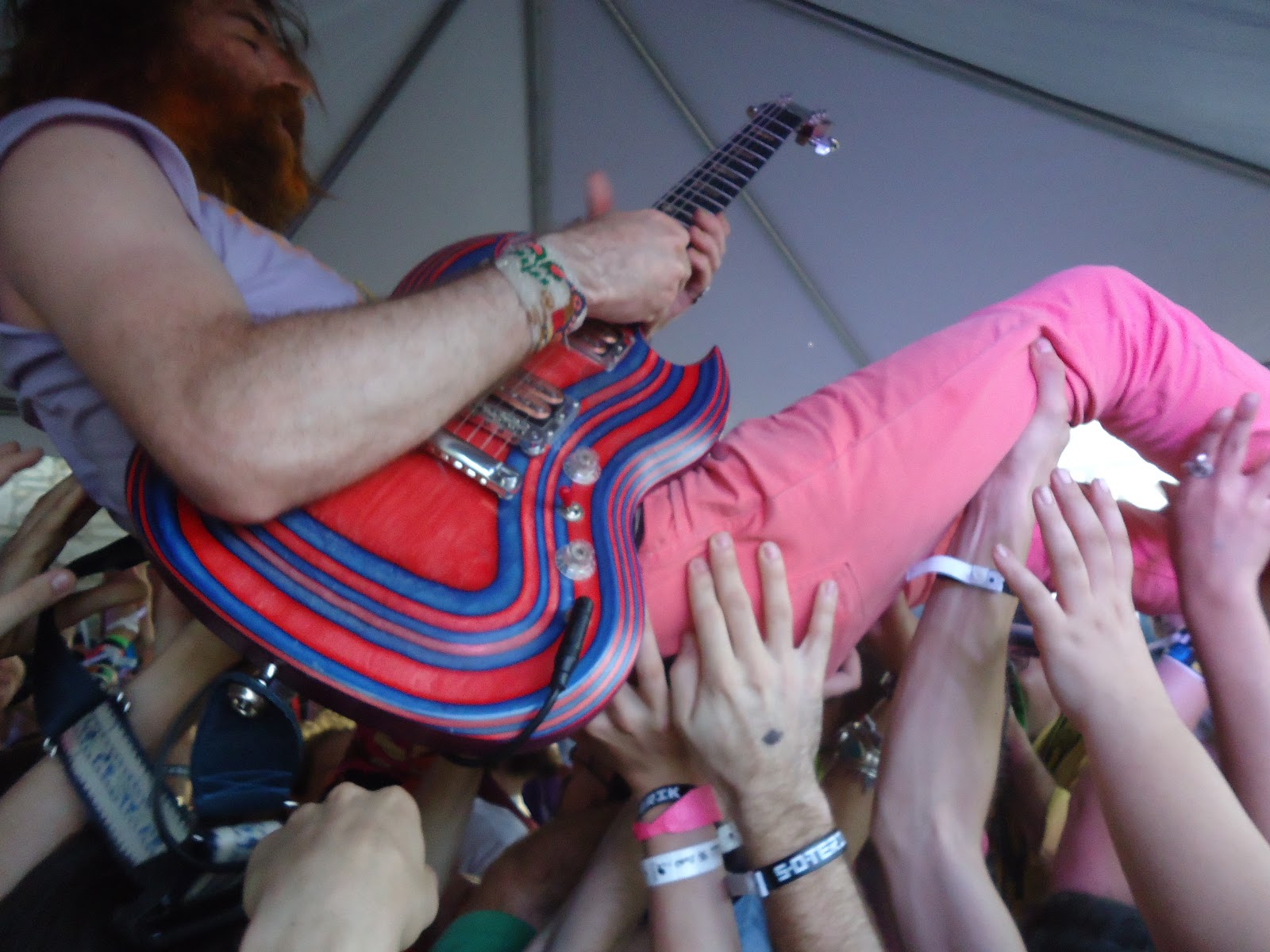
And it was a seriously crowd-pleasing set: nothing but hits, or more specifically nothing from outside of their 2005-2007 apex of popularity. They kicked off with the two big ones from The Sunlandic Twins ("The Party's Crashing Us" and "Wraith Pinned To The Mist"), and the rest of the set was entirely drawn from '07's Hissing Fauna..., including set-closing epic "The Past Is A Grotesque Animal," which ended with, first, guitarist BP Helium crowdsurfing, and then his guitar crowdsurfing by itself, being "played" by the whole audience. Personally, I'd have loved to hear at least some of their more recent stuff, but I was probably a minority there. (Nobody does encores at SXSW, but it's hard to imagine a crowd more doggedly insistent in their clamoring for one. I pitched in with the mini-cowbell I had picked up earlier in the day – inventive swag this year!)


Rittz/Gangsta Boo/Stalley, 7:00pm, Fader Fort
Dinner might have been wise, but the mystery of the 8:00 Fader Fort "special guest" (the characteristically wild rumors swirling included Drake, which, basically, I would have died) not to mention my handy-dandy badge-carrying ability to bypass a monster line outside the bulging venue, were just a bit too tempting. When the outrageously red-haired speed-rapper Rittz (who sounded like an angrier Yelawolf) and former Three 6 Mafiosa/Yelawolf co-sign Gangsta Boo showed up for brief sets in the 7:00 "TBA" slot, I was figuring it was gonna be Eminem (who'd turned up the previous night at 50 Cent's Austin Musical Hall show.) But then Stalley, the self-described "newest" member of Maybach Music took the stage, and stayed on the stage, and stayed on the stage – his beard may be, on a technical level, more impressive than Rick Ross's, but it's nowhere near as lovably iconic or charismatic – and it became clear that, once he finally left, we would be graced with the presence of...


Rick Ross, 8:15pm, Fader Fort
Yep. This happened. Totally ridiculous, totally awesome. Couldn't see half the time because of all the cameras/phones in the air, but I had worked my way maybe three-quarters of the way to the stage by this point, and the energy in the crowd was just delirious. Early in the set, after a couple cuts from his recent mixtape, he whipped through four massive hits ("Hustlin," "All I Do Is Win," "B.M.F.", "I'm On One") in the space of fifteen minutes. I guess, just because he could?

Devon Sproule, 8:55pm, Austin Java
I can't actually tell you about this set, because I wasn't there. What I can tell you is that Devon Sproule is a wonderful wonderful songwriter and one of the most endearing and talented performers I've ever had the pleasure to see, and that I biked fifteen hilly minutes to a semi-remote part of town (well, far outside the SXSW hubbub anyway) to see her, only to learn that it was the wrong Austin Java location, and then, another twenty-plus minutes and some bad directions later, to the correct Austin Java location, where Devon had just finished her set and was loading the car. And I chatted a while with her also-charming, also-a-songwriter husband, Paul Currerri, who told me that they'd just moved to Austin (from Berlin) this week. So hopefully they'll be playing some more, better appointed and better publicized shows at future SXSWs, and hopefully then the (impressively comprehensive, but nevertheless fallible) Austin Showlist website will list the address correctly. (And/or I will remember double-check their info.)


Django Django, 10:00pm, Latitude 30
Buzzy Brits, playing to a sardine-packed room of badgers. Energetic, danceable, slightly synthy rock, with plenty of texture and personality...made me think of Hot Chip, XTC, and other bands I really like. Also, for some reason, their vocal harmonies reminded me a lot of the Dandy Warhols. Not all of the songs made an instant connection, but a few of them did, and I bet their album (if it exists yet) will be very worth hearing. They also had a really big tambourine.


Fanfarlo, 10:00pm, Hype Hotel
I've reviewed two Fanfarlo albums now, and I'm not sure I could recall any of their songs if you asked me to. But they're always perfectly enjoyable when I'm actually listening to them, and they really sounded fantastic live. Epic, anthemic – but somehow not affected or overblown – indie rock stuff, with trumpet and saxophone and violin and big blue lights. Plus, they were adorably Scottish and polite. Nice one.


Best Coast, 11:00pm, Hype Hotel
Bethany Cosentino as a person is as refreshingly straight-shooting and pretense-free as her music, which as she performs it live doesn't even come off as cutesy, just matter-of-fact: she wishes her cat could talk, okay? She made no bones about being pissed off by lame, unenthusiastic SXSW audiences, and asked us if we could just be cool and party with her, for a change. The crowd responded by demanding that she chug the cup of white whiskey she'd been making skeptical remarks about throughout the set. (Meanwhile her guitarist, silent Bobb Bruno, was tossing back a handle of Jim Beam.) She was almost apologetic about playing new songs ("four in a row, is that okay?") but they were some of the highlights of the set, even sandwiched between all the first album faves. (The forthcoming Best Coast album shows, to me, a marked step up in her songwriting and sound – I'm expecting some good things for her this year.)

Wavves, 12:00am, Hype Hotel
Then I got a chair massage from the very cool Kate, which was great except for when Wavves started playing partway through it.


Jacques Greene, 12:40am, Barcelona
SXSW really does not do electronic music well. I guess that's the USA for you. Montrealer Jacques Greene is probably doing as much as anybody these days to underscore the shared fabric of bass music (dubstep/funky/house/whatever) and R&B, and this DJ set was a beautiful illustration of that connection, encompassing everything from Jackmaster to Burial to Moloko's "Sing it Back" and Storm Queen's masterful 2011 soulful house epic "It Goes On," right alongside Waka Flocka Flame, a funky Destiny's Child remix, and Drake/The-Dream's "Shut It Down" (with Greene grinning and singing along to every word) – all in a tight, seamless forty-minute set, pretty much the most exciting, energetic set of dance music you could ask for. (Though as far as I could tell he didn't drop any of his own excellent productions.) But the venue was a cramped, anonymous basement bar, and the crowd, despite several pockets of serious, enthusiastic dancing, seemed inappropriately diffuse and indifferent, mostly hook-up-seeking locals and St. Party's Day revelers who just happened to be there.

Toddla T, 1:00am, Latitude 30
Around the corner, Toddla T seemed be on a similar tip in his DJ set, albeit more populist in his selections (while I was in there SBTRKT's "Wildfire" and Big Sean's "A$$.") Not quite the party I was looking for though.


XV, 1:00am, Hype Hotel
Was on my way to check Flosstradamus but got distracted and pleasantly side-tracked by a prominent Pixies sample blaring out of ye olde Hype Hotel (and, okay, I was running pretty low on tacos.)   Such was my introduction to the very silly, young Wichita, KS (?!) rapper XV. Chipper, vaguely nerdy pop-rap, Chiddy Bang kind of thing. Mindless fun, and sure, why not, as his set-closing single has it, "Awesome." Or something.

Mujuice, 2:00am, Hype Hotel
Never heard of this guy either – I didn't even know who it was when he was playing, as it wasn't listed or anything. But I was pretty impressed by his music, which I was having a hard time slotting into any of the usual electronic-music subdivisions. Subtle, stylish, danceable. Apparently he's "one of the cornerstones of today’s Russian electronica." Okay, cool.

And that was SXSW 2012. Cruised around for awhile (both through the streets and on twitter) trying to track down an afterparty, but it seemed like things had pretty much wrapped up. Diplo was in New Orleans, Rick Ross was allegedly already back in Miami. And it ends, not with a bang, but a well-deserved sleep.

25 December 2011

review round-up XV: 2011 second half, vol. 2 [singer-songwriters and indie rock bands]

Devon Sproule: I Love You, Go Easy review

Devon Sproule's sixth album opens in typically bucolic fashion, with the limber-voiced songwriter musing mellifluously on the mossy, terrapin-filled pond of her childhood commune (perhaps the very same "goose-poop pond" referenced at the start of her previous album), but the record on the whole finds Sproule -- an Ontario-born lifelong Virginian, freshly transplanted to Berlin, who's probably best beloved in the U.K. -- traveling musically and thematically further afield from her rustic roots. I Love You, Go Easy, which feels every bit as warm, thoughtful, and generously gentle as the twofold sentiment contained in its title, was recorded in her native Canada with a fresh batch of collaborators -- free-thinking Toronto producer Sandro Perri (Polmo Polpo) and experimental folk-pop trio the Silt -- who work some small wonders with the album's breezily expansive textural palette, making tasteful use of flutes, clarinets, saxophones, brass, and a few unobtrusively burbling synthesizers alongside Sproule's trusty Gibson. The result is considerably removed from the country-informed folk that dominated (but never completely encapsulated) her earlier work; it's both her subtlest and jazziest effort to date, certainly sonically but also in its songwriting, which tends more than ever toward long, fluid melodic lines and loose, open-ended structures. And the songs, if not necessarily her most immediately captivating or endearingly winsome, are as artful, personable, elegant, and finely crafted as ever, revealing abundant charms and quirks with familiarity. They're also frankly, unapologetically personal, vehicles for Sproule to explore the nuances of her relationships and emotions but also to sort through her life and career goals (though the two tend to intersect, particularly when it comes -- as it often does -- to her husband, fellow singer/songwriter Paul Curreri).

Twin Sister: In Heaven review

Twin Sister's most singular asset – and, apart from a general sonic softness which could be described as "twee," In Heaven's only really consistent attribute – is Andrea Estella's singing voice: a supple, adorable coo that's got a soupçon of Lætitia Sadier, a playful pinch of Judy Garland – by way of Nellie McKay, and, particularly when layered and harmonized, a warm, velvety mellifluence akin to underrated California popsters Simone Rubi and Terri Loewenthal (Rubies/Call and Response.) True, the band's carved out a distinctive, likable, retro-indebted yet minty-fresh baseline sound: dappled, spacey lounge-pop which calls to mind Baudelaire's "luxe, calme et volupté" (also, incidentally, the mantra of romanticist Canadian lushes Stars), and is perhaps best exemplified by opening ditty "Daniel," with its glowing, drifting Tortoise-shell veneer of vibraphone and organ and its gently zippy beatbox bossa. (Call it The Sea and Cupcake – with Estella as the gooey frosting – or, alternatively: Coctail Twins.) But In Heaven, if anything, only ramps up the genre-hopping of Twin Sister's early EPs, rendering it a rather diffuse, perplexing miscellany. Viz., infectious funk-slice "Bad Street" struts into kewpie disco territory (somewhere in the suburbs of "Funkytown"); aptly-named "Space Babe" ushers in the synth-washed and ponderous dream-pop of "Kimmi in a Ricefield" and "Luna," whose gauzy solemnity is then undercut by a spate of campy weirdness: "Spain" (torchy spy-theme pastiche), "Gene Ciampi" (Spaghetti Western clip-clop) and "Saturday Sunday" (easy-listening bubblegum? Petula Clark takes on Rebecca Black?), which largely dial back the synths in favor of screwball guitar. So: Heaven? or Las Vegas? or, more probably, (c. late 90s) Chicago? Hard to predict quite where Twin Sister will end up, but it's a lovely, leisurely, labile journey all the same.

Kathryn Calder: Bright & Vivid review

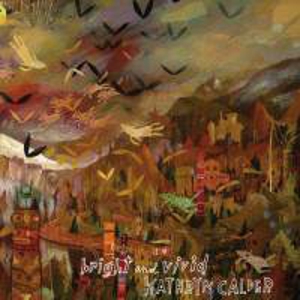
For an album titled Bright and Vivid, Kathryn Calder's sophomore solo effort sure starts out pretty murky. With its thick, squalling guitars, thudding drumbeat, and smeared, muffled vocals, "One Two Three" initially suggests that Calder is taking a page from the voguish, lo-fi girl group playbook (Dum Dum Girls, Vivian Girls, et al), but that soon turns out to be a bit of a miscue. There's a sense of polish and deliberateness in spite of all the hazy, swirling sonics; what emerges here, and throughout the album, is indeed quite vivid and bright -- but on the order of a lush, richly saturated Impressionist painting (or, perhaps, the album's autumnal-hued cover), an aesthetic far removed from the crisp, neatly delineated formalism of her work with the New Pornographers and Immaculate Machine. While Calder's relatively intimate, understated solo debut demonstrated a keen awareness of texture and a solid understanding of arrangement, those impulses come to the fore here in a considerably fuller and more conspicuous way, becoming as much of a focus as the songs themselves, if not more; take for instance the epically evolving, almost suite-like "All the Things," which is instrumental for more than half of its six-minute run time, and features Calder's voice, when it does come in, positively drowned in reverb. That voice -- warm, confident, girlishly pure, more richly developed than ever --still serves as the sublime vehicle for melody it has long been, rising brilliantly above the gentle haze on "Right Book," or tenderly harmonizing on "City of Sounds," but it's also sometimes treated as just one more, albeit integral, element in the album's lavish, layered tapestry of texture. For all the considerable volume of sound on the album -- which Calder recorded in her living room with her producer-engineer husband Colin Stewart (head of Vancouver's Hive Creative Labs), working at a leisurely pace and enlisting a generous cast of collaborators -- it never feels overstuffed. And while the songs, in general, tend not to announce themselves loudly, but rather blossom gradually, taking time to reveal their ample hooks and charms, they show just as much care and craft as the album's expansive soundscape. Even at their most immediately, infectiously accessible -- the glorious, electro-poppy earworm "Who Are You?," which has all the makings of an indie-night dance anthem, or the catchy, rocking "Walking in My Sleep" (the closest the album comes to New Pornos-style power pop) -- these are thoughtful, complex pieces of songwriting. A firm step forward on all fronts, Bright and Vivid is a thoroughly engaging listen and establishes Calder as a creative force and pop craftsperson every bit as worthy as her big-deal bandmates.

Darren Hayman: Essex Arms review

For the second installment in his planned "Essex Trilogy," Darren Hayman shifts his focus from the suburban, middle-class "new town" Harlow – the subject and setting of 2009's Pram Town – to a broader view of the East Anglian county's rural, working-class communities. Like its predecessor, Essex Arms is full of highly specific geographic and cultural references which effectively function as a backdrop to Hayman's usual assortment of love songs, character sketches and wistful ruminations. This time there's no attempt to cement the album's concept through a grand connecting narrative (or even a modest one), but the songs still hang together nicely to evoke a clear sense of place, with linchpins including "Dagenham Ford" – a touchingly bittersweet eulogy to a shuttered auto plant (and perennial football underdogs West Ham United) – and the languorous "Two Tree Island" (an ode to a former sewage works and landfill, now partially a nature reserve), with its vision of the countryside commingled with litter and waste. Sweetness and decadence run hand and hand throughout these songs, with references to semi-public sex and reckless (and sometimes fatal) joyriding intermingling with heartfelt declarations of love (none more pure and guileless than "Super Kings"' earnest refrain.) Perhaps the most winning moment (which is reprised en passant throughout the album, for good measure) comes with "Winter Makes You Want Me More," whose central sentiment is as poetic as it is self-evident; a cold-weather love song that's as universal as pawprints in the snow, shivering smokers and candy-striped flannelette sheets. Throughout, Hayman and a particularly strong incarnation of the Secondary Modern (including contributions from Fanfarlo, The Wave Pictures and – on the scene-setting "Calling Out Your Name Again," a duet with Emmy the Great) infuse the proceedings with a loose but decidedly folksy, countrified air, flush with pedal steel, harmonica, fiddle, mandolin and more. That musical modus may or may not be strictly relevant to the countryside in question, but it works marvelously well with Hayman's increasingly soulful songwriting, both on the hushed, melancholic tunes which make up the majority of this collection (starting right off the bat with the sad-sack "Be Lonely") and the handful of upbeat offerings, including the atypically rocky scrabble-playing closer "Nothing You Can Do About It." While it's not quite the uniquely charming statement Pram Town was, Essex Arms is yet another excellent addition to Hayman's ever-expanding discography.

Jeffrey Lewis: A Turn In The Dream-Songs review

Following the splendid career highlight Em Are I, and after a couple of collaborative detours – the uneven-at-best The Bundles with Kimya Dawson, and the delightfully loopy Come On Board with weirdo-folk icon Peter Stampfel – lovably quirky New York songwriter/cartoonist Jeffrey Lewis returns with a highly likable sixth album full of his characteristic wit, whimsy, sardonic self-deprecation and transcendental musings. Lewis' regular backing band the Junkyard are absent here (under that billing, at least), as are the occasional bursts of electrified rowdiness they've provided in the past. In their place are a clutch of mostly British indie-folk players (including the Wave Pictures' Franic Rozycki, who provides some fine mandolin work throughout), and a bevy of guests – members of The Vaselines, Dr. Dog, Au Revoir Simone, Misty’s Big Adventure and Schwervon – who help flesh out the album's pleasantly loose, vaguely psych-folky vibe, particularly on the tone-setting "To Go And Return," whose spacey, surreal lyric (a somewhat Seussian nonsense rhyme about the cosmic metaphysics of wish-making) is the source of the album's peculiar title. Despite all the friends he's amassed here, Lewis remains an archetypal loner, a condition which informs many of the album's sharpest numbers, from the lovelorn lambast "How Can It Be?" (featuring peppy, '60s-style backing vocals by the Dr. Dog boys) and the goofy "Cult Boyfriend" (which likens Lewis' romantic boom-and-bust cycles to a rapid-fire list of pop-culture obscurities) to "I Got Lost"'s gentle, plain-spoken disquisition on disconnection and "When You're By Yourself"'s wryly tender dissection of the practical logistics of loneliness – not to mention the hyperbolic shaggy-dog suicide saga "So What If I Couldn't Take It Anymore." (As usual – though still impressively – these songs rarely if ever come across as bitter or overly self-pitying; Lewis hasn't lost his knack for balancing depressed and depressing subject matter with insightfulness, sincerity, levity and charm.) All that time alone must give Lewis plenty of opportunity for deep thinking, which might explain the homespun, slightly stoned philosophizing of songs like the de facto centerpiece "Krongu Green Slime" – which uses the odd conceit of a pre-historic novelty manufacturing corporation to reimagine the entirety of evolution, over six protracted minutes of spare acoustic picking – and, perhaps more cogently, the touching "Time Trades," which moves beyond theorizing to offer some practical advice about long-term life planning. Songs like this – imaginative, contemplative, densely wordy, slightly silly but unflinchingly earnest – are arguably Lewis' strongest suit, especially in his recent work, and if the instances on A Turn In The Dream-Songs aren't quite as striking as those on its predecessor, the album still ranks right up there among his best.

Wu Lyf: Go Tell Fire To The Mountain review

British foursome World Unite Lucifer Youth Foundation – amusingly tempting to confuse with their rather distant Stateside counterparts World/Inferno Friendship Society (both bands are, at least, similarly fervent, unruly and rabble-rousing) – craft music that's every bit as elemental, emphatic and willfully enigmatic as their album's title. On its own terms, stripped of the hyped-to-hell/anti-hype vortex of its appealingly mythic but all-too-familiar backstory, Go Tell Fire offers both considerable beauty – lots of chiming, churchy organ, lots of gorgeously liquid, lucid guitar – and considerable ugliness (including some brutish, pounding grooves, but especially Ellery Roberts' instantly divisive choked, guttural caterwaul, which is potent in chunks – especially in exhortative chant mode – but dreadfully wearisome at unremitting album-length full-throttle), neither of which feel like ends in themselves (nor a purpose-driven juxtaposition) so much as value-neutral vehicles striving, straining, yearning toward pure, pummeling visceral emotion. And, to the (inconsistent) extent that they keep things abstract (read: post-rock-ish), and avoid sounding like any other bunch of dull, drudgy indie-rock also-rans (most of the bits invoking their self-conception as "heavy pop," a rather sour, chore-like description), it mostly works.

Zee Avi: Ghostbird review

A pint-sized, ukulele-strumming, vintage dress-wearing Malaysian-born songbird who rose to prominence via YouTube videos, Zee Avi fairly screams cute, quirky whimsy. If that description raises any warning flags or cynical twitches, ghostbird might just not be your glass of agave-sweetened hibiscus tea. (Should it be held against her that both she and her music are the stuff of marketing directors' dreams? It's an open question...) But you'd have to be at least a little cold-hearted not to be pleasantly lulled by the warm, gentle breeziness of Avi's music; its evident charm, predictably familiar though it might be, is modest enough never to feel cloying. If nothing else, the album consistently sounds wonderful: helmed by longtime Beastie Boys associate Mario Caldato Jr. (Bebel Gilberto, Jack Johnson) with a genially eclectic textural expansiveness – drawing freely from folk, swing jazz and soundtrack-friendly pop, with a twist of South Pacific tropicalia – it boasts a particularly vivid variety of percussion elements (shakers, fingersnaps, crisply mic'd congas, brushed snare drums, bullfrogs, rhythmic vocal chanting and discreet turntable scratches.) As for Avi herself, her personality often takes a comfortable backseat to the sound – and her lyrics, save for the occasional pithy sun-dappled observation ("every good fisherman has a pelican watching over him") tend to stand out for vague syntactic awkwardness ("even my lover's no longer enamored by me") or blatant factual inaccuracy ("thirty-one days in June" – from a song whose refrain also asserts "my love will pay the rent") if at all – but her voice, a gorgeously honeyed, legitimately jazzy warble (recalling The Bird and the Bee's Inara George) that belies her 25 years, is simply beyond reproach.

philadelphia city paper reviews:

Jens Lekman: Having An Argument With Myself EP review

Oh so silent oh so long (four years!), Mr. Jens Lekman reminds us just what we've been missing with the delectably dense An Argument With Myself EP (Secretly Canadian.) Over some of the sparkliest, most lovingly detailed grooves of his career – effervescent Afro-pop, plasticine twee-funk, soupy yacht-reggae – the gallant Göthenburger peruses and ponders the debatably ethical society of his hometown (and this world over: Melbourne; Santiago) via personal anecdotes, romantic professions, driving directions, absent-minded small talk, socio-political critique and – of course – plenty of jokes.


Gillian Welch The Harrow and the Harvest review

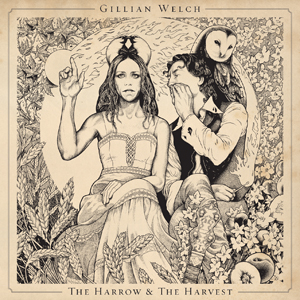
It's been a long, dry spell since last we heard from Gillian Welch – eight years; though the ten sterling originals comprising The Harrow and the Harvest feel, characteristically, far far older than that. If anything, Welch and her indispensable partner (in songwriting, harmonizing, and stunningly meticulous picking) David Rawlings sound more artlessly natural than ever inhabiting these deeply bluesy (and sometimes gothically gloomy) Appalachian folk strains, any of which could slot right in at your next backwoods campfire.


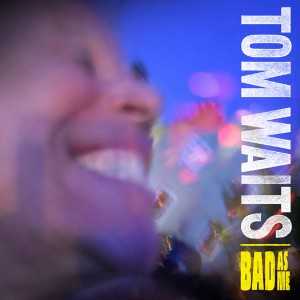
Tom Waits: Bad As Me review

Saying someone sounds like Tom Waits has become a lazy rock critic cliché trotted out for any singer who's a bit growly or guttural. Bad As Me (Anti-), the man's seventeenth album, besides being an all-around marvelous return after the longest recording gap of his career, is a spectacular reminder that, in actuality, nobody sings like Ol' Tom, whose larynx unleashes everything from weary, warbled moans to feral, splenetically spluttering yowls to an eerily husky falsetto croon across a tight set of his inimitable juke-joint rumbles, junkyard blues and bleary, beery ballads.


Steve Malkmus + The Jicks: Mirror Traffic review

Sorta a shame he didn't stick with the wry working title Madonna in Love, but otherwise it's hard to fathom a legit complaint against Mirror Traffic (Matador), Stephen Malkmus's fifth album with the Jicks, first since last year's world-conquering victory lap with that other band of his, and most instantly, consistently approachable in ages. Spanning gorgeously warm countryfied lopes, smirking spazz-outs, and bulls-eye riff-fests, these fifteen cuts are spry, tuneful, funny and touching: nothing but gold, gold sounds.


Laura Marling: A Creature I Once Knew review

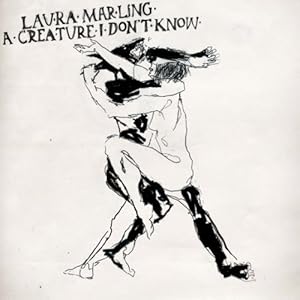
Third time out and the spryest, most striking work yet from the fiercely prodigious Laura Marling, A Creature I Don't Know (Virgin) finds the steely-eyed, still-implausibly-youthful songstress toughening up her nimble, classically refined folk with hard-boiled jazz, blues and (surprisingly bruising) rock inflections; following her increasingly inimitable voice (both literary and literal) into ever more dramatic, elementally mythic themes and haunting, heart-wrenching idiosyncrasies; and also — just showing off — penning her most immediate, ear-catching batch of tunes yet.


Kate Bush: 50 Words for Snow review

Kate Bush – art-pop's high priestess; iconoclast icon who's the inspiration for at least one generation of would-be "eccentrics" – returns to show 'em all how it's done. Except, it's never been done quite like this: 50 Words for Snow (Fish People), her second album this year (but only third this century!) tackles its titular promise with zestful aplomb (and a little assist from Stephen Fry) – "phlegm de neige"..."whippoccino"...psychohail" – but also achieves subtler, equally prodigious feats of imagination and expressiveness throughout its seven mesmerizing, glistening-gentle, white-flurried powder-puffs of song.


The Dø: Both Ways Open Jaws review

There's much that's curious about Franco-Finnish twosome The Dø: the baffling bandname (pronounced "dough," incidentally); the ineffable charisma of Olivia Merilahti's potent, versatile soprano; the way their simple-seeming but naggingly elusive folky/poppy/bluesy tinker-toy tunes flit from gypsy jazz to junkyard electronica and somehow feel at once sparse and texturally teeming. Both Ways Open Jaws (Six Degrees), their modest, ambitious second effort, dances its bohemian dances with a Feist-y, casually effortless sophistication that seems primed to court mainstream attention, but without sacrificing a quark of their subtle, innate quirk.


Brite Futures: Dark Past review

Maybe Seattle electro-popsters Brite Futures' named Dark Past (Turnout), their debut-as-such, in reference to their somewhat notorious, decidedly dubious original moniker, about which the less said the better. It certainly couldn't be about the music, which is as day-glo bright as all get-out: glamtastic party-rocking power-pop with mirrorball glimmers of everybody from Queen and The Cars to Weezer, Phoenix and Daft Punk. It's blatantly mindless fun that, for once, is genuinely fun. Not bad for a buncha goofs who used to call themselves Natalie Portman's Shaved Head. Oh, wait, whoops.


Beirut: The Rip Tide review

Zach Condon's toponym fixation is alive and well in the tracklist of The Rip Tide (Pompeii), Beirut's quietly assured third full-length, but his old-world musical wanderlust is far less dominant than it once was: the defining Balkan, French chanson and Mexican folk currents of past efforts are synthesized here into a broader, more refined aesthetic; the characteristic barrage of trumpets, accordions, string bands and martial snares is more than ever in the service of these nine compact, comfortable songs.


Björk: Biophilia review

She may never recapture the synthesis of uncompromising artiness and pop accessibility which blessed her peerless '90s peak, but the music on Biophilia (One Little Indian), Björk's often arresting, occasionally impenetrable sixth (proper) full-length – in non-trivial danger of being overshadowed by the album's truly ambitious accessorizing (app-based interactivity, exhaustive conceptual exegesis, multi-media overload) – reveals that, when she wants to, she's still able to engage as well as merely dazzle, through concise melodicism, sheer sonic prettiness, and the occasional bad-ass drill'n'bass freakout.


Sam Phillips: Solid State review

Of the increasingly many industry-dispossesed critics-darling songsmiths to go the self-released, fan-financed route (see also: Jill Sobule, Juliana Hatfield), smart-pop lifer Sam Phillips must be among the more ambitious – Solid State: Songs from the Long Play is merely a compact, physical distillation of a long-running subscription-based online project which yielded, in full, forty-three new tunes. The ones compiled here should amply satisfy more casual fans that her rich, Beatles-indebted songcraft and wryly bittersweet vocals (often distinctively close-harmonized) remain as singular and effective as ever.


Feist: Metals review

Metals (Interscope) is Leslie Feist's calmest, plainest record yet; despite the occasional string-laden swelling of sound, group-chanted refrain, or Colin Stetson saxophone murmuration, it basically never deviates from her mossy-soft luxe pop métier, and it will serve comfortably as more-than-adequate background music for just about any demographic. Listen closer, though, and it's rarely if ever dull: Feist may have grown complacent but she's still a smart, thoughtful songcrafter whose subtle way with mood and melody are as meticulous as they come.


The Bees: Every Step's A Yes review

As though still stuck in a starry-eyed, pastoral post-Brit-Pop groove the rest of us have rudely tumbled out of, A Band of Bees (just The Bees to their fellow Britons) have been churning out sunny, amorphously Sixties-referencing psych-pop (and the odd samba detour) for nearly a decade now. The lovely, leisurely Every Step's A Yes (Fiction/ATO), which reaches our shores a year late, is their gentlest, folkiest excursion yet, recalling forgotten soft-pop sophisticates like the Mamas and the Papas (covered quite faithfully here) and The Association.


Baby Dee: Goes Down To Amsterdam review

For anyone who caught up with her classy, largely instrumental suite Regifted Light earlier this year, or the far-too-many who haven't had the pleasure, Baby Dee Goes Down To Amsterdam (Tin Angel) offers a quick and dirty tromp through the highlights of the big-hearted, crazy-voiced harpist/pianist's songwriting oeuvre, sampling both the unabashed tenderness and the chillingly dark, twisted recesses of her catalog, with lots of gleeful cackling along the way. Make a date with one of the most utterly singular talents of our times...and go Dutch.


Bon Iver: Bon Iver review

Superficially, the eponymous second Bon Iver album (Jagjaguwar) is a radically different beast from Justin Vernon's rapturously admired debut – texturally expansive and opulent where its predecessor was solitary and sparse; trading wispy folk for gooey, Oldenburgian Soft Pop. But the music's fundamental allure remains conspicuously unchanged: in a word, vibe. Befitting his work's preoccupation with environments (here, a litany of real and surreal place-names), and extrapolating from an ineffable voice which conveys (or evokes) reams more in sound than it ever does in actual sense, Vernon is, essentially, indiedom's preeminent purveyor of ambience.