Showing posts with label genre. Show all posts

25 September 2008

the decade dance

i've been thinking more about big beat.

i reviewed the debut album, zeppelin 3 (har har) by philly band/dj project pink skull, using an extended comparison to the chemical brothers' dig your own hole as a central throughline - as inspired and informed by [head skull bro] julian s prcss' reference to it in this article. here are some excerpts [yes! self-quotes!]:

"Zeppelin 3 doesn't sound much like the vast majority of electronic music produced this decade, with a rough-edged, acid-washed sensibility that evinces little of electro-house's garish, '80s-refracting gleam or minimal's streamlined polish. . . . most of the album consists of highly abstract, restively mutating groove-based tracks that land somewhere in between breakbeat and acid house, overlaid with squelching psychedelic synths, percussion breakdowns, snatches of saxophone, and tortured, unrecognizable vocal fragments, and embellished with a dizzying array of effects. In other words, it's not far off from the bulk of Dig Your Own Hole..."
the comparison actually took me by surprise - this album definitely sounds more like classic chembros than anything i've heard in ages (even the chems own recent work), but the connection didn't even occur to me at first, even though i've been semi-actively searching for signs of a big beat resurgence. part of that's because i've been struggling somewhat to really enjoy pink skull - i still like them more in theory than in practice, mostly because although they fare pretty well with chemicalesque eclecticism, psychedelicity, bombast (to some extent), weirdness, and general beat science, they never really nail the pop part of the equation. [it helped somewhat when i realized that "gonzo's cointreau," which you can stream or download here, is this album's "block rockin' beats," if it has one. (it doesn't.)]

which means it doesn't particularly sound like big beat more generally - the chemical brothers, and those first two albums specifically, may have set the template for the style, but a lot of their followers (most notably fatboy slim, the genre's most visible practitioner) took things in a somewhat different direction - more overtly poppy, more streamlined, and, inevitably, more predictable (which isn't necessarily a bad thing - just, more formalized, less experimental.)

i realize that i haven't been very precise about what i mean by big beat - what exactly a resurgence would sound like. the wikipedia description is pretty accurate, i think, and i'd argue that justice, simian mobile disco, and others have been utilizing several of the elements mentioned there, though certainly not all.

this also makes me think about how truly different dance/electronica in the 2000s has been from its most prominent strains in the '90s. m. matos pointed out recently [in his review of the effortlessly enjoyable rex the dog album, which is tremendously bombastic in its fashion, which i'll probably write up tomorrow] how relatively static and unchanging things have been lately:
"Four years would seem like a lot longer ago in dance-music terms than it sounds here. It's been that kind of decade: especially compared to the '90s, the best dance records of 2008 don't sound extremely different than those of 2004, or 2000."
this has meant, somewhat strangely, a paucity of distinct subgenres: as big beat, trip-hop, downtempo, drum'n'bass, and the cut'n'paste/sampling/turntablism based style of dj shadow and the ninja tune stable (um, instrumental hip-hop?) effectively ceased to be significant forces in the broader musical discourse (or, as they lost their luster and we stopped paying much attention to them), we've been left with a far-more-thorny-to-disentangle/subcategorize array of styles (tech-house, digital disco, microhouse, electro-house, the omnipresent, near-meaningless "minimal") that share a pronounced and relatively direct connection to house, electronic disco, and synth-pop. these styles, in turn - effectively direct off-shoots of disco - were prominent in the '80s but were relatively out of favor in the '90s, when they informed merely a portion of the varied electronica spectrum, namely the slick, buffed trance and house music which fueled and dominated the rave scene and mainstream club culture (and are still evidently going strong), and the filter-house of the french touch cohort, which effectively formed the bridge to the new millennium, specifically in the form of daft punk (even as the related but more omnivorous sound of artists like basement jaxx fell somewhat by the wayside.)

of course, all of this decade-based generalizing is to some extent simplified and suspect, but it does seem to work surprisingly well. a lot of things do seem to change around the ends and beginnings of decades: like '77-79 before it, the turn of the '90s was a major turning point for music - specifically '88 (in the UK) and '91 (in the US), for different reasons, but also the early-to-mid '90s more generally - and so was '00-'02, as i'll get into in a minute.

i don't mean to suggest that all of these kinds of music haven't had more continuous trajectories: there were certainly '90s-era forebears of contemporary minimal-style techno (basic channel, for one), just as there are still some practitioners of most of the various '90s styles - fatboy slim and the chemicals still soldier on, as do plenty of others. still, at least from my perspective, as somebody who entered the techno-loving picture c. 1997-98, there have been some dramatic shifts in the relatively prominence of these various strains.

to be specific: the forms that i'm positing as prevalent in the '80s and '00s share a relatively straight-up 4-on-the-floor house/disco rhythm and a sound palette that draws heavily or exclusively on synthesizers. neither of these things is true of the styles i listed as big in the '90s, all of which have much more pronounced influences (something that barely even seemed noteworthy at the time) from hip-hop and/or rock, especially classic and psychedelic rock - in its rhythms (breakbeats, heavy funk, accented backbeats), its sounds (guitars, big boomy drums, eclectic sound effects, and vocals by rappers and rock-styled singers as opposed to soul/disco divas), and also in its song structures and overall presentation.

indeed, the rockiness of '90s electronica (and big beat specifically) seems to have had a lot to do with its success - it's no coincidence that it was the prodigy, a _band_, were the first techno act to really break in the states, and broke bigger than pretty much anyone else to date (oh right, moby.) big beat probably had more bands than any electronic style before or since except for trip-hop - lo fi allstars, lionrock, apollo 440 [and now pink skull] - though the majority of its acts were unquestionably duos (why was that?), most of them pairs of producers who enlisted MCs and vocalists on a per-track basis. (sort of like hip-hop in reverse.) as the decade went on, the lines between rock and electronica (and rap) increasingly blurred, what with high-profile fusionists like nine inch nails and garbage, mainstream (rock) artists like U2, blur, and other assorted britpoppers dabbling in (generally rather big-beaty) electronica, and armies of dabbling experimenters spanning the art-pop spectrum - beck, björk, beastie boys, cornershop, soul coughing, etc. (a sector i've discussed plenty) - all getting their remix on. one could think of all this as electronica bending itself in various ways so as to conform to rockist prerequisites and become thereby more broadly palatable. which is hardly a problem: the results were definitely kaleidascopic and fascinating - like most fusions, it was fertile territory.

perhaps it's a coincidence, but right around or slightly after the turn of the millennium, when big beat was imploding, or seemed to be, due to overexposure (shades of disco '79), staleness, and apparent stagnation, and unadultered, non-electronicafied rock was attempting to reassert itself (mostly unsuccessfully), a rising tide of anti-rockist sentiment was beginning to make the world (or at least the musosphere) safe for the re-emergence of disco, synth-pop, and the like - "pure" (or at least more roots-informed) forms of electronic dance (which, to be sure, also carried their own sort of rockist, unintentionally elitist appeal) - as galvanized by daft punk's widely lauded discovery [2001], which ended up having an unforeseeably wide-ranging influence on the decade. [ironically or not, the chemical brothers had staked out a similar direction on surrender ('99), to middling success, but they were already starting to be seen as has-beens by '02, despite the impressively fresh-sounding come with us.] all of which had the (arguably reactionary) effect of segregating mainstream rock from mainstream dance - reversing the trend of integration that had characterized the late '90s - and killing (at least for the time being, and still) the prospects of electronic music truly gaining mainstream popularity in the states.

now, as i have discussed at length in the process of attempting to genrefy it, there certainly has been plenty of rock/dance fusion this decade, but, as i've argued, it's fundamentally from the way that fusion worked in the '90s. compared to the somewhat overdetermined cut-and-paste genre-blending of the last decade (the "collage" aesthetic central to big beat among various other styles), this stuff feels like a more cohesive and organic combination, which makes sense since it's rooted in the way the genres developed together, "naturally," in the post-disco fallout of the early '80s, often obscured from mainstream scrutiny - some strains of synthpop and new wave became commercially successful, but the original dance-punk, electro-disco, and other sorts of post-disco experimentation were relatively underground until recent years.

meanwhile, arguably, jungle/d'n'b didn't so much fade from favor as segue into ukg, grime, and dubstep, effectively strengthening its connection to hip-hop and distancing itself from electronic dance music proper. as for trip-hop and instro-hop, well the avalanches were certainly fresh in '01, but shadow's sophomore alb and rjd2's debut were a good ways from the zeitgest in '02, while diplo's florida ['04] seemed like a total throwback, and this year's return of portishead felt like a completely alien occurence.

so it goes. now another decade is coming to an end, and it's hard to say what might be in store. we may see a continuation of cyclical pattern - it seems likely, though hard to exactly envision right now; things have felt relatively static of late. the only substantial new trend of the last few years that comes to mind, at least in terms of things that have potential widespread impact, is the smallish but still-burbling-along '60s soul revival [which, it just occurred to me, as it's specifically british, perhaps a decades-late upshot of the northern soul phenomenon that kickstarted dj and dance culture as we now know it [q.v. the excellent last night a dj saved my life, which i have just finished reading, and about which i'll have more to say com'n up], could be taken as yet another example, like rock'n'roll and house/techno themselves, of the brits appropriating a black american genre and selling it back to us as white, though the turnaround took especially long this time.]

anyway. the midfield general album drops here in the states next week. i certainly don't expect it to make any major waves.... but you never know. the pink skull album, which doesn't sound all that much like the general's (it's better, i suppose, from an artistic standpoint, but who cares, it's just not as fun) hasn't garnered all that much attention, but some have been hailing it as innovative and forward-looking, and i could certainly envision a similar aesthetic gaining traction in the future. i closed my review by calling it "a worthwhile and promising step in the ongoing exploration and integration of dance music's interconnected past and future." which sounds a bit clunky and vaguely meaningless, even to me, but actually sums it up fairly well, i think. maybe we'll end up looking back on 2008 as the start of another something else. nu rave, indeed. bring on the next, big, thing.

16 April 2008

hot like neon fucking neon

there is a certain kind of music - one of the most definitive and popular kinds of the 2000s, and arguably one of the few truly new ones - which does not have a name. (not unlike the decade itself, come to think of it.) i know, it seems veritably impossible for this to be true, but it is.

sure, people have had to try to come up with things to call it, inevitably sweeping trans-genre portmanteaus like "electro house", "dance rock", "disco-punk," "indie/electronic", "electro-pop" and perhaps most promisingly, but ill-fatedly (too belittled, too late), "new rave." but none of these really come that close to hitting the mark. in each case these terms most properly designate something too specific for them to stand in comfortably for what must by now be accepted as a full-fledged, albeit hybrid and certainly multivalent, genre of its own.

the making time folks - who are the kings of this thing here in small-town philadelphia, end up making up their own endless, goofy, hyper-hyphenated (orjustshovedtogether) descriptors for every new party flyer.

when i've had to call this genre anything i've usually resorted to "hipster dance," which at least seems vague enough not to alienate large swaths of what i mean to talk about - and then there's the recently vogueish "blog house," which is somewhat more imprecise than it maybe suggests (is it actually supposed to refer to house music? not as far as i can tell - it seems to be used in pretty wide-ranging and indiscriminate ways.) but there are some serious problems with defining music in terms of its primary/perceived/intended audience - hipsters; bloggers (each of them more or less a stand-in for "music fans," anyway) - notably that they don't tell you much about the music, and they almost inevitably take on a derogatory tone. see: "teen-pop," "mallpunk," "yacht rock," "handbag house," "bubblegum," and "anorak pop" (if that's a term), (possibly: "backpacker hip-hop," "stoner rock" and "beardo disco." "college rock" on the other hand isn't derogatory, just meaningless.)

"blog house" has the additional problem of being sort of self-defeatingly oxymoronic, um, by which i mean that dance music (which, above all, is what this is) is by definition social music, not intended for sitting around the house (yeah, i know) and listening to on the internet. that sucks!! besides, "blog house" doesn't even have a wikipedia entry (shocka!) so it must not really exist. (i've certainly never heard it!)

anyway, it's pretty clear what the genre is: roughly, the point of intersection between pop, rock, dance, and electronic music. those are all nice broad umbrella terms, perfectly useful for what they are. (though "dance" is often vague nearly to the point of uselessness; it being basically, as i've argued before, a doublespeak substitute for "disco") and it's okay to use three or four of them in combination to describe an artist, as i've found myself doing on numerous occasions recently. but given the large and growing set of artists who are setting up shop in the considerable, roomy overlap between these four ultra-expansive genuses, owing allegiance to no one of them in particular, it would really be handy to have shorthand for the region of that intersection, which could at least serve as a starting point for further hyphenated neologisms.

for starters, you could try to identify which are the artists who trend more to one side or the other: the rapture, phoenix, mgmt and !!! on the rock side; junior senior, the go! team, the tough alliance, and maybe datarock slanting pop; simian mobile disco, mylo, justice and soulwax holding it down for electronic dance, while junior boys, royksöpp, goldfrapp, and the knife kick it electronic pop. whew, that was hard to do, and definitely imprecise, even as an example, and some of these are just the fringe cases; artists towards the outer edges of this territory i'm staking out, though definitely significant contributors to its development. you could also throw in folks with more overt hip-hop elements (m.i.a., spank rock, diplo - certainly very much a part of the same cultural milieu) and go further in the dance-pop vein (annie, robyn, erlend øye, lykke li) or the indie-pop vein (architecture in helsinki, of montreal, los campesinos!), and not forget the scene's immediate electro-clash forebears (felix da housecat, tiga, fischerspooner, adult.) there are the djs (optimo, a-trak, girl talk, dave p), producers (playgroup, maurice fulton, calvin harris, joakim), labels (modular, kitsuné, vice) bands (bonde do role, ladytron, scissor sisters, css, out hud), visionary/iconoclast solo acts (peaches, jamie lidell, muscles.)

and, of course, there's the james murphy, aka lcd soundsystem, aka 1/2 of DFA (plus tim goldsworthy) - both the remix/production team and the would-be genre-defining record label - pretty much the godfather/figurehead of all of this activity, who fits into every one of the above categories. and just might be the most important/pivotal/whatever, awesome, musical person of the decade.

and those or just the people i know and like. i haven't listened very actively to chromeo, new young pony club, klaxons, ghostland observatory, or the presets. and i'm just starting to digest the most recent crop: teenagers, crystal castles, does it offend you yeah?, hercules and love affair, neon neon.

blah blag blog. okay, so why am i bringing this up? (well, it is pretty interesting isn't it? i mean, i'm sure that this has been discussed before, given the prevalence of these artists in - it cannot be denied - the blogosphere. but i haven't really read an attempt to taxonomize or analyze in an overarching, big-picture way, what's going on here.)

for a couple years now, i've had this section of my cd shelves (er, back when i had cd shelves), which started as a small hodge-podge (le tigre, dopo yume, some dfa stuff, couple of electroclash things, whatever) wedged in somewhere abutting and imprecisely connecting the sections of mainstream dance-pop and dance-oriented electronica of yesteryear and today. as i found myself repeatedly forced to stick things in there that didn't fit anywhere else, it gradually grew into an extremely colorful (lots of pink spines!) and unruly shelf or two which was nevertheless impossible to deny a certain sense of cohesion. at this point i'm experimenting with 'alternative' methods of music storage, and have accepted a stalemate in the ongoing game of arraying my music collection as a visual/physical representation of my mental musicographical organization scheme. but it's still fun to talk about genre.

without feeling any compulsion to make explicit definitions or draw strict boundaries (you can put them wherever you like, but as usual they won't help too much), i'd reflect for a minute on what the specific qualities this music are, apart from the broad strokes of its adjacent mega-genres. certainly pastiche - an accumulation of multiple and various distinct stylistic sources - in a sense, a specific aesthetic of derivativeness - is a central (not quite defining) feature of many of these artists. yknow, yr basic postmodern schtick.

but there was pastiche-pop in the '90s too, if not, maybe, in quite the same way, too too much before that. cornershop, the beastie boys, st. etienne, pizzicato 5, cibo matto, and maybe most especially beck, among others have plenty in common with all of this stuff - dance-focused (or at least beat-based) artists who incorporated pop, rock, hip-hop, electronica and r&b, generally in a sunny, fun-loving vein. i've talked about this milieu before; no need to rehash much here.

in contrast to more recent stuff though: those '90s artists are more cutesy, even "jokey" in a fairly self-aware way. even the campiness of junior senior or the go! team feels unabashed in a way that can't be said for the arty stereolab or dimitri from paris or even shibuya kei (deee-lite is another matter, but they're of a slightly earlier epoch.) which doesn't necessarily mean that one era's music is more authentically fun than another, but there is a straightforwardness to the current stuff, especially in terms of its relationship to danceability (significantly, the culture surrounding this stuff in '90s was not really dance culture - which was more focused instead on somewhat segregated strains of electronica; raves, etc. - but rather alt/rock culture - britpop; the college rock c. the indie revolution; new york "downtown" art music scenes, among other things.)

another distinction of the '00s corpus i'm discussing is that a lot of it rocks, hard, with big stupid guitars. with the exception of garbage (pioneers, as i always maintain), it's hard to think of any '90s groups that fused pop and dance music with real rawk guitars, despite their popularity as sample fodder for big beat artists like fatboy slim and apollo 440. this could certainly be related to my point about straightforwardness, as rock often entails an earnestness and assuredness that doesn't really work aside winking cuteness. (unless it's a wink that specifically references rock, a la electric six or the darkness, who may or may not be that winky anyway.) (something could also be said about 90s and 00s eclecticist dance music in relation to the electronica of its era - trip-hop, IDM and big beat vs. the more unilaterally house-inspired 'minimal,' micro-house, techpop, neodisco and what have you.)

also, the reference points for '90s artists tended to be the 1960s, and especially what i like to talk about as an 'internationalist lounge aesthetic,' if you glean my meaning. (though straight-up '60s pop/rock too, though girl-group and motown would have to wait a bit longer for true resuscitation.) these days, on the other hand, it's all about the '80s - mostly, as mr. murphy said and i love to quote, "borrowed nostalgia for [an] unremembered" probably reductionist version of that decade - post-punk, new wave, synthpop, fringy/mannerist disco excess, etc. in the '90s, apart from obviously being too recenet to revive, one might argue that some of it was still feeling the brunt of disco backlash, a couple decades on. the 60s>90s/80s>00s dichotomy is evident all over the place, in pop culture, politics, american society in general, and this isn't the place to get into that (it's been discussed before too, for sure.) (what happened to the '70s? well, lots of things. mostly that people get that confused with the '60s a lot. also punk.)

to be honest, "pastiche" isn't all that good a word for talking about '00s hipster dance music and culture. it skews appropriationist, to be sure, but the synthesis is smoother than that (the collage aesthetic of mashups and quick cuts and endless remixes notwithstanding), and plenty of groups stick within one relatively defined style or sound (even if its a hybrid one), rather than flaunting their eclecticism. in fact, the primacy of sound and style, over compositional/lyrical content - beats, grooves, riffs, and hooks (easily snatched and recontextualized for a bit o' the ol' thrill of recognition) over memorable songs or even melody per se - is a rather curiously defining feature of 00s dance music. consider the canon: "house of jealous lovers," "losing my edge," "galang," "let's make love..." "d.a.n.c.e," "hustler," even "move your feet" and "over and over." who are the songwriters in this scene? you might point to james murphy, again, but we can't really expect the man to do everything for us, now can we?)

finally, there is truly a recognizable "scene" surrounding all of this, which i'm not sure (i guess i wouldn't know?) can really be said about that '90s stuff. there was a lot of bellyaching in the late 90s and early 00s about kids not dancing - something that has surely changed (tho, i dunno, the rapture were still whining about it two years ago in "wayuh," but who cares about the rapture anyway.) there's just critical mass. these artists are constantly remixing one another, touring together, putting each other on their curated mix compilations, etc. etc. in philly, anyway, most of them play dance parties rather than proper concerts - new rave, indeed! and sure, there's plenty to dismiss and dislike about the spazzy/dayglo myspace aesthetic, the rampant disposability of plenty of this output (many of those aforementioned remixes, to be sure), the hyperactive, compulsive download/messageboard culture, and the weirdly unconvincing brand of hedonism that accompanies a lot of it. also, who asked for an '80s revival in the first place?

thing is, stuff gets tagged eighties-throwback so often these days that it's become all-but-meaningless, if not inaccurate. i don't pretend to really remember the eighties very well (much less do i feign nostalgia), or even the earliest nineties (though i probably should.) but if it sounds like it's from the eighties, it's probably going to sound like the 2000s. and, somehow or other, that's still managing to sound pretty good. more on this to come...

01 March 2008

it's always fuzzy in genredelphia

[genrefuzz.jpg]

last valentimes, i innaugurated [careful, noisylink] "genrephilia," a series of posts on genre based around a genrelovey podmix, in an interesting but not entirely successful (maybe?) bit of blog format experimentation. i only got partway through, stopping after ten posts with installment #3, about disco (working backwards from 12 out of a total of 14, including 0 and -1.) part of the idea was to establish a sort of point of reference for each genre, a pronouncement on the state of my relationship with that given musical arena, although i used it for various other purposes as well.

just for kicks, lets see if i can mount an actually brief, 1-2 sentence summary of the current states of those affairs, in the order of the original posts (and with links as appropriate):

12. valentine's - (oh, i forgot about that part. not actually a genre, is it - well anyway i just talked about that in my last post about my new mix; moving on then.)

11. country - unfortunately, haven't found anything to be nearly as excited about since that one keith urban album, though taylor swift may come close whenever i actually get her album; ditto miranda lambert (no, miley doesn't count.) i have become pleasingly, increasingly comfortable with the concept of country as a genre, though, listening to country radio on occasion and taking occasional steps to further my historical perspective. also very curious about this new dolly parton album (dolly's weird - an artist it has become hip for non-country-listeners to think is hip, but who doesn't seem to have much to do with contemporary country anymore, unless i'm wrong.)

10. dancepop - this post was kind of positing justin timberlake, or at least parts of
futuresex/lovesounds, as formally innovative in terms of pop song and album structure...i can't say i've heard anything since to really take that and run with it; the timbaland album i was so amped about turned out to be pretty disappointing. on the other hand, blackout and its unlikely compeers (including x and jordin sparks) are at least investigating some other formal possibilities, on the more micro level.

9. electronica - proceeds apace... last year i said i gave up on it, and i can't say i've heard anything really earthshaking to bring me back around - gui and axel and pantha et al. were nice enough but nothing too new... the return of big beat is possibly still progressing, but i can't quite tell where it's at now (justice are, apparently, Popular - as i learned last weekend, even people who can't identify "d.a.n.c.e." offhand know that it's from 'the cross album' - though it hasn't gotten them into the kimmel center yet.) if i ever hear back from the folks at klang/playhouse or ~scape, maybe i'll have something to tell you. [eta: oh, yo. yo.]

8. local/diy - staying out of it. i have officially not been to any of yr standard west philly basement shows - i haven't actually heard of many happening anyway - save for the recently begun, consistently brilliant weekly revues at 4814 hazel, which have little in common with anything else of the sort, seem to belong to no scene other than their own, and are rarely all that focused on containing 'actually good' music - it's all about the show. so i can't really comment, but maybe just perhaps there's been a lull in w-phi diy-land? dunno.

7. reggae - nothing new to report. oh wait i got that mighty diamonds LP - that's pretty sweet. really really sweet actually. (someday, when he's old enough to understand, i will make a mixtape for my nephew that will feature "dem never love poor marcus.") also, if it counts, the soul-jazz
rumble in the jungle cd compilation of mid-90s british ragga/jungle is one of the best things i heard in 2007, maybe the most vital music ever. (oh yeah, that's a new project: to realize/decide that dancehall/ragga/whathaveyou are actually subgenres of reggae, and maybe to get comfy with that historical progression)

6. contemporary art music - aka avant-jazz, post-classical, new music, world-fusion, interdisciplinary hoo-hah, non-profit org steez. or anything that gets programmed at the painted bride. not unrelated to some things i've been writing recently for amg - triosk, whom i pegged i think pretty aptly as "post-jazz" and adrian klumpes, their keyboardist, who's so far post that it's nothing to jazz, just straight-up avant. interesting too if that's functioning in an indie music context, not so much non-profit driven. actually, let me combine this with

5. jazz, about which i continue to wage internal struggles... still getting the hookup from matt - he took me to see the mingus big band at the kimmel center the other week, which was a blast - though, helpfully, i'm not getting the stream of new releases and info from him i was at one point; just an occasional something to sink my teeth in and get more out of - lately, genre transgressors adam rudolph and nels cline - but i'm not that much closer to feeling at home with contempo jazz, to really owning it.

[i was looking forward to writing something about the trio of concerts i was to have seen this weekend - the multi-ethnic jazz/world fusion of adam rudolph's moving pictures at the bride, the ball-busting gypsy/punk fusion of gogol bordello at the electric factory, and the cambodian pop/indie fusion of dengue fever (in arden, delaware) - but i only actually ended up seeing the first two, in the same evening, both of which were great and powerful in very different ways; it's hard to imagine two more disparate versions of globalized musical cross-pollination, though i'm betting dengue would have offered a third, if not something of a middle ground.]

4. soul - continues to get hotter (legit recog for sharon et daps? another sfj new yorker thinkpiece on winehouse? several of these picks def feel like a stretch, but still. apparently finnish funk is a thing? better get on that) but i can't say i'm really feeling the heat... dunno, just not in that groove at the moment, and i think it may have to do with my current suboptimal musical living situation. still, i've got plenty of material to sift through, and new leads to pick up on when i get the hankering, as i'm sure i will - for just one, spanky wilson, who mysteriously appeared somewhere on my harddrive in time to make it onto love is the answer.

3. disco - similar, maybe. that was a good post, wasn't it. (somebody read it and say something!) i'm feeling pretty great about disco, actually/still, though i'm not necessarily doing much about it. oh wait, i did make that mixtape.

the remaining four were, i guess, twee/indie pop (acid house kings), um, classic indie pop (the go-betweens), hip-hop (outkast) and then whatever jan jelinek counts as (i recycled that introbit for loveistheanswer, as you may have figured.) i guess i don't have much to say about those right now, though i have been listening to quite a bit of indie pop, and learning myself some more hist'ry (just bought a felt record...may get some field mice soon), based on the fact that the swedes i'm covering lately (the honeydrips and others on sincerely yours; all the labrador artists; billie the vision too most likely) definitely see themselves as part of a lineage.

but anyway, i'm not actually here to talk about genre. that's not what this blog is all 'bout. i'm here to talk about a mixtape. an actual cassette, and awesomely idiosyncratically cassettic too. dug it out recently to play in nava's car.

Title: GeNReCALiA
Format: cassette (90 minutes)
Date: July 2005
Packaging: front of insert as seen at the top of the post (though notso fuzzy.) back of insert like so (with apologies to sol lewitt):

also enclosed, in lieu of a tracklist, a type-written syllabus: not only is this a mixtape about genre, its contents in fact comprise the course materials for a (proposed?) course about, well, what else is there to talk about...?

Made for Alyssa. i don't even think she asked for it. she hailed it as the Mixtape to End All Mixtapes [caps hers - ed]. perhaps i should have taken the hint.

///

GeNReCALiA
"explorations and provocations in the ontology of musicodiversity, 1960-2005"

visiting lecturer, bowtie askew

objective:
to countenance, underwhelm, exasperate, dismantle, recidivise, inactivate, and otherwise unanswer the question of musical (and/as) genre, in the context.

<-- syllabus -->
0. Intro and Praxis: . "genrefuck"
1. Keynote: "peaches en regalia" prof. zappa, frank (1969)

UNIT ONE: roots and counter-culture: cross-pollinations, 1960-1975
2. flirtations, the. "nothing but a heartache" (1969)
3. king, carole. "smackwater jack" (1971)
4. brown jr. oscar. "work song" (1960)
5. beefheart, captain. "frownland" (1969)
6. otis, shuffie. "happy house" (1974)
7. animals, the. "the story of bo diddley" (1964)
8. cline, patsy. "heartaches" (1962)
9. mamas, the, and the papas. "i call your name" (1966)

special topic: hey, Aretha Franklin drinks Coke !
10. kaada. "all wrong" (2003)

UNIT TWO: the Nonesuch School: pomo art music (for BoBos), '90s-'00s
11. Byron, don. "bounce of the sugar plum fairy" (1996)
12. cachao. "al fin te VI" (1994)
13. reich, steve (trans. evan ziporyn). "new york counterpoint"
movement III, 'fast' comp. 1985/perf. 1996)
14. cain, uri, and ensemble. "the goldberg variations" (excerpt)
variation 3-/quodlibet/drinking party/logic's organ prelude (2000)
15. trio, tin hat. "scarp" (2000)
16. frisell, bill. "the tractor" (2001)
17. bailey, derek. "please don't talk about me when i'm gone" (2002)

Midterm Exam
18. AmiYumi, puffy. "thats the way it is/Kore ga Watashi no Ikirumichi" 1998)
19. Haden, Petra. sings "Heinz Baked Beans/more music" (excerpt) (2005)

SIDE BREAK

UNIT THREE: Intelligent? Dance? Music?: pomo beat excursions (for hipsters?), '04-'05
1. dj /rupture. "overture: watermelon city" (2004)
2. radioinactive and antimc. "movin' truck" (2004)
3. lidell, jamie. "you got me up" (2005)
4. busdriver (prod. dædelus) "yawning zeitgeist freestyle" (2005)
5. M.I.A. "one for the head - skit" (2005)
6. Optimo. "how to kill the dj, vol. 2" - excerpt: cissy strut/a minha menina; shack up; stand of the world (2005)
7. girls aloud. "love machine" (radio edit) (2004)

pop(?) quiz(!):
8. unicorns, the. "jellybones" (2003)

///

G UNIT (not on this tape)

Special Topic/Case Study: "folk" of the (naughty) aughties
9. akron/family. "suchness" (2005)
10. animal collective. "who could win a rabbit?" (2004)
11. frost, edith. "too happy" (1997)

Special Topic/Case Stubby: the tropicalian diaspora
12. gil, gilberto. "Só Quero Um Xodó"
13. veloso, moreno. +2. "das partes" (2001)
14. lindsay, arto. "prefeelings" (1998)

FINAL EXAM
15. the books - "an animated description of Mr. Maps" (2005)

BONUS ?
16. final fantasy. (?) (2005)

///

what is to be said? i don't think i ever intended to, like, explain what's going on here, any more than is already evident in the tape itself. or more likely i did, but it wasn't a very good idea. the tape is an intellectual endeavor, a multi-part hypothesis if you will, or maybe even a thesis (i typed multi-party by mistake), but it's also an art project; or, it's a conceptual/programmatic/didactic mixtape but it's also a dada/surrealist/situationist (ha!) one.

but perhaps... well, obviously, the tape is not very interested in existing conceptions of specific genres - i included a couple of "uncomplicatedly" "generic" selections - the flirtations' "nothing but a heartache" (an incredible, brilliant song, regardless of genre or lack thereof, which may be one of the few things it has in common with the rest of the tape), and, just maybe, edith frost's "too happy" (which i was too in love with at the time of mixmaking not to include, though it's also interestingly, though in no way unusually, utterly irrespective of genre. it got a wider airing later on october is eternal, but that kinda rulebreaking is the least of this tape's concerns) - to provide a starting point, or i guess to cover my bases. essentially, the kind of discussion of individual genres that i was perpetrating above has little if anything to do with this.

i was serious about "unanswering the question of [...] genre" - i was trying not to contemplate genre, but to actively destroy (or, i suppose subvert) it. if there's a systematic project here, it's to demonstrate that, even concurrently with the development of musical styles as we conceive of them, there has been plenty music being made that actively defied such categorization (even though the artists themselves may have succumbed to it.)

in other words, i strove to include music that doesn't neatly conform to (and hence actually undermines) any preconceived notions of genre, consciously limiting myself (for the most part) to particular historico-cultural domains (selected on the basis/bias of my own particular tastes and musical knowledge) which represent, perhaps, especial frontiers of genre experimentation and subversion - but with the working assumption that similar sets could be drawn from plenty of other such (vaguely defined) domains. key to all of this, of course, is that contemplation and understanding be based on the music itself, regardless of its contextual trappings and cultural associations.

lots of these songs have particular elements to add to that discussion, and it would be probably be fruitless to continue very much further without getting into specifics...

on another level though, i just wanted to make the most eclectic, omnivorous, kaleidoscopic, mix that i possibly could - while still having it make sense or at least work as an enjoyable listening experience, not just seeming completely random. that part of the project is just as significant as the headier 'conceptual' side, but, ideally at least, they shouldn't be so separate as to make the distinction relevant. which is probably why i should stop talking about it now.

28 October 2007

before and after eternity

lot been goin on. you can see by my (just, finally, updated, but already out-of-date) sidebar that i've been doing some diligent collecting these past months - i'll have plenty to say about many of those recent acquisitions (many of them excellent); hopefully i'll get around to saying it, for now the emboldening will have to suffice. i recently contributed what will likely be my last bits of semi-amateur music-scribing for a while, in the form of some blurbs for the styjuke's track-by-track dissection of the radio one. established 1967. album/covers series. not an overly worthwhile thing to write about - forty top uk chart acts covering songs from 1967-2006; even on such a grand scale, with a nearly limitless wealth of implied possibilities, these kinds of things seem almost guaranteed not to produce any music of lasting value - but an enjoyable project nonetheless.

stylus magazine and most of its satellites, including the singles jukebox, are shutting down after this wednesday. i've actually known this for a couple months from certain inside sources, but it seems to have been a successfully kept secret until very recently - quite an accomplishment in itself on the 'nets, which i take (maybe fancifully) as just a small indication
of how beloved and respected stylus was, by loyalists inside and out. to join the cortège of eulogists who will doubtless continue to fill the commentboxes (also here) for the next two days and beyond...i too am certainly going to miss stylus sorely - it has meant a great deal to me in the past three years or so, even if my tenure as a writer - first as staff reviewer, more recently an occasional jukebox blurbist - there was fairly undistinguished. [eh...well short anyway; re-reading my handful of contributions now i'm reminded that i can in fact write a pretty damn decent record review, in fine stylus style, when i can actually be bothered to take the time. this is probs the best thing i did for 'em, although i made it into their farewell roundup - to my surprise - via my rare, impassioned, lone comment on this piece. heh. i'm sort of touched.]

but as it happens i'm moving on to, i guess, semi-pro music-scribing, for the only outlet that rivals stylus for my attentions and affections...well actually, in case you haven't already guessed/don't know (and, er, if "you" care), i'll hold off on telling you where for another minute, 'til i'm actually published. though it did occur to me today (not entirely for the first time), that if i couldn't make a decent go of it as a music writer in an environment as welcoming and open-minded as stylus (albeit uncompensated), it's probably just not something i'm sufficiently compelled to do... eh, but here i am. so here i go.

folk
more i wanted to say about folk and songwriting. it keeps coming up - maybe one of those october things. was gonna eta that devon sproule piece below (which ended both before i'd gotten everything out and long after it should have) but better to just keep it flowin'. anyway the night after i wrote that i discussed those ideas, and extensions of them, with a friend who almost uncannily predicted several comparisons just before i drew them - the magnetic fields as exponents of what i'm calling classicist or formalist songwriting, and more interestingly joni mitchell as an analog/precedent for what devon does: as a songwriter/lyricist, but simultaneously as a vocalist/guitarist, because point being that their musical creations don't fit neatly within those lines; the elements all combine in idiosyncratic, virtuosic constructions that, though they could certainly be performed by others, would lose something integral in the translation.

we (my friend and i) mostly meant the joni of blue, i think, specifically - even as soon after that as court and spark, the music had moved well beyond what could straightly be called "folk," i think (and her writing was if anything less classicist, despite perhaps some literary formalism.) her earlier days of course had their share of classicism, or, at least, classics, in the trad-folk, campfire-sing sense. (not that even these entirely fit the straightforward, economical model of formalism i've been hawking.) (ok, i'm actually pretty ignorant of mitchell's music beyond those two albums and mingus, so i'll stop talking about her, and try to rectify that.)

it's not like devon's work is entirely lacking in formal structure, either - "let's go out," particularly, stands out as an excellent 32-bar aaba (one reviewer rightly pegs it as 'her own jazz standard.') and that's not to mention her earlier work either, the two albums she released, under her first name only, back we (she and i) were in our teens (i like how the amg reviewers point out that she's more like ani difranco than britney spears), in the immediately post-lilith era, when she was hanging with the likes of dave matthews band and, yknow, being a teenager - albums she seems to have (rather adorably; also understandably) attempted to bury. [a little bird told me that although she claims they're "out of print" to any prospective buyers, there are in fact has stacks of them in her mom's basement.]

i haven't heard them, so i don't know. but do i gather that one thing which sets her later "mature" [=early 20s] work apart is also the thing which most markedly separates it from blue-era joni: a pronounced rootsiness. which can be a stripe of authenticity, general speaking, but more specifically and germanely sets it up as folk music in a way that is more ambiguous with, e.g., blue (which could be called folk, but doesn't signify it nearly so overtly, and really oughtta be labeled "singer/songwriter" if anything should, since it practically originated s/s as we know it.) funny thing about that, actually - a modicum of country/blues/hillbilly/even jazz (in dev's case) signifiers (instrumentation, vocal stylings, general ramshackleness, what-have-you) helps to establish something as folk(s)y (those being musics of the people)...but too much of those things and you're already off in a different direction: genre. (i wanna say something like folk isn't so much a style as a mode, but i don't even really know what that means.)

and that's the thing about dev - she's got, if anything, more of that backwoods, ol'-timey flair than you could ask for (and with nary a hint of affect; lilith-pop closet-skeletons notwithstanding), and her songs fit beautifully into that aesthetic, in lyrical and musical content, but structurally they seem to be something fundamentally other - more in the realm of a artsy-poppy literary mitchell or newsom or will sheff (okkervil river) or maybe even springsteen (?) than a traditionalist/lyrical-minimalist like lucinda williams or patty griffin or ryan adams or perhaps loudon wainwright or ron sexsmith. which seems like something a little unique. at least i'm struggling to come up with parallels. erin mckeown comes to mind (as sharing a lot in common with devon), though distillation leans more formalist, grand is rockier, and i haven't heard her last couple.

what else? i'd come up with some other examples for the kind of songwriting i was and have been describing, in addition to stephin merrit, andrew gregory, carsie blanton, and perhaps john hiatt (whom i don't know well at all):
• edith frost (particularly her most recent album - but: she does a poor job of conveying that crucial 'folk' intimacy/rapport in concert - she just seems like such tentative a presence)
• much of beck's sea change album (in such marked contrast to most of his lyric-writing before or since as to arouse suspicion - which is partially why i've given him so much flak for it over the years...even though there are admittedly a couple gems. actually, his failure to connect convincingly live is probably more of the reason.)
• well john darnielle, indeed - albeit in style more often than substance (which is often more abstruse, but get lonely, especially, peels back those layers to become, by contrast, shocking in its starkness. and he certainly delivers the personal-magnetism goods live. he supposedly denies being "folk," but he can suck it.)
• some of will oldham's stuff. loudon, probably, but in a clunky/sappy way (eh, i just don't like him much.) maybe some early billy bragg (but i doubt it.)

but it's hard. none of these are stellar examples, and frankly what i'm getting at is something that probably happens pretty rarely, and probably never consistently across a whole body of work. i want to set out this dichotomy [succinct/effusive, structured/fluid, perspicacious/evocative, pithy/poetic, direct/discursive, universalist/idiosyncratic] that speaks in theory to my sense of what traditionalist folk writing, rigorously defined, wants to be (viz., the first of each binary in that list), but of course in practice most songwriting falls in between most if not all of these pairs of poles - a majority of good songwriting draws from both strains, intertwining as necessary. so it's hard to single out examples, particularly without actually discussing specific lyrics. and i'm thinking it's particularly hard to stick entirely within either column in a way that's both engaging (not boring) and effective (not pointless.) which may be why it's so impressive to hear either done well.

deejaying
i've been djing a bit. did one party last weekend (the night before mine), where there wasn't a whole lot of dancing, but what there was was enjoyable: first a cute couple grooving to motown; later the predictable whooping it up for madonna and prince - but they disappeared back into the kitchen when i slid that into some peppy italo; finally a bit of h.c.g.d.a. to harder-edged club pop and jungle/d&b schtuff - a guy who clearly knew told me i was "too good for my own good." awshux. it was one of my more fun, fluid, flawless recent sets if i do say so.

on saturday, the second of three costume parties this weekend (i barely noticed the music at the first, except for the romantics' funky "walking in my sleep" downstairs and old 97s upstairs), i djed what i knew would be the most rollicking dance-party since...the last time i played at the walton house - the dancers didn't disappoint. one of them asked me what the soul songs were that i played, so i e-mailed her this list:

laura lee - i need it just as bad as you
tyrone davis - can i change my mind?
tommy roe - sweet pea
stevie wonder - signed sealed delivered
temptations - i can't get next to you
sharon jones and the dap-kings - tell me
candi staton - i'd rather be an old man's sweetheart (than to be a young man's fool)
dusty springfield - lost
katherine mcphee - love story

which was one entire set (i think that's all of it) - i tended to stick with one genre at a time that night more than i often like to do (from there - roughly - to chart-pop to massive dance jams to some electronica then roundabout to some '80s favorites and then more recent uk/scandinavian stuff, and even a little set of rock at the end.) some very good requests, and i think i played all them, usually right away (sort of a challenge/point of pride): "sweet pea" was a request (that was pretty leftfield - glad i happened to have it with!), later the roots, justice (i played a different cut than i'd intended so i played two more later), "challah-back girl," "cock-rock," and michael jackson. several people asked that, and i was a bit hesitant, but i'd kind of known all along that i was going to play "thriller" - so i did, and it was undoubtedly the pinnacle moment of the party. so, excellent.

[strange as it may sound, i don't really know michael jackson, outside of the obvious singles (of which there are many) - i don't have any of his albums, even though they're always around and are very manifestly both good and important. i suppose i've sort of been holding them in reserve them for those very reasons - no reason to hurry, really. at the third party of the weekend i chatted with a longtime mj fan who helped convince me that the time may be soon...]

"thriller" went right into rjd2's "the horror," which went over quite well. i was also very happy to play "frankenstein" (edgar winter - not the whole thing), adult.'s "nausea" (just got 12"!), "like a pen," cerrone's "supernature," black box's "everybody everybody" (thrift store pickup), and two tracks each from blackout (which went over v. well) and in rainbows (which didn't exactly - thought "bodysnatchers" might work as a dance jam but no dice; "reckoner" was my last song, and they did some nice improvy things to it.) i specifically bought a dennis yost and classics iv greatest hits lp that afternoon so that i could play "spooky," but of course i forgot to play it...oh well.

status
stalled out on the mixtape front - which is cool, for now. i do want to upload an existing dj-mix or two but have been having trouble finding a frustration-free way to share 'em. am more or less waiting on making more until i get some kind of laptop set-up worked out - have been playing around with traktor but it's going slowly. most of my cd collection is in boxes now - save 400 in two binders for djing, and 96 i guess in another for home listening. and of course the fifty or so that i've bought or otherwise acquired in the last two months (and if the sidebar is to be believed only sixteen of those were in september, all in one fell swoop on a brilliant a.k.a. day.)

actually, i don't think i've bought anything at a.k.a. since - in well over a month that is - though i have stopped in there. branching out, then - finding some excellent stuff at long in the tooth (on 20th and sansom) which has a tremendous amount of character despite an odd layout - definite focus on true-blue (for want of a better word) rockist tastemaker territory - punk, vintage indie, pedigreed country, jazz, '60s garage/psych and folk-rock... got some girl-group comps there too, which seems to fit in as well. prices not too bad either. have also made some cautious stops at th!nk music, the new a.k.a. only in that it's next-door to my new work-place, which has an equally bad layout without the redeeming features (they even sort used records alphabetically with new, ew), but managed to get some nice indie gapfillers. finally, i redeemed all my volunteer credit at the marvelous for a grab-bag of whatsit. otherwise, did some carefully plotted 'net shopping in the weeks leading up to my birthday (that's allowed, right?), among other things, expanding and consolidating various recent explorations in genre, and prepping my self for my new writing gig.

hm, how 'bout i stop talking about buying records? maybe i'll get around to talking about the music on them. or maybe i'll at least talk about the new britney and radiohead albums - those are pretty much the big news of the month, aren't they? since i'm all about being relevant. both are about 43 minutes long - bit too much for them to fit on a cd-r together, which is too bad b/c blackout rainbows has some good artistic possibilities. also both are quite good, but i'll give you a hint: one's better than the other. and it's not the one dave bedbug thinks. oh yeh, speaking of, teenpop is finally starting to perk up for '07 - save hilarity, rihanna, and ashley t., there'd been precious little action up until a month or so ago. and i may just be ready to listen to some more of it. digital-wise, i've been processing a handful of enjoyable things recently, one of the better of which, in case i don't get to mention it again, is tmbg's cast your pod to the wind. what the christ. what the devil.

one more recent obsession: "one sound" by knife in the water. dusty semi-country minimalism. nine minutes plus. same progression just repeated and repeated, sometimes with verses. organ harmonizations just so-slightly off, never quite resolving they way they should, but growing familiar enough that you almost don't notice - the unsettling rendered inconspicuous through desensitization. "i want to fall right back to sleep/to dive back in the sheets." hypnotic. hmm now.

17 October 2007

devon sproule will save your soul


haven't been seeing a lot of shows lately (there have been a bunch that i might haps have gone to, but didn't care quite enough to go by myself), but no way was i gonna miss a frustratingly rare philly performance by this Virginny (not virginy) gal, whom i first heard/saw the epiphany before last - i think she's been back in the interim, but i was out of town. anyway, never miss her. if you get the chance to miss her, just don't do it!

even though this show was "in the round" with three others - which turned out to mean four folkers on stage with their 'coustics, going down the line and each singing a song in turn, surprisingly little roundness to it, really, devon was pretty much the only one who tried to add some harmonies to the others' choruses. (there was also a whistling meme.) she was also the only one who broke out of the demurely self-effacing/adulatory mode of 'tween-song banter ("wow, you're so talented, how can i ever follow that up!" "i don't think i know that many chords!") which quickly got a bit tired, albeit cute. not that she was impolite - and she was suitably complimentary of her peers - she just wasn't so earnest about it all (like, insisting that she spells "devon" the correct way) in a way that got her cast and played up as the kooky [and/or] drunk one. (which she certainly was, too - best moment was when she raced to the bathroom and back in between someone else's songs, and half-admitted/half-boasted: "i didn't wash my hands!") point being, she was by far the awesome one of the four, and you could tell she kind of knew it too.

not that the others were bad - though i was mildly pained by one john francis, who veered from overweeningly solemn to clumsily saccharine, often in worrisomely strangulated voice (hurt too that he went after d.s. each time. possibly this wasn't a good venue for him tho.) the other devin was more intriguing, did political reasonably well (also, at all); nice "end of the world as we know it" pastiche. anyway he had a nerdy-goofy personable presence which made his songs easy enough to take.

but in particular i enjoyed carsie blanton's mastery of a certain straightforward, but witty, style of writing (about relationships, almost inevitably) that is a lot of what i like in folk music - you get it the first time through, there's a set-up that's either subverted (in a way you forgot to remember to expect) or else not (which may be harder to make work, but can be more satisfying) - anyway; crafted, crafty and formalist (which is only almost to say formulaic, but in a good way, like a "well-written blues.") it's something that happens in other forms too of course - i'm struggling to think of practitioners but stephin merrit comes to mind, and some john darnielle (though that's usually less straightforward)...actually i'm really surprised i'm having so much trouble with this. oh, john hiatt maybe? anyway, not to get sidetracked into a whole discussion about lyrics (though i'd like to have it later when i marshal some more examples - but do you get what i'm saying?)

it's an economy of language - not necessarily few words, but each word being overt in its purpose. songs that are simple enough in their construction that you can remember them easily (for campfire/cartrip singing, especially), possibly even after just one hearing; narrative/linear enough that you can remember the sequence - indeed that the sequence effectively creates the content of the song; and witty and distinctive enough that you want to remember them (rhyming/wordplay is crucial here - it's often where the craftiness comes in, and is also a memory aid), even if remembering is almost beside the point, is just a way of saving/savoring the moment of initial encounter.

because that's the fundamental act of folk music, more, i think, than other musics - the songwriter sharing the song, presenting it, like a piece of handicraft, like telling a story with a practiced, finely-tuned delivery. "it's all folk music," they say, right, cuz it's all made by folks, but to me that's where the folkiness of it comes in - folks playing songs for other folks (and the "songs" part is important, it's not just "music"), in a context of the everyday, a relationship that has to do with shared humanity - and there's that folk[="craft"]/art distinction, too. not that folk can't be arty, for sure - definitely this interpretation is not very coterminous with stylistic/cultural/marketing-based understandings of the genre.

to head off this thorniness (thorn off this headiness?), let me say that what i think i'm actually doing here is trying to justify to myself why i am not an especial devotee of the folk. (at least in its contemporary state.) i.e., that its essence stems from live performance, and i, ultimately, am a recorded-music guy. [whoa - 'nother new can of worms?] don't know if that's a good 'splanation, but it'll do, because we are getting way off from the point of this post, which is that devon sproule rules (that does not rhyme btw) and is awesome.

and btw what she does is not the kind of songwriting i was describing before. (actually i'm not really sure if carsie blanton does that either - i can't really decide if anybody does. oh wait, andrew gregory does; he really does. "shades of john prine?" dunno.) no, devon writes wordy, florid, meandering lyrics, often self-consciously literary, but just as like to be colloquial and off-the-cuff, either way full of precise, lucidly evocative details, typically of the homespun/folksy variety. not at all unlike joanna newsom, really (in style, though usually not in substance.) exactly like the kind of poems that i don't tend towards (i'm more inclined to poems like the songs i described above - pointy, shapely, snappy)...possibly because they ask more of the reader...except that hers are just so lovely i don't mind, and i want to drink them in.

especially when she comes up with a doozy of a musical setting for them, a single simple titular vocal hook ("(baby) does the day feel long?" "(baby) let's go out"), or a whole-cloth stunner of a chorus melody ("plea for a good night's rest" - that one's been haunting me.) more typically her tunes meander to match her words, without choruses to speak of; her unshakable appeal probably comes less from self-evidently undeniable songwriting than the combined potency of the entire package; her fine-spun lyrics, her accomplished pickin', her beguiling, terrifically limber voice (underplayed on the recorded versions, unfortunately though understandably), and probably most of all (if you're lucky/dutiful and go to see her), well, just her ineffable charm - maybe that's the folk part like i was saying, but also the part that transcends folk (qua genre): a great performer is a great performer.

just as devon's music certainly transcends folk - it's country, jazz (well, swing anyway), soul (er, soulful), bluesy-rootsy - poppy too, if you like - and all this with just herself and a guitar, though she's augmented on record. (it's a similar blend to ms. erin mckeown, another modern "folk" artist who's got something special going on.) but then folk by nature is mongrel anyway, or it oughtta be - even the kind of classicist formalism i was trying to get at earlier is something equally germane elsewhere (country, soul, pop); seems dangerous to yoke a genre to a particular songwriting mode (and what's labeled folk these days might just as well be called "acoustic/singer-songwriter," as much of it is, though those are terrible burdensome tags too.) anyway, just as easy as "it's all folk" why not say "none of it's folk." (i mean, my whole point was, maybe i'm not a folk fan, but this folker is too good to pass up.)

well. the devon sproule song that was my obsession for a good two weeks (and this entry has taken so long to write that even that's faded, though the song itself is untarnished) is "keep your silver shined," the title song from her new album, thankfully out and available recently though i heard her do it nearly two years ago when i first saw her, and it stuck with me all that time. you can hear it at herspace. again, no chorus (just the title phrase, soaring upward into wordlessness) - this time i think it's the harmony that really does it for me (how cute is she telling this kid the chords?), along with those little melodic lilts and of course the words - their sound ("a summer swam...a poughkeepsie scam") just as much as their meanings. it's got her cutesiest ("hands in our pockets and our pockets in our pants") and most poignant ("the best of us changed; the rest of us stuck behind") lines, and a wishful wish list it's hard to disagree with. essentially it's a catalog of and appreciation for life's little joys (from apple-picking to dresser drawers, two things i've almost, but not quite, achieved in the last week or so), a good thing for autumn if not quite autumnal. though in effect maybe it is. it's got that october feeling. indrawn communal contentment. glowy.

the "in the round" performance was a nice concept - done right, i think it would have created an especially conducive setting for a folk music interchange, one that allowed these four songwriters a chance to augment their music and performance by playing off one another. i'm not sure how that would work exactly - something like a jam session; a folk-song sing-a-long - inevitably something more fluid, less structured than you're probably gonna get in a contrived concert situation like that. what we got was a measly four songs from each performer - a tease, dev agrees, but also a neat forced encapsulation (should be easy to for each one to be memorable - devon did "silver," "plea," her quirky appalachian swing stomper "ol' virginia block," and a lovely compilation one-off called "julie") - and four roughly parallel but divergent visions of what folk might be. well ain't it all after all? sproule rhymes with soul rhymes with rock'n'roll. it's only acoustic singer/songwriter music, but i like it.

18 June 2007

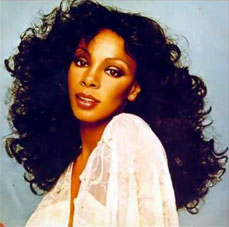
stay after (donna) summer

http://www.nndb.com/people/091/000023022/ds2-sized.jpghttp://rugdkialekvart.blog.hu/media/image/margaret2.jpg
from disco to disco

7 FEBRUARY 2007
Summer, the sole bartender at the M Room (formerly Manhattan Room) late on this post-concert Wednesday night, saunters over and introduces herself... "Welcome to my bar!" she smiles. She's around my age, probably a few years older (but I tend to think that about everybody), and her bright yellow T-shirt is emblazoned with the words "DISCO STILL SUCKS."

The touch-screen cash register behind her has been running a screensaver consisting of feebly witty faux-aphorisms. Summer's iPod, plugged into her bar's sound system, has been playing an unobtrusive mix of mostly classic rock and soul, pitched at roughly 20% hipster-irony, %80 earnest borrowed-nostalgia goodvibes: "I Put a Spell On You" (Screamin' Jay Hawkins, not CCR - though we'd been hearing them earlier in the evening at Johnny Brenda's) and Al Green, but also here and there the likes of I want to say Journey. Finally I engage her in conversation about the slogan on her shirt: "Do you really think so?" I ask. "I'm pretty sure disco doesn't suck anymore."

She demurs. It turns out she's wearing the shirt not so much to broadcast her opinion as to pay homage to a dude, back when she was growing up in New Jersey, at a gas station, who used to sell them smokes even though they were underage, and wore the same DISCO SUCKS T-shirt every day, so she says. Well okay. Summer does admit that she likes some ABBA songs and occasionally puts them on at the bar when she feels like dancing.

well anyway. this post has been in the works for well over five months now, and it just gets more and more relevant by the day, as i've finally removed the shrinkwrap from the copy of donna summer's bad girls album [deluxe edition] that i'd been sitting on for while... for some reason, this is the continuation of the genrephilia series stemming from my valentine's podcast. it's supposed to be about disco but the song in question is actually
3 i'm gonna stay after summer ♥ margaret berger
[and since that link is gonna be annoying, here's an actual mp3 of the song for your delectation]

which isn't exactly a disco song, really, unless you consider all dance-pop to be disco - more on which later. it's not actually a summer love song either - in fact it's the perfect post-summer lovesong ("the winter is cold and cruel/i want to be warm with you") so it really ought to have been on this mix, nevermind that marble is already hogging the most featured track.

marble - which i just figured out is what she's saying her name is on the intro, mostly thanks to these stylish 'spacers (nice subtle "robot song" remix too) - has however been crowned the "new queen of disco" by none other than wm. b. swygart. that's mostly on the basis of
"samantha" and "will you remember me tomorrow", the latter of which is in the running for my favorite track on the album. those are definitely disco - they have not only the four-on-the-floor drum pulse, but also those woozy upbeat swells betwixt - but, especially in the context of the eclectish album, you'd hardly notice, since that's just one of many flavor lectropop flavors these days.

whoa, is this interview for real?

and now i have nearly exhausted all of the margaret berger-related links i can muster, except! that i may have finally found a way to order her album
, which if i can do it will mean finally owning my top whatever favorite records of last year. i'll try to puzzle my way through the japanese later and let you know.

but... i didn't really come here to talk about margaret berger, love her to bits though i do. this is about disco. and whether, or not, it still sucks. still, i say, because i have to admit that it definitely used to pretty much suck. before poptimism and conscientious generalism and political-correctness and the disavowal of guilty pleasures and even before guilty pleasures (and guilty whitestraightmaleness?) themselves, there was "celebration" and "we are family" and especially fricking "Y.M.C.A." - and its fricking idiotic dance - and i heard them all the time (mostly, i want to say, at bar mitzvah parties and summer camp dances) and i really rather despised them. and it wasn't even (consciously) because i'd encountered received wisdom about disco's suckitude; i'd just heard them way too many times and was bored and annoyed.

and i pretty much still feel that way about those songs (kylie's cover of "celebration" has redeemed it to some extent, but jordan pruitt's has not done same for "we are family," and i still have nothing particularly kind to say about the village people. or "i will survive.") which is pretty unusual, because there really aren't that many songs i feel very strongly negative about. i feel like those songs (and a small handful of others) serve almost as shorthand for the whole notion of 'disco' in the minds of many people (americans, anyway) (including mine) - which is also pretty unusual; i'm struggling to think of other entire genres that are so simply and widely represented (albeit imprecisely) by a few standard tracks. now, i don't really remember specifically proclaiming a distaste for disco (as i certainly did for hip-hop and - for a good while longer - country), but i've also had pretty much no interest, until fairly recently, in attempting to actually listen to or learn something about the genre outside of the standard tunes featured on a zillion disco compilation cds - just for instance, i don't think i've ever really heard the saturday night fever soundtrack. i just...never really thought about it as music worth caring about.

which is kind of funny considering my torrid love affair with unabashedly disco-indebted late '90s french house - and, particularly, dimitri from paris' 2000 disco mix album a night at the playboy mansion [which draws equally from '78-'80 and '98-'00, and nobody would never notice the difference.] it has of course become blindingly obvious that disco is and was incredibly important and is in fact well worth checking out for historical reasons of nothing else, but also that it is the genesis of most or maybe all electronica and dance-pop and possibly every other kind of dance music as we know it, including contemporary r&b and hip-hop. disco never really died, though certain people did a very good job of making it seem like it had - and very likely it never really sucked.
Why...did "funkateers and feminists, progressives and puritans, rockers and reactionaries" band together in an "unholy alliance" against disco, destroying "the last remaining musical scene that was in any sense racially mixed" ...a scene that made crossover stars of women, African-Americans and gay men?
that question - which is paraphrased in a publisher's weekly review reprinted on amazon of a book i think i might like to read, and whose author i just might like to study with, as banal as his book titles may be - is essentially another way of asking "why did disco suck," and it contains its own implicit and unappetizing answer, which is a pretty damn pertinent one that i'm kind of amazed i never really thought consciously about before (not that werner is the first person to have suggested it.) but there are several other answers which might be equally or perhaps even more apt - which mostly involve the behavior of money-hungry record companies - on the one hand, capitalizing on a quickly overexposed trend and running it into the ground; on the other, protecting their interests (as purveyors of rock music) by hastening the death of music they saw as "dipping into their pockets" (as gloria gaynor puts it in this awesome video)

none of these answers, i might point out, has very much to do with music.

as i typically understand it, punk was pretty disparaging of most of the music going on around and just before it, in the mid-late 70s - arena rock, prog, california songwritery stuff, most certainly disco - as excessive, bloated, artificial, sentimentalized, inauthentic, etc.; and since punk was effectively the originary moment for the prevailing ethos of self-professed "serious music fans" up into the indieocracy of the almost-present and recent past, those perspectives and prejudices have been passed down and perpetuated - which, as nate patrin discussed in his emp paper from last year - has meant ignoring and dismissing a lot of quite interesting things that were going on at that point. disco in particular feels in a lot of ways like the antithesis of punk, and its status as anathema has taken a long time to wear down. (probably because - as werner points out - disco was hated equally by many different sectors of society.)

it may be having the last laugh though. that disco never really died - something that i already knew on some levels - clicked for me in a new way recently, when i did a dj set stringing together, among other things, songs by justin timberlake, chic, paris hilton (the "grease"-sampling "i want you"), and one of morgan geist's canuck-italo 'unclassics.' [you can hear something like it towards the end of my published-in-progress "love is the dancer" mix.]

in the world as a whole, it might have never even sort of died - it's just in america, the site of the backlash, that "disco" [the name] became a dirty word, and disco [the style] was forced to go (back) underground, or at least in disguise, at least for a little while. (though even in punk circles that didn't last long; consider the recently celebrated forebears of the "disco-punk revival.") just in terminological terms i wonder whether, if not for the backlash, we would now understand the category "disco" to be as broad and stylistically varied as "rock," and accordingly conceive of it as an entire genus in its own right, as opposed to the motley assortment of styles we now call "dance" and scurry to imprecisely classify under the umbrellas of rock, pop, electronica, r&b, and so forth. it seems to me that the dance club music originating in the mid-70s, bred from elements of funk, soul, pop, rock, and early electronic music, but with a new and streamlined attitude and intent, constitutes a substantially new idea, in its own right, much as the birth of rock [and roll] in the late fifties, out of a similar stew of styles, is so readily discussed as a watershed event.

and that idea's still with us, obviously - probably in a more meaningful and evident way than rock itself - but (because of the backlash, i'm proposing) we just call it dance music, or pop/r&amp;amp;amp;amp;amp;amp;b, or we don't really know what to call it; and "disco" mostly means kool & the gang, instead of meaning most of the kinds of music that are most popular all over the world. (except hip-hop, which is certainly its own thing, and a new idea, as well, though probably one with less stylistic breadth.) there's something to be said for limiting the musical concept of disco to stuff with (the genre's most defining feature) a pronounced 4/4 thump - but even allowing for that you've still got an incredible amount of widely varied music.

indeed, i have the sense that there's a whole vast unexplored world of funk and disco music from the '70s and '80s which, in the wake of "disco sucks," were probably ignored by most people (especially, perhaps, white people?), and which i have (therefore) been almost entirely ignorant for my entire voracious-music-devouring life. consider, for instance, these two mp3s, which are songs that were sampled by daft punk. i felt funny about discovering these samples, and more generally the rather heavy dependence of daft punk and fellow french touch folks on samples from this era. (looking through the liners notes of my copy of crydamoure's waves compilation, for instance, almost every cut features a seemingly vintage sample.)

it's not so much that i have a problem with the sampling per se, or that it calls daft punk's musical genius and artistic integrity into question for me, but there's something a little backhanded about sampling these tracks and serving them up to an audience that, by and large, are probably not going to realize they're samples, because they're probably not going to recognize the originals. not that samples should necessarily be self-evident as samples (though it's cool when they are - when, even if you don't know the source, you can recognize some element of a tracks as clearly sampled, but it still works in the context of a track), but if it's being presented sonically as of a piece with the track as a whole, i'd feel better about it if i thought that most listeners wouldn't just assume it was original work. of course that's making an assumption about the audience - i'm sure there are some dedicated and older club music fans who enjoy picking out their favorites as reworked and interpolated by the french house folks. and you could certainly argue that drawing on these older tracks helps to establish and celebrate a lineage of disco/dance music which many listeners (though increasingly fewer, i think) might try to deny or ignore.

well. there are many different directions to go with this, and i've started to outline a couple of them. along the lines of the above, there's the mystery of italo, which like "disco" itself seems to have a range of varyingly specific definitions. i recently picked up two cerrone albums and giorgio's from here to eternity and am enjoying them all a good deal - further comment at some point perhaps.

so there you go: let's talk about disco. i've know for a while now that i would need to investigate disco, if only because it's the obvious connecting middle point between soul and dance-pop, two of my current strongest reference points and the two genres i have often declared it my musicographical goal to situate on a common continuum. that that continuum is disco seems so completely obvious in retrospect that i'm not really sure what i was doing wondering about it for so long. i think i've had enough residual distrust that it took some whittling away at both ends [following the later careers of several soul singers into the disco era, plotting the steps of the slippery slope where soul gave way to something slicker - and occasionally falling over the edge myself, and not entirely minding; on the other end, tracing swedish and teenish synthpop back through the '90s and '80s through a spotty, pointillist tour of eurobosh, pet shop boys, freestyle, synthpop mk. 1, and assorted new wave oddities. meanwhile, the present climate of microhouse, dancepunk, robocrunk, electro-touch, etc. keeps on hammering away and away, in 4/4 time, at the disco foundations of it all, and everything's increasingly harder to ignore, even as i'm for the moment losing some of my grip on the two-way cutting edge.]

basically most of what i've done so far with all this stuff (disco, proto-disco, post-backlash confusion, and the diasporic profusion) is attempt to get myself roughly situated. i have a lot of getting acquainted to do, and it's gonna take a long time to really feel like i have a handle on it - assuming i don't lose interest first. it really does feel like a whole new world to explore. major gaps in my dance-music knowledge between 1969-1996 that i either didn't recognize or didn't care about before. so that's what's up.

p.s.: h/t to my friend david (not that friend david, a different friend david) for pointing out that my other friend david, who did some 'research' into this stuff a couple years ago, expressed a similar sentiment about the underlying reasons for the disco backlash:
"These self-proclaimed music critics often stated that what bothered them was that these songs were made by machines (they often were, and proudly so) and therefore lacked sincerity or realness. I think what they were really afraid of was the fact that many of these songs emanated from a mostly Black and often gay subculture — a combination which was so unimaginably scary that its musical representation simply had to be fought off at all costs.
well said, and i also really like his list of tunes - i should check out most of them; i like the ones that i know (a bunch of them are on the the pure funk compilation, which is interesting.)

12 March 2007

so, soul...

[or: "talkin' loud, sayin' nothing"]

one of the great things about soul music is there's not that much you can say about it. well that's not true. there's not much that needs to be said about it, maybe - at least anymore. or how about: whatever there is you might say about it, it's gonna pale mightily compared to what can be conveyed by the music itself. hm hm...well, better not try to talk about it too much, because you're gonna end up tripping over your words.

yeah, setting it up as anti-intellectual like this has this uncomfortably essentialist twinge, but...there's something there to do with its purpose, and its power, no? (soul has a massively complicated relationship with Otherness - on one level it's fundamentally antithetical to it - predicated on a universal commonality of emotion - but, at least in the current cultural/historical moment, it seems almost to be defined by its relation to an absent place and time - it can never be fully and unambiguously Present. so there's a lot to be said there, but little likelihood it'd help matters much.)

i guess it'll go without saying (see) that Soul is a superword, which more or less means it can't be defined (and don't ask me what a superword is, either - the best definition i can fully get my head around is something like "genre descriptor.") but, and this is maybe what i was (not) saying before - it's obvious when you hear it. i mean, we all know what soul sounds like (and so, we don't need to talk about that.) that's because, in part, it's a style with highly specified parameters. which might be another way of saying it all sounds the same. (which is true, i think - and i don't think that's a bad thing nor does it stop me from seeking out more and more of it.)

which, again, points to why there's not much to say about it. isn't it telling that i've gotten this far without mention any specific examples of artists or songs? i don't know whether that supports or undercuts (or both?) this little argument i'm having (with myself) - is it intellectual laziness on my part, or just endemic to the topic? it seems to me that when folks mention specific songs and artists in the context of a discussion of soul they're either using them as placeholders - arbitrary examples (and always the same ones too - aretha, marvin, otis, james) standing in for the genre as a whole - or something comparable but slightly more nuanced (as in the the fairly well rehearsed topic of regional stylistic differences, wherein the entire output of certain labels - stax, motown, philly international - are treated as more or less interchangeable and homogenous wholes.) or else they're getting really specific about the music (comparing the vocal approaches of different singers, for instance), which is sort of a different level of discussion from what i'm primarily concerned with here.

not that any of these things is bad, necessarily. i'm just making observations here.

so, i'm obligated (says me) to write about soul (as much as i'd really rather not) and/or specifically about

4 i got you babe Y etta james

which as everyone knows is actually a groundhog day song, and not a valentine's day song. but it's both a fun cover and pretty darn great in its own right, and besides i just had to choose any old soul song to represent the genre as a whole, and more or less any one would do, since they're all about love anyway. (well, i wanted one about happy love, which is always a taller order.)

seriously, etta's tell mama: the complete muscle shoals sessions, in addition to appealing to both the albumist and the completist in me [it's a genuine original album, plus over an album's worth of equally-stellar bonus tracks, and it's her entire muscle shoals output, as the title indicates, all on one cd] is perhaps the biggest revelation (so far) in my recent and ongoing soul binge. (a.k.a. building a reasonable proper library of the essentials.) i put it on s/r/s'd with elvis' get happy!! while stirrin' up some fry a while back, and it just blew me away... it's dynamic, fiery, fun, funny (check out "mother-in-law"), funky (even the ballads, somehow, not to say they're not heartfelt too), top-notch from start to finish: i would recommend it to anybody without hesitation. (anybody with an interest in soul music, that is - but who isn't these days?)

but i don't have much more to say about it - i couldn't really convey anything about what makes it great, but it would all become immediately apparent on listening to it - i'd be left musing about how so many of its tracks overlap with the (also awesome) clarence carter comp i got around the same time, and you just wouldn't be interested. is there something that makes this particular album so damn RFG, beyond the standard RFG-ness of vintage southern soul? maybe so, but it's probably nothing that mysterious, or at least nothing that could be mystified without a lot of painstaking attention to subtle detail. (you know: the songwriting, the singing, the arrangements, the playing. the remastering probably helps too.)

~~~~

hold on. just realized: i think i meant that there's not much to say about soul music in and of itself. but of course there are things to say about it, in contexts. and what seems relevant in particular is soul in the context of music, c. 2007. and specifically this notion that's floating around about soul revival(ism?) which is what my EMP proposal was about, of course. and, i did say that i would (or not) try to write about that stuff here since my paper wasn't accepted.

i noticed that not many of the papers that were accepted are about soul (there are a handful, but any fewer would really raise my eyebrows), and almost none (as far as i can tell/remember) of them have do with revivalism - certainly not soul revivalism. which is actually kind of surprising to me, because it's a perfect topic for the theme of the con, and an extremely timely one as well.

or has its time passed? - when there's a new york times sunday feature about it, does that mean the "pontificating about what's going on with all of this soul stuff" phenomenon has jumped the shark? no i don't really think so either. even though i am very late (it's my wont!) in getting around to mentioning it. pretty interesting article, though probably less for what it says than how it says it. here, have a link where you can actually read it. (thanks 'net!)

the first four or five grafs are nothing but a laundry list of different ways and places that soul has popping up in the cultural landscape of late (dreamgirls, james brown tributes, stax @ 50, candi, bettye, kanye, cat power, etc. etc.) i'd say lumping beyonce and mary j. blige (?) in with this still-rather-dubious "trend" is a bit of a stretch (on the basis of one sample on b's album?), but not as much gnarls barkley. (really now...not getting into it now, but i could if you like)

so, there's all of this stuff. but it's so disparate (and aimed at so many different groups of people) that it's hard to really call it a movement, or even a phenomenon. quoth craig werner: “It’s coming out of the hip-hop world. It’s coming out of the R&B world. You’re hearing it in pop music too. No matter which vector you’re following, you’re winding up with soul music.”

well ok. i'm not entirely convinced by this largely circumstantial evidence (or by the several paragraphs devoted to the alleged soul connections of current grammy-nominated songs and artists.) could it be enough just to say 'soul happens to be "in" these days' and leave it at that? (but in for whom? the demographics of the resurgence are still pretty mysterious to me: who's going to see bettye lavette; who's watching dreamgirls; who's listening to ghostface and cat power - are they all the same people, and if so are they conscious of these things being related?) there are all kinds of things going on all the time in cultureland, and it's easy enough to pick and choose where you're focusing... anyway, assuming this is a coherent phenomenon, is there any explanation for this sudden confluence? oh yeah.

three more quotes:

“People have been fed prefab music for so long that it’s starting to resonate with them that it’s not real” [Doyle Davis]

“Electronica came along and gave soul to the machines, but now people are coming back and saying they want real soul played by real musicians,” Mr. [Matt] Abels said. “People want that smoky feel again.”

“People want something that sounds authentic, which I think to them means something that’s not being designed, something that’s not being distanced by advertising images or forced into a mode,” he [Werner again] said. “I hear that from my students all the time. They hate anything that sounds mechanical or processed. They feel like there’s an immediate response to experience in soul music. They hear it and say, ‘Yeah, that’s what’s adding the flavor to the hip-hop cuts.’ ”
okay, yuck. so here's where the article really gets my goat. setting aside (for a second) the kneejerk "prefab" headache...why does the emergence of one thing have to explained fundamentally in terms of the rejection of something else? can't soul music simply be great (and deservedly popular, if it is indeed actually "popular") without it being the more "real" and "authentic" alternative to some other music that must therefore be disparaged? [is "authentic" even allowed in the dictionary any more without scare quotes?]

does this explanation even make sense? people are giving up on electronica (which last i checked wasn't actually that popular in america - although i do like the notion of it being 'soul as played by machines') and mainstream pop (er, implicitly), and instead listening to, um, john legend (and christina aguilera)? how are dreamgirls and gnarls barkley and, sure, candi's astralwerks comeback and bettye's on anti- (oh man that label name is so fraught) not "designed" or complicated by advertising images? and i happen to know that not all of craig werner's students "hate anything that sounds mechanical or processed" - i'd wager most of them don't - because i heard one of them waxing rhapsodic about the pussy cat dolls and passionately arguing that britney and ashlee deserve the same props as the crystals and betty everett (hey charles, hit me up sometime!)

meanwhile, it's not just pop and electronica that's taking the fall here - the "experts" get in their smug indie digs too, on the weird and contentious grounds that rock and folk concerts are boring and lifeless, unlike soul performances (which have tended, historically speaking, to be polished, "sophisticated," revue-style affairs, putative rawly emotive content notwithstanding):
“People love the messiness of live music,” Mr. Werner said. “They love that sense that the players are actually listening to each other and that everything’s not all preplanned.”

For Mr. Davis, “It’s not the same as seeing the latest buzz-band rock band come and perform their album that just got a rave on Pitchfork.”

“You see the indie-rock kids who, if they were at the Sufjan Stevens or Iron & Wine show, would be completely reverent, stroking their beards or whatever, and here they are dancing with giant grins on their faces,” he continued. “I call those epiphanous musical moments. When you go see Bettye LaVette, you have that.”
blech. well, i can attest to having danced with a giant grin at a sufjan show, right along with the dancing grinning cheerleading illinoisemakers on stage. eh, i don't think i'm going to dignify this obvious snidery with further response. (though i would definitely really like to see bettye's live show, which from the description in the article sounds a lot more exciting than her decidedly subdued album.)

okay, i get that these folks are just being typically shortsighted, prejudiced people, of the sort that are routinely considered reasonable, and i shouldn't hold them accountable for such commonplace snobbery. i also get that there's some relevant truth to their confused rhetoric - the "rejection" notion is a red herring, and it's not about a logical pattern of listening choices conforming to an easily discernable trend - i'd say it's not even about the sound of the music so much (remember, it's happening in a wide range of genres), but there is something about the soul impulse, as these folks lay it out - earnestness, humanity, passion, and sure, authenticity. which isn't too hard to link back to that whole death of irony business (can you believe it's been six and a half years? do you miss irony yet?) it just so happens that i find these qualities in plenty of pop and techno and indie rock - in fact, couldn't one say that these are things that most or all "good music" strives for? and soul just has an unfair advantage, being preternaturally predisposed to raw, emotional potency?

(which doesn't mean that you can access that potency just by sampling it or 'sonically alluding to it' [a lá gnarls, i guess], but you can try, and maybe fool some people - or you can at least remind them of soulfulness without actually achieving it.)

[at the end of the article, a Michael Gray offers a more concrete, less romanticized explanation for the trend: “What’s changed is what’s happening in the culture and the music industry. Platforms are being created to promote these artists.”]

interestingly, the article fails to mention the two artists that i consider to be doing the most exciting things with soul these days: sharon jones - whose concerts feel like actual small-scale revivals, in the old-timey religious sense - and jamie lidell, who's been more ambitious and successful than anyone i can think of at creating something truly new that still retains that evanescent soul impulse. i can see how jamie's steez is too actually musically innovative for the nytimes, but i'd say it's borderline inexcusable for them not to mention sharon/daptone at all.

a recent philly weekly article about the "giddy white men" phenomenon does mention sharon, in passing. (i'm guessing writer craig lindsay didn't draft that silly subtitle - the copy editors nabbed it from this line - "I eventually let my colleague borrow the album; I haven’t seen a white man that giddy about getting some soul in his life since David Bowie married Iman" - which is the second bowie marriage reference in two posts, for those keeping score.) mostly the article focuses on the wave of reissues from the likes of stones throw, ubiquity, numero group, and daptone, along with o-dubs' "soul sides" comp and the like - which is another aspect of the phenomenon that has a bit for relevance for me.

actually, it's been interesting trying to be a record collector/librarian with completist tendencies amidst all of this. with a new "undiscovered classic" being hyped and rediscovered seemingly every other week, one gets the sense that the soul canon is possibly in the midst of a shaking-up and reappraisal. time's gonna have to tell on that one - but it's possible that a few years down the line candi staton, for instance, will be seen as a more important and central figure than she was a few years back.

anyway, i've been trying to keep abreast of current reissues to some extent, but lately i've been more concerned with building a solid collection of the truly canonical stuff, both to have that frame of reference, and also because there's plenty of great stuff there that's not getting much attention these days. in fact, a number of the supposed greats (according to the likes of peter guralnick are still relatively underanthologized on cd) - especially the goldwax folks (james carr, o.v. wright.) i've been using the discography in the back of guralnick's book and, so far, mostly going with what's available cheaply through bmg and half (including a lot of rhino/atco reissues of stax and atlantic stuff.)

i've been held up actually reading the book because i wanted to more have the music in place to listen to alongside - i'd gotten as far as the sam cooke chapter and then paused, since i felt ray charles greatest hits cd wasn't enough to accompany the 50+ pages on him. but now that ray box set has finally arrived, so i'm ready to proceed. from there it'll be smooth sailing on into solomon burke and then stax and muscle shoals heydays...so i'll let you know how it goes.