well, speaking of nosaj thing, that review i linked to is nearly nine months old at this point, and i have fallen way behind in my amg review rounding-up. no wonder, looks like i only did five last calendar year. my project for the month of february is to write a record-review-a-day (falling behind there too: only 15 for the first 24 days, though it's actually 27 if you count all publish-able pieces of writing – bios and cp previews – so that's not too shabby – or alternately it's only 18 days if you don't count the weekends, fewer for snow days and holidays...) but i thought as a corollary to that i could get up-to-date on these round-ups. so, here's one.
in something like ascending order of mellowness:
 Nosaj Thing: bio and Drift review
California has long been a prime breeding ground for instrumental hip-hop, from DJ Shadow's pioneering work in the form through Madlib's tireless explorations and iterations, and that's never been more true than in the late 2000s, as a cresting wave of interest in the work of the late J Dilla helped to spark something of a stylistic resurgence, while a handful of Los Angeles-based producers coalesced into a recognizable local scene centered around the venue Low End Theory. That scene's first prominent breakout star was Steve Ellison, aka Flying Lotus, who earned widespread notice with his 2008 Warp debut Los Angeles, but 24-year-old Jason Chung (Nosaj Thing) followed shortly thereafter, dropping his aptly named LP, Drift, the subsequent spring. As with FlyLo's work, Nosaj pushes well beyond the customary bounds of hip-hop into glitchy IDM, ambient, and even dubstep territory, foregrounding highly abstract electronic textures more reminiscent of artists like Prefuse 73, Aphex Twin, and Burial than the beatmakers referenced above, with hip-hop's rhythmic drive never entirely absent but often reduced to a spare, skeletal framework. But despite some clear stylistic parallels, Drift is a notably more austere, measured work that feels classically restrained in comparison to the fragmentary, static-soaked clutter of Los Angeles. With a distinctive sonic palette of muted squelchy synths, wordless vocals, and largely inorganic-sounding percussion, the album is curiously playful in spite of its somber, almost funereal tone, as it floats from the airy twinkles and reverberant handclaps of the opening "Quest" to the denser, menacingly murky electro-funk of "Coat of Arms" and the sinuous "1685/Bach." The album's latter half takes on an unexpectedly spiritual cast, partially due to Nosaj's use of decidedly churchy, organ-like textures. Though brooding, minor-key tonality and middle-range tempos remain dominant nearly throughout, the brief, nearly beatless "2222" and hazily serene "Us" introduce a welcome note of warmth and reassurance, before the murmurs and heartbeats of "Voices" usher in "Lords"' climactic, doom-laden choral fantasia. It's quite a stunning sequence, and evidence of the breadth of Nosaj Thing's compositional prowess, which extends from a fine ear for minute detail to a rare sense of album-length sweep.
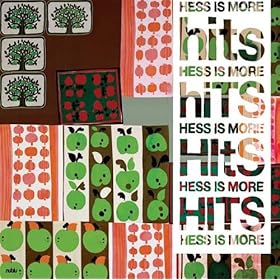 Hess is More: bio and Hits review
An impish musical humorist -- though by no means a novelty artist -- Mikkel Hess makes his U.S. bow with this career retrospective, drawn from his three albums and a couple of singles, whose very title, though seemingly straightforward, comes off as somewhat smirking: he may have reached number 11 in his native Denmark with the perky instrumental "Ssshhhh," but he's still hardly anyone's idea of a hitmaker. The most striking and memorable thing here is probably the occasionally anthologized "Yes Boss," a provocative curiosity that manages to be at once droll, seductive, and unsettling: over a sultry, percolating electronic groove, punctuated with torpid, dub-inflected brass outbursts, a deadpan Hess conducts an enigmatic but sordid-seeming "job interview" with vocalist Bang Chau, who responds in lush and suggestively breathy harmonies. It's a fantastic and fascinating track, equally effective as a work of conceptual comedy and an alluring piece of music. Though it takes an entirely different approach, the goofy, hooky electro-pop jingle "The Magic Invention from the Divine Business Research Center" similarly satisfies on multiple levels. Most of the collection's other vocally based inclusions fall somewhat short of these highlights, either because their humor is a bit too one-note (as on the cabaret-style waltz "In the Fridge," which grows a bit stale despite a delightfully hammy R&B turn from the incomparable Dean Bowman) or simply because the music overshadows the lyrical content. But Hess' considerable compositional and production abilities are on display throughout, from the jokey, meandering house pastiche "Would Would You Like to Disco" to the beguiling "Piano Waltz" (not actually a waltz, but rather an oddly fluid conglomeration of a haunting, lopsided piano figure with a reggae-ish bass groove, assorted percussion fragments, and other unexpected sounds). Oddly enough, the instrumental and near-instrumental selections tend to be just as humorous, and certainly just as quirky, as the tracks with lyrics, employing a skewed, lightheartedly kitschy sensibility (making prominent use of whistling, for instance) that calls to mind the work of Arling & Cameron and child-minded musical cartoonists like Plone, Komeda, isan, and Norway's Toy. That said, Hess is very much a distinct individual, and Hits offers a highly enjoyable glimpse into his idiosyncratic world.
 Meanderthals: bio
and
Desire Lines review
Desire lines are undesignated paths created by foot-traffic erosion simply because they're where people want to go. Desire Lines walks -- strolls, ambles, struts (occasionally), and yes, meanders -- down well-trodden and welcoming musical trailways, toward no destination in particular, just for the simple pleasures of the journey. The routes are familiar and instinctually inviting, even if the signage is vague and imprecise: dub, psychedelic, downtempo, ambient, post-rock, folk, with occasional spur trails pointed toward the Tropics, or the discotheque, or into outer space. (Because Meanderthals are a triumvirate of dance producers, the road map reads "electronica," even if most of the sounds come from instruments being played in a room -- an Oslo studio to be specific -- during a handful of loosely convened live recording sessions.) The clearest, newest-looking signpost is marked "Balearic Disco," and indeed, mirrored shards of diasporic disco fallout are littered liberally along the way, though rarely are they spiky enough to spur feet into action. Mostly we glide by, basking in the sun-drenched acoustic strums and steel-pan patters of "Kunst or Ars," wallowing in the murky bass and intoxicating haze of "1-800-288-Slam," lingering amid the languid pulse and pianistic ruminations of "Bugges of Room." Fussless and fluid, loose but never lazy, Desire Lines is another fine feather in the caps of Rune Lindbaek and Idjut Boys, who now take their place alongside fellow travelers Studio, Hatchback, and Quiet Village as creators of some of the finest, hippest, and coolest chillout music of the late 2000s.
 Nite Jewel: bio
and
Good Evening review
The home recording project of an L.A.-based multimedia artist/philosophy student who wields an eight-track cassette recorder and cites freestyle divas Lisa Lisa and Debbie Deb as among her primary influences, Nite Jewel's effectively self-released debut album holds the potential to be many things, few of them particularly promising: dryly intellectual, artily indulgent, self-consciously ironic, vapidly modish, unlistenably amateurish. Indeed, it can be a bit off-puttingly stuffy, with an occasionally discernible whiff of pretension that may incline some more critical-minded and discriminating listeners to dismiss it out of hand, and its production values are undeniably negligible, but taken on its own terms
Good Evening is a good deal more singular, intriguing, and difficult to characterize than one might initially suspect. A perplexing conflation of rudimentary electronic dance-pop with wobbly lo-fi experimentalism, it lacks the energy and melodic distinctiveness to be effective as either pop or dance, but it works quite nicely as mood music, maintaining a similarly beguiling, woozy atmosphere across its ten tracks. Ramona Gonzalez's analog synthesizers and high, swooning vocals, swathed in tape hiss and bleary-eyed reverb, offer a warmth and tenderness that are largely absent from her darker, moodier cohorts in the Italians Do It Better camp, and though she may have all the right '80s signifiers in place to evoke that label's achingly stylish post-disco mode, there's something guilelessly genuine and personable about her approach, knowing as it may be. (The inimitable, idiosyncratic Arthur Russell has been tossed around as a reference point, and while she can't measure up to his uncanny appeal, it's a surprisingly relevant comparison in terms of both sonics and overall effect.)
Good Evening's weakest point, aside from the non-issue of its non-danceability, is its songs: as an undifferentiated half-hour mass they're perfectly fine, but apart from the meekly melodic "Artificial Intelligence " and a wormy synth line or two on "What Did He Say," nary a hook pokes out from the haze, and not simply because Gonzalez keeps her vocals smothered and distant. So it's a welcome change of pace when the album concludes with a cover of Roxy Music's "Lover," which might qualify as the album's best track simply by dint of having a perceptible tune and structure.
 Infantjoy: With
review
Infantjoy's
With is part appendix, part follow-up to the duo's well-praised debut,
Where the Night Goes, featuring several remixes of that album's tracks (variably referred to as "revisions," "reflections," and "adjustments") and several new original pieces that were apparently inspired by these reworked versions. In any case, it's a companion piece that also stands well enough on its own, a fluid whole ably inhabiting an elegant, cinematically ambient space, with only one truly jarring disruption. The new tracks are largely effective mood pieces, taking up the first album's Erik Satie fixation in their gently musing piano lines but introducing a darker undercurrent of anxiety and urgency in their rhythms and intermittent electronic bleeps. The subtle but pervasive eeriness fits into the album's vague preoccupation with ghosts and spirits, as evidenced by Paul Morley's spoken ruminations on the supernatural in "A Haunted Space" and "Absence" and the Sarah Nixey-sung cover of Japan's "Ghosts" (reprised here in a hovering, skeletal remix by Populous). While generally in keeping with the prevailing mood, the reworkings (which are interspersed throughout the running order) tend to stand somewhat more apart from the pack, both for better -- isan's typically glistening take on "Composure," which they've liberally sprinkled with flittering shards of crystal, and Tunng's application of folksy pluckings and queerly muttered interjections to the closing "Arrival" -- and for worse -- Handshake's mix of "Someone," which sounds haunted all right, but in a violent, glitchified way (at least relative to its surroundings). It's not an unmitigated assault, but it definitely feels disconcerting and somewhat baffling in this context, and (perhaps along with the nifty but decidedly beat-driven Lodge remix "Exposure") prevents
With from functioning as a fully cohesive ambient work. Program out that track and you've got a smooth, intriguing, and decidedly pleasurable journey.
 Dntel: Early Works For Me If It Works For You
,
Something Always Goes Wrong,
Early Works For Me If It Works For You II, and
This Is The Dream of Evan and Chan EP reviews
From the glitchy, careening beats and hauntingly melodic synth flutters of
Early Works for Me If It Works for You's striking opener "Loneliness Is Having No One to Miss," it's clear that Jimmy Tamborello, in this early phase of his electronica career, was taking his cues from the towering British figures at the forefront of 1990s IDM: Autechre, Aphex Twin, µ-ziq, and so on. At the same time, perhaps ascribable to his Californian context or his emo bass-playing background, his tracks lack the distancing austerity and arty abrasiveness that mark much of those artists' work, instead embodying, in embryonic form, the elements that would become hallmarks of later Dntel releases: an understated melodic sweetness, hazy, dreamlike textures, and above all an undeniably human, organic warmth. These qualities tend to be somewhat overshadowed here by playfully fidgety beat programming, which doesn't necessarily play at cross-purposes so much as it forms a striking counterpoint to the underlying moodiness, with results that aren't nearly as meandering and restless as they may seem at first. A superb aural research project from a student of the abstract electronic greats, and a fine start to an enjoyably inventive career.
 Susumu Yokota: Mother
review [plus others
here]
The 2000s were a staggeringly productive period for Susumu Yokota. Starting off the decade by releasing one of his most gorgeous and enduring works, the majestically serene
Sakura, he continued issuing albums at a rate of more than one per year, the majority of them forming a loose series of kindred but conceptually distinct explorations of similarly organic, generally hushed musical territory. As the decade drew to a close, the ever-industrious producer came up with yet another way to traverse that same terrain with
Mother, his fifth release on Lo. It's not too much of a shakeup from his recent ways of doing things: for one thing, much of it continues his subtle preoccupation with triple-meter time signatures; for another, like much of his late-2000s output, it's an album of collaborations with vocalists, among them his Lo/Leaf labelmates Nancy Elizabeth, Casper Clausen of Efterklang, and Claire Hope and Panos Ghikas of the Chap, as well as Japanese singer Kaori and Yokota's frequent partner Caroline Ross. But despite being perhaps his most vocal-based and song-oriented record to date, it's also perhaps his calmest, most fully ambient outing since
Sakura. Some tracks feel more than others like proper fully formed songs: the loungy bossa-like opener "Love Tendrilises," the Chap's subdued but typically curious "Tree Surgeon," and Nancy Elizabeth's "A Flower White," whose reliance on a looped acoustic guitar figure makes it one of the more pedestrian things here. But even on these more vocally overt pieces, Yokota's focus on texture and utterly relaxed pacing tends to eclipse the centrality of melody or compositional structure, making for a masterful sympathetic fusion of song and ambience. And without taking anything away from the fine contributions of his collaborators,
Mother's most satisfying moments are those where the vocals are most fully subsumed into Yokota's hazy, limpid sonic meanderings, becoming just one textural strand among many. The album closes with its only fully instrumental piece, a Harold Budd-like solo piano meditation that resonates marvelously in its simplicity, in the way that even a fully enjoyable evening of socializing can make a later moment of solitude feel infinitely precious.
 King of Woolworths: Rediffusion
review
Jon Brooks' third album as King of Woolworths finds him continuing to explore his fascinations with vintage film soundtracks and library music, analog synths, and 1960s lounge exotica. The lovingly crafted and unfailingly pleasant results are reminiscent of similarly inspired acts like Air and Stereolab, and of fellow downtempo electronica artists like Lemon Jelly and Boards of Canada. That may make Brooks seem like an imitator of already derivative artists, but he clearly has a flair for the material and his own remarkably authentic approach to it, as well as a knack for sweet if forgettable melodies. Although whooshes and burbles and all manner of grainy synth textures abound, he tends to downplay any electronic elements that sound more recent than the mid-'70s. Only a few tracks ("Big Sur" and the mildly menacing "Yellow World") have beats big enough to overtly reference dance-based electronic forms (most notably trip-hop), while much of the album, starting with the lovely two-part clarinet-led opener "Coccolo," is almost wholly organic in feel, if not in substance, hitting many of the primary reference points (vibraphones, harpsichords, wordless vocals, lush string orchestration, Latin percussion) of his target styles without seeming especially corny or gimmicky. In all, an enjoyably chilled-out and cohesive effort. "The Loner" is a cover of the theme to the 1970s British TV series Budgie.
 various artists: Teaism
review
A compilation album celebrating the "art and culture" of tea? Leave it to the quaint, whimsical Brits at Static Caravan records to come up with such a quaint, whimsical, British idea. And why not, indeed? The collection opens, fittingly, with the click of a stove burner and the wail of a tea kettle, accompanied by Max de Wardener's meditative autoharp. Beyond that, most of these tracks have relatively little overt, audible connection to the subject at hand -- somewhat disappointing, but not overly surprising since this is a primarily instrumental affair. However, as several of the song titles suggest, many of the artists involved claim to have prepared their contributions while sipping a particular tea, or to have attempted evoking the feeling of drinking a certain variety. The result, especially in the album's first half, is a whole lot of calm, soothing, slow-moving pastoral electronica, from the grayscale drones and flutters of the Break-Ups' "Assam" to project coordinator Inch-Time's chiming, ISAN-esque "Snow Jewel" and AM/PM's expansive, vaguely Asian-tinged "Shennong," named for a Chinese emperor. The always-intriguing Tunng shake things up with the album's first proper song, a cut-and-paste shanty about the Boston Tea Party, complete with a computer voice reciting the names of the participants, entitled "Shove It." Also of especial interest are the sax-and-trombone-led microtonal jazz of Root70's "Immaculate Conception" and the peppy, playful glitch-IDM of Qua's "Lapsang Souchong (Iced Tea Mix)," whilst "Dollboy" sing restfully of the proper way to brew and Cibelle and Josh Weller reimagine Earl and Lady Grey as a disillusioned, fortune-seeking couple in their jaunty, folky closing duet. Nothing here is terribly riveting or dynamic, but it does make for an exceedingly pleasant, relaxing listen -- a perfect accompaniment, no doubt, to drinking a nice warm cup of tea -- as well as an appealing way to explore a loosely connected group of mostly British and Australian artists (only a handful of whom have previously recorded for Static Caravan) who are engaged in gently exploring the intersection of folk, electronic, and avant-garde composition. A nice bonus are the droll line drawings by Roy Ananda, which notes the similarity of a teaspoon to a catapult and a tea bag to a yoyo, and imagines a teapot as the hybrid of a watering can and a piggy bank.
 Yuichiro Fujimoto: Komorebi
review
Yuichiro Fujimoto's debut album is a quiet marvel, an intriguing, peculiar, and ultimately delightful work of minimalist construction. These home-recorded pieces, most of them two to three minutes in length, feel more like tentative exploratory sketches than compositions per se. Suffused with a simplicity and ephemerality that recall the elegant spirit of Japanese ink-brush painting, they find an equally resonant visual counterpart in Fujimoto's own crude, childlike drawings and curiously arbitrary, hazily graceful photographs that adorn the booklet. Pieces typically consist of one or sometimes two instruments (piano, acoustic guitar, thumb piano, toy piano, glockenspiel) played in an improvisatory and sometimes strikingly rudimentary (but generally consonant) fashion, occasionally with a slight amount of electronic sound processing, and sometimes accompanied by a backdrop of found sound (children's voices, birdsong, ambient rustling). The audible evidence of the recording process seems to be as significant and at least as deliberate as the strictly musical content, ranging from the relative cleanliness of the bell-and-shaker duet "See Water" (the only piece with any real discernible structure, in the form of a gradual accretion of sonic density and digital delay) to a slight, soothing analog hiss beneath the spare guitar meditation of "Slow Boat" to the heavy, churning tape hum and almost painfully distorted piano meanderings of "Kujira." While
Komorebi is, on the whole, a calming and delicate album comparable to the gentle likes of Fujimoto's countrymen Motohiro Nakashima and Lullatone (all of whom share a penchant for bell-like tones), its primary motivating concern seems to be not tranquility in itself but rather a patient, deliberate attunement to momentary experience and the detritus of the everyday, with results that can be contemplative, innocent, whimsical, unsettling, or simply indeterminate.
 Johan Agebjörn: bio
and
Mossebo review
The material on Johan Agebjörn's debut album, much of which predates his work with Sally Shapiro, is a good distance from the melodic dance-pop of that project, which was overtly influenced by early-'80s Italo-disco -- although Shapiro's instrumental album closer "Sleep in My Arms" suggested something of what was in store. In a sense this is another sort of throwback, to the even earlier ambient explorations of Brian Eno and Tangerine Dream, but this kind of music arguably has little use for concepts like progress and timeliness, and
Mossebo's lush, limpid soundscapes are equally redolent of contemporary artists like Susumu Yokota. Agebjörn himself cites the celebrated early-'90s work of Autechre, Aphex Twin, and Future Sound of London, as well as his fellow Swede Krister Linder (Yeti) and the Norwegian Biosphere, as primary influences, which gives a good idea of what to expect here, though
Mossebo definitely rests on the more placid and soothing end of things. As suggested by song titles like "The Sound of Snowflakes Touching the Ground" and "Putting More Wood in the Fire," there is something palpably Scandinavian and wintry about the album's tone, less due to icy twinkling synths (as in his work with Shapiro) than a gentle, glacial sweep that suggests the quiet grandeur of the Northern lights. Sonically, there's an even blend between electronic sounds (hazy synthesizer washes, gently pulsing clicks and hums) and organic ones (most notably Lisa Barra's entrancing wordless vocalizing, but also occasional pianos and field-recorded sound effects.) A handful of the pieces are entirely beatless, while only the vaguely electro "Ambient Computer Dance" has anything approaching a danceable groove.
Mossebo functions well as a fluid but slightly varied whole, although the two-part "Siberian Train" offers something of a respite from the unmitigated new age serenity -- the first half, which Agebjörn record in 1996, has a darker, foreboding cast that sets it apart from the rest of the album. It's accomplished, if not entirely distinctive mood music, and well worth experiencing, though clearly a different animal from the Agebjörn of Disco Romance.
 Eluvium: Similes
review
For an artist whose primary emotional touchstones are stillness and serenity, Matthew Cooper refuses to stay in one place for very long. Starting from the leap between the hazy textural washes of his first album and the unvarnished solo piano meditations of his second, the ambient composer/producer has taken a departure, slight or striking, with each new release, seemingly making an exercise of finding continually new and different sonic and compositional approaches to similar spiritual terrain.
Similes, Cooper's fifth full-length as Eluvium, and first since 2007's sumptuous, symphonic
Copia (discounting the like-minded, limited-release “solo album” he issued under his birth name in 2008), is no exception, as his first foray into working with two elements whose heretofore conspicuous absence has largely defined his output: percussion and vocals. If the arrival of that news prompted any consternation among the Eluvium faithful, the results ought to lay any fears to rest: Cooper's unerring instincts have always been among his greatest assets (along with the genuineness and utter conviction that mark everything he’s done), and he’s hardly made his first false move here. Neither, by any means, has he made a beat-driven pop record. The “percussion” takes the form of soft, gentle clicks and pops (and a few distant, barely-there thuds) which turn up on half of these tracks and bear, for the most part, only a casual resemblance to anything that might be called a “beat” (the primary exception being “The Motion Makes Me Last,” whose soft but insistently galloping pulse does indeed create a stirring, quietly exuberant sense of motion beneath the prevailing calm.) The vocals, though nearly as unobtrusive (and relatively sparse), are a striking, almost magical development – long-time listeners may find the emergence of Cooper’s voice after so many years of silence to be particularly affecting and even revelatory, even though it’s as understated an instrument as we might have expected all along: he sings in a sober, pensive near-monotone, with slight Ian Curtis echoes tempered by the baritone richness and introspective, bruised-heart resonance of Lou Barlow and Bill Callahan. Cooper’s cerebral, abstractly insightful way with language has long been evident in his well-turned if rather fussy song and album titles; those qualities are certainly present in his lyrics as well, but hearing him intone his own words renders them somehow less ponderous, more yearning and introspective, as well as gently, wittily self-aware, especially since many of the lyrics here feel like glosses (similes, perhaps?) for the ineffable, absorbingly ruminative experience of listening to Eluvium’s music (“overanalyzing how the leaves eclipse the light/constantly find meaning and naivete inside”) and the perhaps not dissimilar sensation of creating it (“I'm a vessel between two places I've never been.”) And that experience has never been more absorbing, ineffable, or rewarding than it is here. Despite its innovations,
Similes is entirely grounded in the ambient compositional techniques that Cooper has spent his career mastering – not just on the three shorter instrumental cuts but also the vocal pieces, which even at their “poppiest” (the stately, baroque “Weird Creatures”) feel more like laconic meditations than proper songs.
Copia’s lush, variegated organic textures,
Accidental Memory’s tenderly tinkling pianos (albeit more heavily processed and ring-modulated than ever before), and even the softly whirring guitars of
Lambent Material all turn up here, but the closest reference point is invitingly warm, expansively droning
Talk Amongst The Trees (whose title is referenced in one of this album’s first lyrics) which up until now was arguably Cooper’s zenith. With
Similes, he’s made his most touching, certainly his most engaging work yet, and against the odds, somehow the most quintessentially Eluvium release to date.


 Yo La Tengo
 Retribution Gospel Choir
 Petra Haden
 Pantha Du Prince & the Bell Laboratory
 FaltyDL
 Mountains
 Nosaj Thing
 James Ferraro
 Memory Tapes
 Purity Ring/Young Magic
 Parquet Courts
 Buke & Gase
 Christopher Owens
 The Walkmen
 A Sunny Day in Glasgow
 Jessie Ware


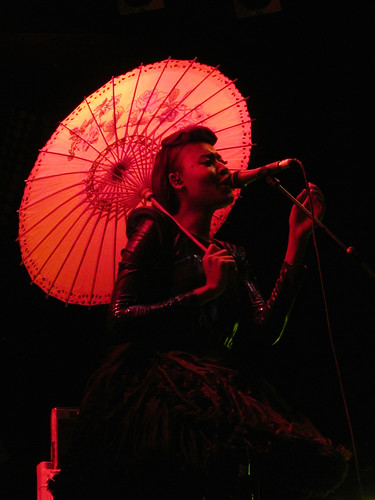 she didn't have a parasol, or lighting that was at all decent; she was wearing what she describes as "geisha hat" that hid her hair and to some extent her face, and lit from below by a frantic color-flashing light (once they rigged it up, about halfway into the set) that did cool and disorienting things to her plaid pants. this felt like a very silly show – there were only maybe twenty people in the crowd, for one thing – but she was loving it, bubbly, alternately endearing for her giddy showmanship and her enthusiastically genuine personability – anyway completely lovable. she seemed just tickled to be here, her first time in philly, asked us what she should do (i wish i knew how to answer that question... somebody shouted out "standard tap" and then explained that they had "pub food," which made her just light up, and ask if she could get a good cup of english tea anywhere) and seemed almost as surprised that we didn't respond with unbridled enthusiasm when she asked about drake (before turning in a kick-ass
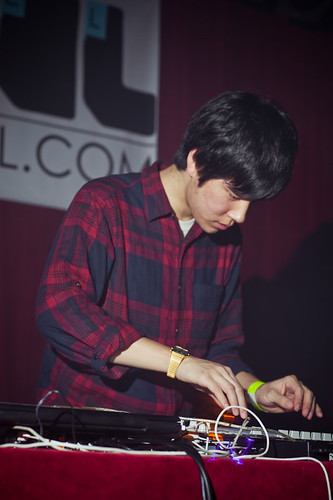 nosaj (whose name seems to be pronounced somewhat differently by his various friends/tourmates) was unbelievably sick. and slick. he played mostly his own music, including the bulk of
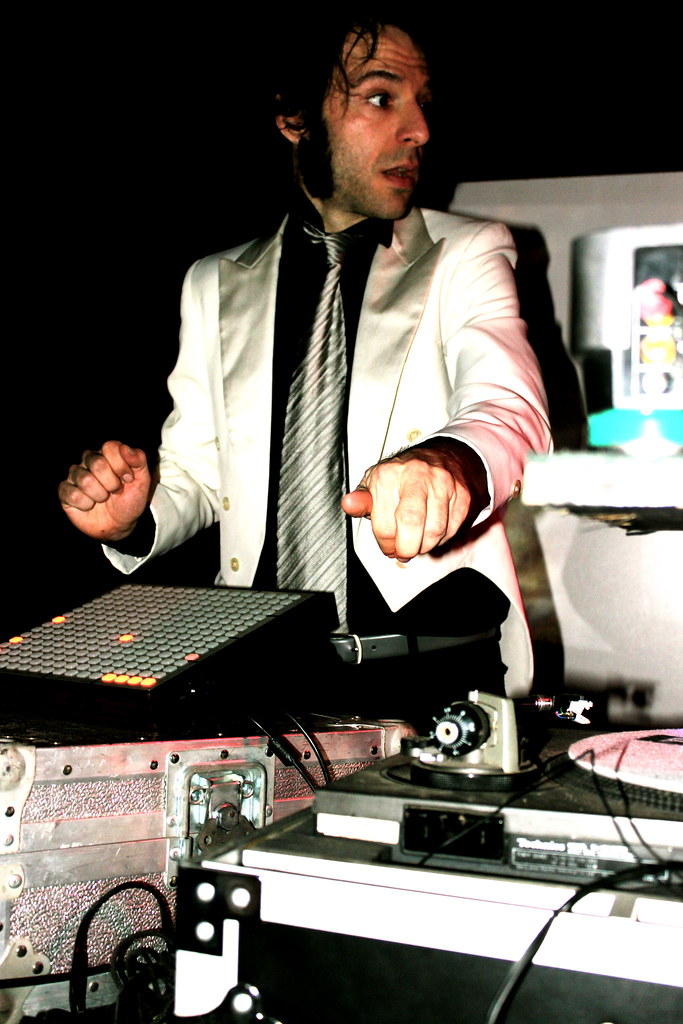 he announced that he'd play "some fun stuff and then some dirty stuff and then back to fun stuff." "what's the difference" someone shouted, and he smiled meek assent, but in fact i couldn't really figure out what he meant, as his set felt relatively consistent in tone throughout, building fairly quickly to a level of activity that, while fun for a while and intermittently, mostly felt closer to dirty – in the messy sense, and not the fun one. he was using the

