Showing posts with label sharon jones. Show all posts

01 February 2014

Review Round-up: January 2014

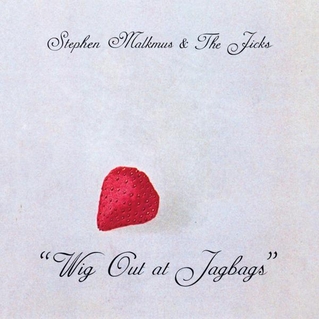
Stephen Malkmus and the Jicks
Wig Out at Jagbags
[Rock/Pop]

With Wig Out At Jagbags (Matador), Stephen Malkmus has now made more records with his trusty Jicks than he did with Pavement – all together, as impeccable a run as anybody's had over the past twenty years – and his craft only continues to develop, in small but intriguing ways.  Building from the revelatory (relative) focus and melodic directness of 2011's Mirror Traffic, Jicks #6 stands as the tightest, nimblest and possibly the most fun Malkmus LP yet; notably the shortest since his solo debut and – note the title – easily the silliest.  "Tennyson" gets rhymed with "venison," "Hades" with "Slim Shadys," "party crash" with "Balderdash" and "Cert" with "that ain't no dessert."  A similarly glib wit extends to the musical arrangements: check the horn blasts and Thin Lizzy-style guitar leads of the rollicking "Chartjunk", or the way the album's occasional, brief jammy passages – the fake-out freak-out introducing "Houston Hades"; the wry dub reggae outro of aging-punk rallying cry "Rumble at the Rainbo" – are folded into carefully devised structures.


There's a surprising amount of heart here too, especially for such an inveterate obscurantist snarkmeister.  Malkmus' more subdued, prettier numbers have always been some of his best, but the freewheeling, atypically earnest nostalgia of "Lariat" and sweetly contented nonconformity of "Independence Street" are uncharacteristically affecting.

Maybe it's blasphemy for some, but I've long connected Malkmus with Phish's Trey Anastasio: fellow smirky, shaggy-haired Gen X guitar icon, and noted Pavement fan (also, presumptive namesake of "Jenny and the Ess-Dog"'s pooch.)  Despite its lack of extended six-string, well, wig-outs, Wig Out seems to point up that connection more than ever.  And not just because the Grateful Dead get name-checked (along with yurts, tripping one's face off and "glass-blowing funky neighbors.")  Malkmus just somehow seems like more of a hippie than a hipster these days.  But darling, don't you go and flip your wig.  Maybe it's his age; maybe it's the cumulative effect of all those years living in Portland; very possibly that's just the difference between 2014 and 1992. [A-]

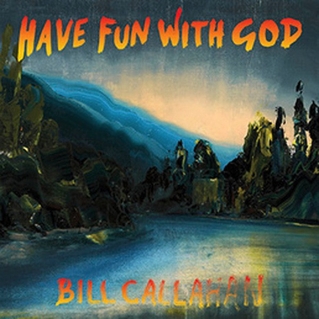
Bill Callahan
Have Fun With God
[Folk/Dub]

The way Bill Callahan intones his lyrics, in that steady, laconic, somewhat eternal-seeming baritone, they have a tendency to drift lazily by, sometimes more felt than fully, consciously registered.  Have Fun With God (Drag City), therefore – a no-foolin' dub (though not reggae) rework of last year's Dream River (already perhaps his most sonically rich album), wherein about half the lines are either excised or drift off into limitless eddies of reverb – plays like the dream-logic, Zen koan approximation of the actual experience of listening to a Bill Callahan record.  It's conceptually droll, even absurd, but surreally lovely nevertheless. [B-]

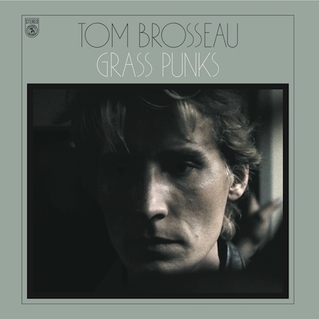
Tom Brosseau
Grass Punks
[Singer-Songwriter]

North Dakota-via- finger-picker Tom Brosseau (who graces Ortlieb's this Friday) peppers Grass Punks (Crossbill), his seventh album, with wryly topical numbers – about technological interference with romantic intimacy ("Cradle Your Device"), Dairy Queens, swap meets and being stuck on the roof – but they're too understated to scan as novelty songs, and too flat-out pretty to be anti-folk.  He writes some sweet little love songs too – though nothing too straight-on – but the truest, most humbly self-evident is "I Love To Play Guitar": he so clearly does, and he plays it deftly, simply, gorgeously. [B-]

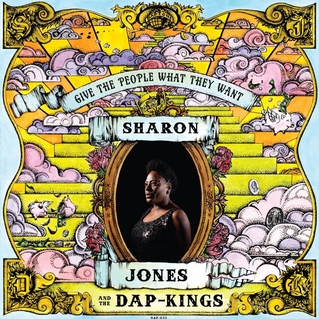
Sharon Jones and the Dap-Kings
Give The People What They Want
[Soul/Funk]

By now we know what to expect from a new Sharon Jones & the Dap-Kings album, and – sure enough, yet again – Give The People What They Want (Daptone) does precisely what the title says.  The band's output is so reliably strong; their emulation of iconic '60s-vintage soul so effortless – leagues beyond novelty – that it's dangerously easy to take for granted, even given the circumstances surrounding this album's postponement: Jones' recent (triumphant!) battle with pancreatic cancer.  The passion in these grooves – several among the leanest and meanest they've cut since their gritty, hard-funking debut – and especially in her nimble, powerhouse voice – simply makes it hard to imagine anything holding these guys back. [B+]

various artists
BOATS
[Indie/Electronic]

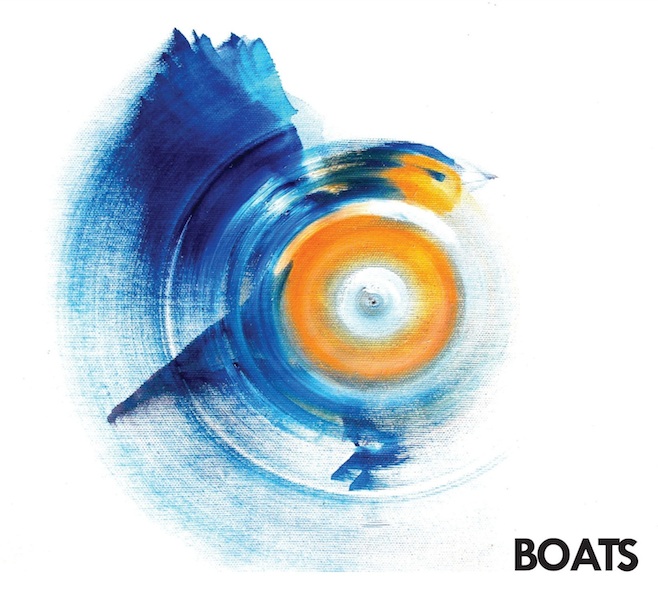
Charity compilation albums, while admirable, tend to be musically insubstantial mishmashes, so the good people of Edinburgh's Transgressive North have managed quite a feat with the oddly-titled BOATS, which is both conceptually coherent and highly worth hearing.  A generous cast of indie and electronic A-listers contributed tracks incorporating recordings of the Love of Light Choir (i.e. the very Southeastern Indian "untouchable" children the comp's proceeds go to support), and while that may sound trite, Langley Schools Remixed this ain't: these two discs of surreal odd-pop duets and fluidly interconnected sound sculptures offer a kaleidoscopic bevy of delights. [B-]

John Talabot/Breach
DJ-Kicks
[Dance/DJ]

!K7's venerable DJ-Kicks series – which sees its 20th year (and 50th installment) in 2014 – has been in a resolutely housey mode of late, and the two mellow-leaning volumes dropped in quick succession late last year were no exceptions.  Both offered a fine assortment of streamlined thumpers, synthesizer reveries and soulful vocal cuts, but where Barcelona's John Talabot packed 27 cuts into a mix that often felt strangely tepid and inert, Breach's livelier, more fluid effort covered more ground in half as many tracks, with a particularly potent final sequence highlighting a mid-'90s chestnut from Philly's own Josh Wink.  [Talabot: C, Breach: B-]

Delorean/Mas Ysa
[Electronic/Pop]
concert preview

Barcelona's Delorean make bright, cheery electronic dance-pop with all the sharp edges sanded away into a luxuriant lather of glowing synths and big, sunbursting major chords.  Apar (True Panther), the band's first album since the international breakthrough of 2010's Subiza (they've been together and active since forming as teenagers around the turn of the century), takes its name, aptly enough, from a Basque word for "froth." It finds the foursome toning down the beach-party beats and honing in on their songcraft, but it remains a reliably warm and dreamy ride through burbling, trebly, Mediterranean waters.  The Woodstock, NY-based Mas Ysa (a.k.a. Thomas Arsenault) explores a gruffer, notably more emotionally fraught take on song-centered electro-pop with his Downtown Records debut, the wide-ranging long-form EP Worth.  Arsenault's throaty, digitally frayed vocals and industrial drum-machine throb underscore the urgency of key tracks like "Why" and "Shame" – recalling the punchy, DIY punk-flavored approach of Denver's Pictureplane – while the fragile, frosty balladry of "Years" offers a starkly minimalist counterpoint.

Ryan Hemsworth
[Electronic]
concert preview

Ryan Hemsworth is a connector.  Maybe it's a Canadian thing.  The twenty-three-year-old Halifax native, who gained attention with his bootleg reworks of Grimes and Frank Ocean and "cloud-rap" beats for artists like Deniro Farrar and Main Attraktionz, gives off a decidedly unassuming, personable vibe.  For instance: how many hip-hop or electronic producers operate under their unadorned given name?  You can hear that affability in his lush, laid-back grooves – his debut full-length, last year's Guilt Trips (Last Gang), connected the musical dots between dreamy bleep-pop, synth-addled R&B and the barbed, thuggish percussion antics of trap, with vocal guests ranging from Kitty to Baths to Disclosure affiliate Sinead Hartnett – and you've gotta imagine it helps him seal the deal on improbable juxtapositions like convincing the potty-mouthed Angel Haze to spit over his Cat Power remix.  Meanwhile, Hemsworth's recent holiday season download offering, ☺RYANPACKv.1☺ brought his ear for detail and distinctive recombinant gifts to bear on the typically moribund realm of mp3 mash-ups, brokering virtual introductions between Beyoncé and the Notwist, R. Kelly and Yann Tiersen – via the exquisite "Real Talk" tweak "La Valse D'Kellz" – and hardcore Brooklyn rapper Mr. MFN eXquire and J-pop star Kyara Pamyu Pamyu, while putting Danny Brown in a kawaii-style Koosh Coma.

Connan Mockasin
[Psych/R&B/Experimental]
concert preview

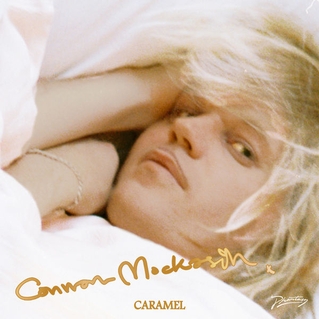
The cover of Connan Mockasin's 2010 album Forever Dolphin Love depicted him as a brightly painted papier-mâche totem/figurine – the New Zealander's shaggy blonde mop-top is, evidently, unmistakeable in any medium.  His recent follow-up, by contrast, presents him as a lounging loverman, all in white and gold, with a pencil-thin 'stache and a come-hither gaze.  The corresponding musical shift, from folky glam-psych meanderings to fever-dream seductive smooth jams, is just as marked: Caramel (Mexican Summer) was recorded in a Tokyo hotel room with the express intention of embodying the sounds suggested by its title, and none of indiedom's recent, rampant flirtations with R&B really serve as proper preparation for the album's sultry strangeness.  It's probably best described as Barry White by way of Ariel Pink, with a side-helping of Ween and/or Beck at their most Prince-addled and narcotized, and while that may sound awfully arch and off-puttingly irony-prone, Mockasin makes it surprisingly easy and enticing to succumb to his lavish alien lovescapes.

R. Stevie Moore
[Pop/Rock]
concert preview

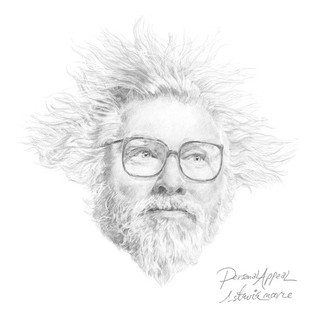
R. Stevie Moore is, in his highly particular way, the ultimate cult artist.  He's staunchly dedicated to home recording and DIY distribution practices.  He's flabbergastingly prolific – besides thirty-odd "commercial" releases since 1976, his website lists over 300 full-length titles available on cassette, CD-R, VHS and/or via bandcamp.  His stylistic range is as sprawling as his output – enfolding jazz, country, thrash punk, metal, hip-hop, techno, and innumerable wacky sound experiments and spoken interludes – but his aesthetic remains fundamentally beholden to Zappa, Rundgren, Brian Wilson and The Beatles, which, combined with his unerring, apparently limitless knack for insidiously catchy hooks, makes him precisely the sort of artist whose followers love postulating about alternate realities with improbable, topsy-turvy top forties.  As for himself, "Why Can't I Write A Hit?" (which lead off last year's Personal Appeal compilation (Care in the Community) – as handy a single-disc condensation of his ouevre as any) finds Moore answering his own (semi-ironic) musical question, in a whispered, pitched-down, self-fulfilling mantra: "the songs are too weird."  But that's not quite it – or, okay, that's occasionally not it: if anything, it's Moore himself that's too weird.  More simply, it's really just a question of priorities.

Cate LeBon
[Pop/Rock]
concert preview

We were first introduced to Cate Le Bon as something like a protégé of her Welsh compatriot Gruff Rhys, of Super Furry Animals: she released her 2009 debut LP on his Irony Bored label, and sang with his synth-pop side project Neon Neon.  But while the two artists share a predilection for melodic psychedelia and the occasional ramble into slightly baroque ramshackle folk (plus a fondness for singing in their country's mother tongue), Le Bon's sensibilities have proven considerably darker and more dour than her affably goofy countryman.  Mug Museum (Wichita/Turnstile), her first album since relocating to Los Angeles, is her lightest, loosest foray yet – it features several pop tunes that could legitimately be called "sprightly" – but still finds room for plenty of somnolent, gracefully dirgelike ballads and a couple leery lurching rockers.  The uptick in eclecticism only shores up her musical resemblance to the Velvet Underground – well beyond the oft-noted Nico-esque starkness of her voice – which, far from whiffing of pastiche, feels unfussy, warmly familiar and entirely welcome.

Gambles
[Singer-Songwriter]
concert preview

The "gambles" invoked by New York City songwriter Matthew Daniel Siskin's recording moniker (his "bandonym," per the critic Carl Wilson) might just be the endless, inexorable crapshoot of life itself – a game in which, as his songs lay out in unflinching, plainspoken poetry, he's taken some knocks in recent years: a miscarriage, a failed marriage, a dark period of substance abuse, addiction and general listless malaise.  But it also suggests the dicey proposition of putting himself out there – on stage, on record, on the murky, lawless internet – with nothing but an acoustic guitar and a raw and resonant if slightly shaky voice, recalling the ragged, vehement diction of the young Conor Oberst or the craggy earnestness of Clem Snide's Eef Barzelay.  It's a seemingly unremarkable, commonplace act that, in Siskin's hands, takes on a visceral precariousness.  And, so far at least, that one seems to be paying off.  Hence, perhaps, the title of his debut recording, Trust (GMBLS), a gritty, frequently bleak collection that's not without its cautious, hard-fought hopefulness – and a little bit of whistling to boot.

Jason Isbell/Holly Williams
[Country/Folk]
concert preview

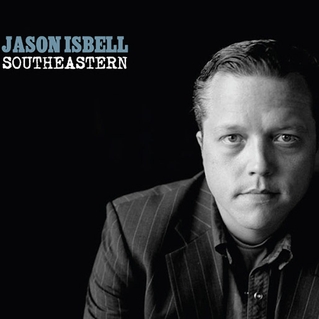
While the biggest noise coming out of Nashville in 2013 – cutting through the monotonous stream of trucks, dirt roads and tight jeans recently collated by Entertainment Weekly's Grady Smith – favored a spunky, decidedly youthful feminine energy (Kacey Musgraves, Pistol Annies, Keith Urban, et al.), this pedigreed pair took a decidedly different approach to crafting two of the years finest country full-lengths.  Both Southeastern (Relativity) – former Drive-By Trucker Isbell operating without his 400 Unit, and inciting uncanny Ryan-Adams-circa-Heartbreaker flashbacks – and Williams' The Highway (Georgiana) – yep, she's the daughter of Hank Jr., granddaughter of Hank, though she doesn't sound a lick like either – are markedly subdued affairs; spare, stripped-down storytelling songs with just the occasional spot of mild shit-kicking (Isbell's "Super 8," Williams' "Railroads.")  They're serious, grown-up records – Williams (with some help from her buddies Jackson, Jakob, Dierks and Gwyneth) tracing the powerful lines of love and family across the canvas of a lifetime, to the grave and beyond; the recently sober Isbell tackling alcoholism, recovery, cancer and loss among other weighty topics – maybe a little self-serious at times, but never overwrought or sentimentalized, just simply presented, beautifully sung, as frank and flat-out heart-wringing as it gets.

Bottle Rockets
[Rock/Pop]
concert preview

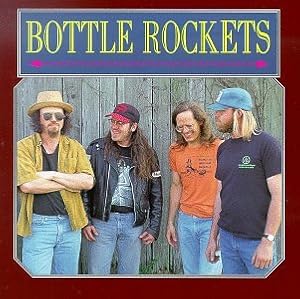
Among the major players in the 1990s alt-country scene, Festus, Missouri's Bottle Rockets weren't the most traditionalist (that was probably their close confederates Uncle Tupelo), nor were they the most twangily raucous (maybe Old 97s in their early days), but they boasted a potent, undeniable personality all their own, combining a tough, infectious Southern rock guitar attack with the populist storytelling of classic country.  While they've maintained a relatively steady release schedule into this century, their self-titled 1993 debut and 1995's The Brooklyn Side – both recently reissued on Bloodshot Records with a mess of bonus tracks and extras – remain the best introductions to frontman Brian Henneman's blend of down-home charm and punk-derived sarcasm, balancing good-timey odes to girls, cars and rural blue-collar life with sneering topical potshots at racist "rebel" rednecks, indie rock snobs, and antagonistic traffic cops.  As tunes like "Gravity Fails" and "I'll Be Coming Around" made clear, the band also has a long-standing knack for straight-up, classicist pop-rock, which explains why their current gig – both backing up and opening for veteran tunesmith Marshall Crenshaw – is such a natural fit.

Saintseneca
[Americana/Folk/Rock]
concert preview

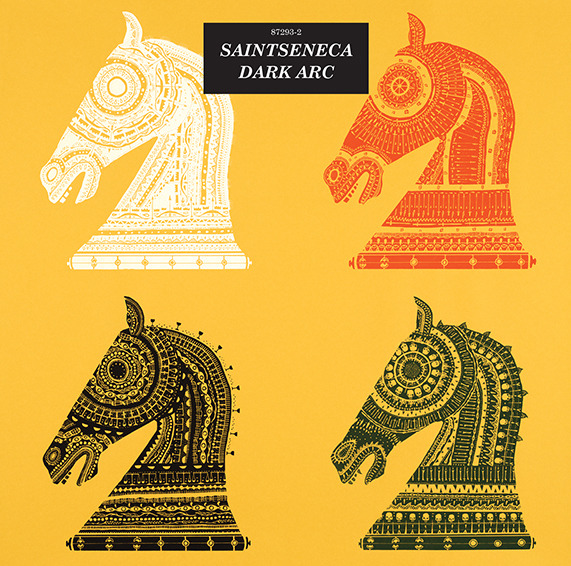
This Columbus, OH quartet recently signed with the Anti- label (home to Neko Case, Tom Waits, Man Man, Dr. Dog, etc. etc.), who'll be releasing their sophomore LP, Dark Arc, this March.  It's a good fit for the band's expansive, idiosyncratic vision of Americana, which combines warmly earnest harmonies and a lively stompiness that should endear them to fans of Fleet Foxes and Edward Sharpe with refined and nuanced chamber-folk arrangements (incorporating mandolin, dulcimer, balalaika and Turkish baglama) that align them with artsier DIY collectives like Cuddle Magic and Mutual Benefit.

originally published in Philadelphia City Paper

23 March 2007

SxSW finis
(putting the austin in exhausting)

PART FOUR

[PART THREE] [PART TWO] [PART ONE]

[goodbadqueen.jpg]
the good, the great, and the awesome, more like, heh heh (l-r?)

day four! well, i didn't really expect this day to top the incredible day three, particularly since there weren't all that many shows i was especially keen on. but somehow it managed to be about equally perfect, except that where friday had been carefully plotted out, saturday was for the most part a serendipitous string of spontaneous happenings.

breakfast was the first meal i'd had at home (in a home) all week, and possibly the nicest - toad in the roads (toads in roads? eggs in holes? one-eyed egyptians) with avocado and fruit and matt and nico and david and those wacky ledowski sisters. but after that lovely bit of company i headed out on my own for the first show of the day, the almost unfathomably exciting the good the bad and the queen.

man, getting on that rsvip list and getting my wristband ensuring access to the fort was maybe the best decision i made all week. sure, it would have been swell to see gbq at their official showcase the night before at stubb's, last on the bill in a venue more befitting their stature... but this way i was able to save $40 and still watch them play a full hour-plus set (including two encores), in the open air at 3:00 on a balmy afternoon, from the second row, dead center. (also, i couldn't have gotten in the night before.) the fort itself was pretty rad - not sure what the building's used for usually, but they had it set up as an indoor maze of nooks and crannies, a jeans showroom, a guitar repair shop, blogger rooms, and an adult swim "gallery," eventually leading out to an expansive courtyard with various kiosks, dj tent, bar dishing out free beers and peach-colored soco punch. and a sizable stage, of course.

they had by far the best djs i heard all week too - a-trak and the rub were scheduled to spin that day, and just between sets as the most exciting "background music" you can think of. not sure who was playing at that point in the afternoon, but they kept me smiling, with "california soul," "lip gloss" (!), some new-ish house song that i really like and haven't been able to place yet, "fu-gee-la" played over a clipse instrumental, and pb+j's "amsterdam," all seamlessly sequenced together. melissa in sundress asked if i was going to be dancing during the show too - "well, i don't think it's exactly dance music" i said, but she said just to wait - after all, with a rhythm section like that...

in case you don't know (and wonder why i'm so excited about this band who are, after all, brand spanking new), the good the bad and the queen are damon albarn (mastermind of blur, my favorite band, or darn close to it, among many other excellent musics), paul simonon (bassist of clash, everyone else's favorite band), tony allen (the the afrobeat drummer, veteran of fela kuti's bands and his own as well), and also in addition the guitarist from the verve as well (and gorillaz, etc.) right. well, hopefully you can understand why it was a little intense, to be standing five or ten feet away from at least two or three bona-fide legends. i'm not sure i'd fully prepared myself for that aspect of it.

even before they took the stage, just looking at paul's bass (old and yellow, with his name scratched into the side - indeed, it's the same one he played with clash) was an unexpectedly holy experience. it was clear this was to be no winehouse-esque taster set - they were doing their thing full-on, no messing around, with an evocative painted backdrop and a lengthy overture by the bowler-hatted all-female string quartet. there had been a band scheduled to go on before them, at 2:00, but they were forced to cancel, allegedly so that gbq could finish their soundcheck. (yup.)

and then they strode out...oh man. i'm not sure i can do justice to how bad-ass paul simonon is, in particular (just check out his outfit in the above photo!), sauntering around the stage with his bass, or aiming it like a weapon at somebody in the audience, his every move (even plucking a single bass note) seeming deliberate and deadly serious but somehow also tauntingly tossed-off. tony was cracking me up - most of the time he'd sit basically expressionless behind his kit, the most casually dressed of the bunch with just blue jeans and polka-dot button-down on his diminutive frame, but every so often, especially as the set went on, he'd break into a big goofy grin. damon, meanwhile, who was standing almost directly above me for the majority of the set, was effortlessly dapper as hell with his top-hat and navy suit, looking absolutely distinguished despite the remnants of a boyish sparkle in those dreamy blue eyes. melissa had called him "delicious," and it wasn't long before i was swooning right along with her - at one point, in an instrumental break, he and paul went to the side of the stage and lit up, then strode back and just stood there casually dragging, basically just oozing sex in an almost ridiculously calculated but still woozily potent manner.

with that much coolness pervading the air, the music was almost secondary - but then, the music was an integral part of the coolness too; they fed off one another. honestly, paul and tony's playing was nearly as solid or in-pocket as you might think - there were definitely moments where the time was a little fuzzy, and individual licks that didn't quite hit their mark. as has been noted, the rhythmic elements are not especially prominent in gbq's music - tony spent one song just shaking a rhythm egg (see above), and another barely playing at all - and that sparsity makes the bass and drum parts so much more exposed and vulnerable, and therefore harder to play, mistakes that much easier to detect. but it didn't really matter - especially as they warmed up, they found a way to make the grooves work in spite of, or almost because of these rhythmic inconsistencies. on the other hand, maybe we were just all ready to forgive them, or accept whatever they offered as gospel, because of the magnanimous force of their mere presence. i was really curious how tony was going to render the chorus fills on "herculean," which, on the album - as looped by danger mouse - feel a little off-kilter, almost too subtly to be deliberate. it turned out he didn't even play them, just stuck to the simple groove.

of course, this really was damon's show, even as he made his contributions as understated as everything else. the songs, which were just perfect for that warm, slightly overcast afternoon, are centered around the vocals, and his performance of them was as achingly beautiful as you could hope. he didn't do much else besides sing, in fact - he moved to the piano for a few songs, played a few recorder notes at the end of one, and a bit of melodica on another - and that was more than enough. just like last time i saw him - when "sweet song" was at the peak of its personal poignancy for me - there was a moment that he nearly brought me to tears. that was in "green fields" (i could have predicted - i'd nearly wept before just listening to in headphones in the sun), certainly the emotional centerpiece of the album, collapsing the personal and political, how the world has changed and especially "above all things, i've learned/it's the honesty that secures the bond in the heart" - i just put my hand on mind, chest almost overflooded with that warm sad love, reached out to melissa and she nodded back.

they played the entire album, a lot of it in order, and then they came out for an encore - the two groovier b-sides, one they recorded in lagos and the other for which they brought out a syrian rapper, who was pretty amusing. then damon (who hadn't said very much the whole time) urged us not to forget new orleans, and that was it. whoosh.

now. if i'd really had it together, i would have gone earlier to the norwegian showcase at the "northby tent" in a park a few blocks away, to see when marit my dreamgirl was performing. i hadn't because i'd wanted to make sure to get to the fort in time (which wasn't really a problem but better safe) and also because i'd sort of thought i wouldn't be able to get in without a badge. as it happened, marit played a three-song set at 4:10, which would have been perfectly me timed for me to go catch it after the good bad finished. but i didn't know that, so i called ben back and chatted with him as i strolled leisurely over, arriving just after she had finished. ohhh welllll. it was only three songs. i also missed her playing with thom hell's band earlier (though i did get thom's cd, which i look forward to checking out.) and i didn't get to jump around some more with matt and sarah. but at least i got to see her again, in the lovely dress she's wearing this picture, and flutter flutter some more. (would have tried to get another, non-blurry picture with her, but my batteries had died again while taking gbq videos - i've decided that my new camera kind of sucks, which is a real shame. or maybe i just need to use lithium batteries rather than aa rechargeables.)

i did stick around for the next band, davey jones' locker, who were truly impressively loud (earplugs!!!) and had a transparent orange drum set. and rocked pretty good, not that it's my kind of thing. also got definitely the best free beer i saw all week, "fat tire" from local brewery. and that's where i finally met up with caitlin (remember, from pb+j night one) again, along with her friend (dave, i'm pretty sure), who's on the verge of dropping out of music business school to pursue his music business fulltime (seems like a pretty sensible decision, actually.) he definitely had some fast-talking, hard-living industry cat in him, and he's a charmer, as you gotta be, so i liked him. he just finished booking a tour for scanners, he said, and they were playing in fifteen minutes over at the beauty bar, so would i like to come?

actually, i really like scanners, though i hadn't put too much into trying to see them, so that was an excellent proposition. even better that tagging behind dave made it much easier to get into the venue than it would have been otherwise - less an issue of credentials than confidence and assertiveness. funny six-degrees connection - my high school buddy scott got to be good buddies with scanners (especially the lead singer, sarah), while he was living in london last year. so i had something to talk to them about when i met them briefly before and after their set. which was flipping sweet, by the way. i think i rocked out harder to their set than any other show all week. especially crucial hits "lowlife" (their new order cover), "in my dreams" (p.j. harvey cover), and "look what you started" (travis cover), though for some reason they didn't play my favorite and their album opener, "joy" (their, um, gay dad cover?) guy and girlfriend in st. pat's green next to me were totally rocking out too. yeah, that was awesome.

went in search of the annuals ("who are annuals?" txted nan - "indie rock cuties" i txted back) but the venue seemed to have disappeared. just as well, because we got in line early for earl greyhound at chuggin' monkey, which filled up fast (even though the bar actually wasn't that full when they stopped letting people in.) we watched from the balcony upstairs, just above the stage, and took a lot of good photos, which are all on nan's camera:


hopefully i'll get those soon and put them up here. in the meantime, this gives you something of an idea. dig: massive drumkit, almost-as-massive drummer, the feather in the bassist's afro (i couldn't decide if i thought that was her real hair or not), the guitarists gawjess locks (you can't really see the embroidery on his shirt there), the fact that the dudes outside at the window definitely have the best spot of anybody. earl greyhound played and sounded almost exactly like they looked, which is to say it was pretty righteous. a power trio, no questions asked. as alyssa promised, no hint of camp or irony, just hard-hitting funky rock and psychedelic riffage. i suppose i could say something theoreticalish about that. but i won't.

at that point i was more than ready to take a break and head back to the outskirts for a st. paddy's party at the house of matt's friends the brosnans (who had lent us the bikes.) and that's exactly what i was planning to do, but just to see i started back via 6th and red river, more or less the nexus of the sxsw scene, to see what things looked like outside the daptone showcase which was starting in five minutes. to my surprise, they looked pretty sparse. very short line for ticket-buyers, no line for anybody else. i'd have been fine with not seeing sharon jones for a fourth time just then, but if they were going to make it that easy... and only $12 too, which is hard to beat. so i waited in line and grooved to budos band who had just started up their set (and were easily visible just around the low wall of the emo's annex tent. it took slightly longer than expected, chatting with jeanine the bouncer who seemed almost more eager to get us in than we were ourselves, but after a small parade of badgies and wristies
she came through for us.

so i was right up front for the last four or five tunes of the budos set, including the dynamite "aynotchesh yererfu" and a sort of odd, loose version of "my girl," which they emphatically insisted was a smokey robinson cover (well, yeah.) and for sharon i was in the very front row. actually i wasn't as excited as all that. fourth time around the novelty had kind of worn off, and this was an abbreviated version of the set - though they still did the full dap-kings intro and a number with just binky (which was a really excellent "memphis-style" piece - can't wait for his album to drop, as he keeps promising), which meant a smaller percentage of it was sharon. but actually it was refreshing not to be the most excited person in the audience, for once. that title would have to go to kent, local kid standing (er, dancing) next to me in the front, who had never seen sharon before but seemed to know a lot about her, or possibly the bear couple just behind us, in yellow and orange. (they both got to go up and dance on stage with sharon, and their giddiness was beautiful to watch.)

well, anyway. she did a couple of new-ish numbers, and no-longer-new-to-me like "be easy" (which is still great) - her next album is gonna rip too - and also "genuine" (to close the set, with both of the amy winehouse back-up singers - amy was watching from backstage.) still no "n.b.l." or "all over again," sigh. too bad she couldn't have done a longer set, but it seemed like the crowd was loving it, so hopefully that portends good things to come.

now it was 10pm. no clear plan for what to do - hadn't been able to meet up with any of the usual suspects, who were scattered around (none of them, i think, made it into the crazy crowded spoon/stooges stubb's bill, and i was fine with not being there either.) i went to exodus, where i knew i wanted to end up later on, and saw the end of todosantos (venezuelan techno/dance/rock group) fun ravey set. was not impressed by what i saw of lesbians on ecstasy (too bad), so i wandered out again...thought about catching gary wilson at the church, but didn't feel like paying another $15 for it; could have seen keith kilgo but that would have been money too...eventually just got a free myspace hotdog and watched the pipettes from behind the beauty bar for a while. ("this is our last show of the week, so we want to make it extra special!")

...when i got back to exodus as lezzies on x were finishing, the club had filled up a bit more, and it continued to throughout prototypes' excellent electro-punk ("we are prototypes, and we come from paris!") fun to catch some of the french lyrics, though even when i understood them they didn't necessarily make sense. by the end of that, when headliners jr. sr. were
next up, it was difficult to move through the room, and almost as hard to see the stage (this was the same venue where it'd been impossible to see nellie the night before.) still, i managed to get all the way back and upstairs to say hi to caitlin and dave (txting had finally failed us), and back down front to my same spot, with some hip kids on a little side staircase.

when junior senior finally took the stage, the crowdedness didn't matter. or rather, it became part of the point. the whole front section (twenty feet back? thirty?) turned into a chaotic frenzy of dancing, jumping, shouting, singing, smiling, clapping hands ("we are the handclaps" [clap clap]) and saying yeah ("do the kids dig what we do?" "yeah! yeah! yeah! yeah!") it was a little violent, but violent like love is sometimes. basically it was a huge dance party free-for-all, a teensy bit out of control, but fueled by giddiness and glee and ridiculous danish dayglo-pop-dance-rap-disco. "who cares about junior senior anymore?" a funny little woman asked me before the show - well, evidently a lot of people, or else they were just ready for a release. the second jr. sr. album is finally coming out in the states this summer, and judging from the new (to me) tunes they played, it's just as bright and fun and hooky as the first, with maybe a stronger disco influence.

hey, looks like some people managed to get some decent pictures at the show, cool. i almost can't imagine getting some of these shots in the middle of that insanity. look at those funky back-up singers! look at that (japanese?) m.c. they did a silly duet with! look at that crowd! hey, that's me, pumping my diagonal fist (in upper right, with green and er tan shirt):

The image “http://farm1.static.flickr.com/177/429098414_90f26cb3dd_b.jpg” cannot be displayed, because it contains errors.

the best way to put it is that we just did what the song said: "move your feet and feel united!" and indeed we did. even in the middle of the set, there was spontaneous hugging and laughing and dancing with strangers, all swept up in the euphoric moment. it was kind of incredible.

they closed with "d-d-dont stop the beat" and then one more song (new one), and then they closed the club down and we spilled out onto the street. the captain fellow from the hyphy show the night before was there, saying "it's rare that the last show is also the best."

indeed. but just possibly, the last best show was simply being there on sixth street, watching as all the clubs were closing and emptying out and the streets were crowded with sxsw folks, st. patrick's day revellers in their scanty greenness, garden-variety weekend partiers, and all other random sorts of people. a floodstream of humanity. yes...that was nice.

ok.

12 March 2007

so, soul...

[or: "talkin' loud, sayin' nothing"]

one of the great things about soul music is there's not that much you can say about it. well that's not true. there's not much that needs to be said about it, maybe - at least anymore. or how about: whatever there is you might say about it, it's gonna pale mightily compared to what can be conveyed by the music itself. hm hm...well, better not try to talk about it too much, because you're gonna end up tripping over your words.

yeah, setting it up as anti-intellectual like this has this uncomfortably essentialist twinge, but...there's something there to do with its purpose, and its power, no? (soul has a massively complicated relationship with Otherness - on one level it's fundamentally antithetical to it - predicated on a universal commonality of emotion - but, at least in the current cultural/historical moment, it seems almost to be defined by its relation to an absent place and time - it can never be fully and unambiguously Present. so there's a lot to be said there, but little likelihood it'd help matters much.)

i guess it'll go without saying (see) that Soul is a superword, which more or less means it can't be defined (and don't ask me what a superword is, either - the best definition i can fully get my head around is something like "genre descriptor.") but, and this is maybe what i was (not) saying before - it's obvious when you hear it. i mean, we all know what soul sounds like (and so, we don't need to talk about that.) that's because, in part, it's a style with highly specified parameters. which might be another way of saying it all sounds the same. (which is true, i think - and i don't think that's a bad thing nor does it stop me from seeking out more and more of it.)

which, again, points to why there's not much to say about it. isn't it telling that i've gotten this far without mention any specific examples of artists or songs? i don't know whether that supports or undercuts (or both?) this little argument i'm having (with myself) - is it intellectual laziness on my part, or just endemic to the topic? it seems to me that when folks mention specific songs and artists in the context of a discussion of soul they're either using them as placeholders - arbitrary examples (and always the same ones too - aretha, marvin, otis, james) standing in for the genre as a whole - or something comparable but slightly more nuanced (as in the the fairly well rehearsed topic of regional stylistic differences, wherein the entire output of certain labels - stax, motown, philly international - are treated as more or less interchangeable and homogenous wholes.) or else they're getting really specific about the music (comparing the vocal approaches of different singers, for instance), which is sort of a different level of discussion from what i'm primarily concerned with here.

not that any of these things is bad, necessarily. i'm just making observations here.

so, i'm obligated (says me) to write about soul (as much as i'd really rather not) and/or specifically about

4 i got you babe Y etta james

which as everyone knows is actually a groundhog day song, and not a valentine's day song. but it's both a fun cover and pretty darn great in its own right, and besides i just had to choose any old soul song to represent the genre as a whole, and more or less any one would do, since they're all about love anyway. (well, i wanted one about happy love, which is always a taller order.)

seriously, etta's tell mama: the complete muscle shoals sessions, in addition to appealing to both the albumist and the completist in me [it's a genuine original album, plus over an album's worth of equally-stellar bonus tracks, and it's her entire muscle shoals output, as the title indicates, all on one cd] is perhaps the biggest revelation (so far) in my recent and ongoing soul binge. (a.k.a. building a reasonable proper library of the essentials.) i put it on s/r/s'd with elvis' get happy!! while stirrin' up some fry a while back, and it just blew me away... it's dynamic, fiery, fun, funny (check out "mother-in-law"), funky (even the ballads, somehow, not to say they're not heartfelt too), top-notch from start to finish: i would recommend it to anybody without hesitation. (anybody with an interest in soul music, that is - but who isn't these days?)

but i don't have much more to say about it - i couldn't really convey anything about what makes it great, but it would all become immediately apparent on listening to it - i'd be left musing about how so many of its tracks overlap with the (also awesome) clarence carter comp i got around the same time, and you just wouldn't be interested. is there something that makes this particular album so damn RFG, beyond the standard RFG-ness of vintage southern soul? maybe so, but it's probably nothing that mysterious, or at least nothing that could be mystified without a lot of painstaking attention to subtle detail. (you know: the songwriting, the singing, the arrangements, the playing. the remastering probably helps too.)

~~~~

hold on. just realized: i think i meant that there's not much to say about soul music in and of itself. but of course there are things to say about it, in contexts. and what seems relevant in particular is soul in the context of music, c. 2007. and specifically this notion that's floating around about soul revival(ism?) which is what my EMP proposal was about, of course. and, i did say that i would (or not) try to write about that stuff here since my paper wasn't accepted.

i noticed that not many of the papers that were accepted are about soul (there are a handful, but any fewer would really raise my eyebrows), and almost none (as far as i can tell/remember) of them have do with revivalism - certainly not soul revivalism. which is actually kind of surprising to me, because it's a perfect topic for the theme of the con, and an extremely timely one as well.

or has its time passed? - when there's a new york times sunday feature about it, does that mean the "pontificating about what's going on with all of this soul stuff" phenomenon has jumped the shark? no i don't really think so either. even though i am very late (it's my wont!) in getting around to mentioning it. pretty interesting article, though probably less for what it says than how it says it. here, have a link where you can actually read it. (thanks 'net!)

the first four or five grafs are nothing but a laundry list of different ways and places that soul has popping up in the cultural landscape of late (dreamgirls, james brown tributes, stax @ 50, candi, bettye, kanye, cat power, etc. etc.) i'd say lumping beyonce and mary j. blige (?) in with this still-rather-dubious "trend" is a bit of a stretch (on the basis of one sample on b's album?), but not as much gnarls barkley. (really now...not getting into it now, but i could if you like)

so, there's all of this stuff. but it's so disparate (and aimed at so many different groups of people) that it's hard to really call it a movement, or even a phenomenon. quoth craig werner: “It’s coming out of the hip-hop world. It’s coming out of the R&B world. You’re hearing it in pop music too. No matter which vector you’re following, you’re winding up with soul music.”

well ok. i'm not entirely convinced by this largely circumstantial evidence (or by the several paragraphs devoted to the alleged soul connections of current grammy-nominated songs and artists.) could it be enough just to say 'soul happens to be "in" these days' and leave it at that? (but in for whom? the demographics of the resurgence are still pretty mysterious to me: who's going to see bettye lavette; who's watching dreamgirls; who's listening to ghostface and cat power - are they all the same people, and if so are they conscious of these things being related?) there are all kinds of things going on all the time in cultureland, and it's easy enough to pick and choose where you're focusing... anyway, assuming this is a coherent phenomenon, is there any explanation for this sudden confluence? oh yeah.

three more quotes:

“People have been fed prefab music for so long that it’s starting to resonate with them that it’s not real” [Doyle Davis]

“Electronica came along and gave soul to the machines, but now people are coming back and saying they want real soul played by real musicians,” Mr. [Matt] Abels said. “People want that smoky feel again.”

“People want something that sounds authentic, which I think to them means something that’s not being designed, something that’s not being distanced by advertising images or forced into a mode,” he [Werner again] said. “I hear that from my students all the time. They hate anything that sounds mechanical or processed. They feel like there’s an immediate response to experience in soul music. They hear it and say, ‘Yeah, that’s what’s adding the flavor to the hip-hop cuts.’ ”
okay, yuck. so here's where the article really gets my goat. setting aside (for a second) the kneejerk "prefab" headache...why does the emergence of one thing have to explained fundamentally in terms of the rejection of something else? can't soul music simply be great (and deservedly popular, if it is indeed actually "popular") without it being the more "real" and "authentic" alternative to some other music that must therefore be disparaged? [is "authentic" even allowed in the dictionary any more without scare quotes?]

does this explanation even make sense? people are giving up on electronica (which last i checked wasn't actually that popular in america - although i do like the notion of it being 'soul as played by machines') and mainstream pop (er, implicitly), and instead listening to, um, john legend (and christina aguilera)? how are dreamgirls and gnarls barkley and, sure, candi's astralwerks comeback and bettye's on anti- (oh man that label name is so fraught) not "designed" or complicated by advertising images? and i happen to know that not all of craig werner's students "hate anything that sounds mechanical or processed" - i'd wager most of them don't - because i heard one of them waxing rhapsodic about the pussy cat dolls and passionately arguing that britney and ashlee deserve the same props as the crystals and betty everett (hey charles, hit me up sometime!)

meanwhile, it's not just pop and electronica that's taking the fall here - the "experts" get in their smug indie digs too, on the weird and contentious grounds that rock and folk concerts are boring and lifeless, unlike soul performances (which have tended, historically speaking, to be polished, "sophisticated," revue-style affairs, putative rawly emotive content notwithstanding):
“People love the messiness of live music,” Mr. Werner said. “They love that sense that the players are actually listening to each other and that everything’s not all preplanned.”

For Mr. Davis, “It’s not the same as seeing the latest buzz-band rock band come and perform their album that just got a rave on Pitchfork.”

“You see the indie-rock kids who, if they were at the Sufjan Stevens or Iron & Wine show, would be completely reverent, stroking their beards or whatever, and here they are dancing with giant grins on their faces,” he continued. “I call those epiphanous musical moments. When you go see Bettye LaVette, you have that.”
blech. well, i can attest to having danced with a giant grin at a sufjan show, right along with the dancing grinning cheerleading illinoisemakers on stage. eh, i don't think i'm going to dignify this obvious snidery with further response. (though i would definitely really like to see bettye's live show, which from the description in the article sounds a lot more exciting than her decidedly subdued album.)

okay, i get that these folks are just being typically shortsighted, prejudiced people, of the sort that are routinely considered reasonable, and i shouldn't hold them accountable for such commonplace snobbery. i also get that there's some relevant truth to their confused rhetoric - the "rejection" notion is a red herring, and it's not about a logical pattern of listening choices conforming to an easily discernable trend - i'd say it's not even about the sound of the music so much (remember, it's happening in a wide range of genres), but there is something about the soul impulse, as these folks lay it out - earnestness, humanity, passion, and sure, authenticity. which isn't too hard to link back to that whole death of irony business (can you believe it's been six and a half years? do you miss irony yet?) it just so happens that i find these qualities in plenty of pop and techno and indie rock - in fact, couldn't one say that these are things that most or all "good music" strives for? and soul just has an unfair advantage, being preternaturally predisposed to raw, emotional potency?

(which doesn't mean that you can access that potency just by sampling it or 'sonically alluding to it' [a lá gnarls, i guess], but you can try, and maybe fool some people - or you can at least remind them of soulfulness without actually achieving it.)

[at the end of the article, a Michael Gray offers a more concrete, less romanticized explanation for the trend: “What’s changed is what’s happening in the culture and the music industry. Platforms are being created to promote these artists.”]

interestingly, the article fails to mention the two artists that i consider to be doing the most exciting things with soul these days: sharon jones - whose concerts feel like actual small-scale revivals, in the old-timey religious sense - and jamie lidell, who's been more ambitious and successful than anyone i can think of at creating something truly new that still retains that evanescent soul impulse. i can see how jamie's steez is too actually musically innovative for the nytimes, but i'd say it's borderline inexcusable for them not to mention sharon/daptone at all.

a recent philly weekly article about the "giddy white men" phenomenon does mention sharon, in passing. (i'm guessing writer craig lindsay didn't draft that silly subtitle - the copy editors nabbed it from this line - "I eventually let my colleague borrow the album; I haven’t seen a white man that giddy about getting some soul in his life since David Bowie married Iman" - which is the second bowie marriage reference in two posts, for those keeping score.) mostly the article focuses on the wave of reissues from the likes of stones throw, ubiquity, numero group, and daptone, along with o-dubs' "soul sides" comp and the like - which is another aspect of the phenomenon that has a bit for relevance for me.

actually, it's been interesting trying to be a record collector/librarian with completist tendencies amidst all of this. with a new "undiscovered classic" being hyped and rediscovered seemingly every other week, one gets the sense that the soul canon is possibly in the midst of a shaking-up and reappraisal. time's gonna have to tell on that one - but it's possible that a few years down the line candi staton, for instance, will be seen as a more important and central figure than she was a few years back.

anyway, i've been trying to keep abreast of current reissues to some extent, but lately i've been more concerned with building a solid collection of the truly canonical stuff, both to have that frame of reference, and also because there's plenty of great stuff there that's not getting much attention these days. in fact, a number of the supposed greats (according to the likes of peter guralnick are still relatively underanthologized on cd) - especially the goldwax folks (james carr, o.v. wright.) i've been using the discography in the back of guralnick's book and, so far, mostly going with what's available cheaply through bmg and half (including a lot of rhino/atco reissues of stax and atlantic stuff.)

i've been held up actually reading the book because i wanted to more have the music in place to listen to alongside - i'd gotten as far as the sam cooke chapter and then paused, since i felt ray charles greatest hits cd wasn't enough to accompany the 50+ pages on him. but now that ray box set has finally arrived, so i'm ready to proceed. from there it'll be smooth sailing on into solomon burke and then stax and muscle shoals heydays...so i'll let you know how it goes.

23 January 2007

to bed with history

this was my proposal for EMP:

Sharon Jones, Daptone Records, and Soul's Constraining Historicality
Sharon Jones was born fifty years ago - in James Brown's hometown, as she's fond of mentioning - but she didn't put out her debut album until five years ago. That record and its 2005 follow-up - both released on Brooklyn-based, musician-run Daptone records and recorded with that label's younger, mostly white house band, the Dap-Kings - consist of gritty, funky, rawly emotive Soul, of the sort that Jones was surely surrounded by growing up, but that has been strikingly scarce since the mid-'70s.

With their vintage-stylized album artwork and choreographed "super soul revue" concerts, Jones and her labelmates might strike some as "retro" novelty performers or niche-based nostalgia-mongers. But the honesty and artistic integrity of their music defies such facile categorization: this is, undeniably, living and contemporary music, albeit music with strong roots in tradition.

Aside from producing emotionally viable art (and fresh sample-fodder for the likes of Kanye West), how is the Daptone stable relevant to the current musical landscape? Despite inklings of resurgent interest, via reissues, feted comebacks, and newly emergent would-be revivalists, Soul still feels Old, inextricably shackled to its historical originary moment. In an age when decades-old genres from garage-rock to synth-pop, substantially liberated from their historical referents, can enjoy renewed artistic and commercial viability, what is it about Soul that sustains its rarified, ossified, antiquated air?

In considering this question, I'd like to examine Jones and her contemporaries in terms of the stylistic parameters of Soul, the historiography of R&B (including the debatable merits of the '90s neo-soul "renaissance"), the effect of changing performance conventions, production techniques and audience-reception models, and those ever-thorny issues of purity and authenticity, to glean what I can about the music's past, present and future.

it didn't get accepted. (sigh...) oh well. neither did dave's, which i thought would (also) have been a fabulous paper - but both of us are probably still going to attend. at this point i'm really curious and excited to read the abstracts for the proposals that did get accepted.

although it would be nice to think that i might still work on writing something formal and/or in-depth about the topics i raised there...well, who knows, maybe i will, but i'll start by trying to blog about them in some vaguely systematic way. or not.

i've been reading peter guralnick's evidently canonical sweet soul music: rhythm and blues and the southern dream of freedom, which i had figured would be necessary background for my paper, but is also something i possibly should have read years ago. i'm already slightly skeptical about guralnick because of something charles hughes said at EMP last year, part of the incredibly intense q+a session after the girl groups panel that i think i never actually got around to blogging about, in response to xgau's insistence that he "name names" about who he was attacking in his polemical paper (which i'd really like to get my hands on a copy of...i'll try asking him again) arguing that modern female pop acts are equivalent (and deserving comparable appreciation) to "classic"-era girl groups.

what i took from that is that guralnick may be something of a curmudgeon and a rockist (or soulist or whatever), which i suppose isn't an especially relevant concern in terms of a book whose scope is explicitly limited to the 1960s. though i'll keep it in mind as i go. so far i have read the introduction, which seems to do a good job of revealing and grounding his biases (as a listener and lifelong fan, but also an admitted outsider to the history he's reporting on, with a number of preconceptions that he'd to a greater or lesser extent debunked since starting his research.)

the introduction also nicely corroborates my conception (which i didn't have space to elaborate on in my proposal) of the short span and decisive endpoint of Soul:

"Soul music was a brief flowering, really. It first peered out in the mid-1950s, like rock'n'roll, as a kind of alternative to assimilation. It came into its own no earlier than 1960, crossed over by 1965 or 1966, and, despite lingering traces of its influence throughout the culture, was spent as a controlling force by the early '70s." [18]

he also offers a convincing depiction (presumably to be strengthened by the actual content of the book) of soul as the unique product of unique [historical, social, cultural, economic, geographic, etc.] circumstances. perhaps less helpfully for my project - or not, since it's helpful to have something to argue against, if that's even what i would to do - he asserts more or less outright that a popular rediscovery or even a stylistic return or would be impossible, because of the unrepeatable conjunction of those circumstances, and particularly because of the unlikely way in which artists who were in some ways "naive," or at least treading in uncharted waters, were able to achieve phenomenal commercial and popular success:

"I've tried to view it...as a combination...of art and commerce in which the music attained its highest level when the marriage was closest and in the absense of which the form cannot be revived today." [p. 19]

(also: "Soul music...was the product of a particular time and place that one would not want to see repeated, the bitter fruit of segregation, transformed...into a statement of warmth and affirmation" [p. 3])

actually, i agree with him; history of course can't be repeated, and an authentic "revival of the form" is unimaginable. and it's hard to conceive of what a "real" soul revival would look like in the contemporary music milieu (even though in some ways it seems like it might be happening) (would it be like the swing and ska "crazes" of the 1990s? - more on those later...) is it possible to distinguish a "true" stylistic revival from a more general return to relevance that would take some other form?

there's a central problem though, and this is where the (alleged) allegations of guralnick's curmudgeonliness come into play: to him "it almost goes without saying that soul was an incomparably greater form (because it was incomparably more passionate, emotionally expressive and individualistic) than its more celebrated contemporaries" [i.e. motown and the beatles...and also, i think implicitly though maybe i'm reading too much into it, greater than any other pop music that's come along since.]

in some ways i'm tempted to agree again, because there is something incredibly powerful and emotionally expressive about southern soul music, which doesn't necessarily make it "greater" than less nakedly emotional pop or rock, for instance, but does seem extremely special. but if the essence of that music is now gone forever, does that mean that degree of expressiveness married to that level of artistry is destined to remain the province of this one brief historical moment, never to be recaptured or equalled?

it seems clear that that's an unacceptable conclusion. and not an especially hard one to poke holes in. but it's still a tempting trap to fall into, and one that seems to be manifested and reinforced by the mythologizing tendencies that prevail in the discourse surrounding soul music.

02 October 2006

john and sharon: live and in person


01. in d.c. this weekend, i got the chance to see and hear two of my favorite performers: the mountain goats and sharon jones and the dap-kings. in both cases, a total treat. the latter was particularly lovely; not only was the concert free and outside (on the terrace in the back of the kennedy center), i hadn't known it was happening until the night before.

and sharon sounded better than ever. her singing was at its most dynamic and technically impressive; it seemed like her vocal chops have improved in the months since i've seen her. and the band - tight as ever, of course - appeared more comfortable on stage; binky griptite's emceeing was more commanding, the horn section choreography less put-on, and the interplay between sharon and individual band-members - in a spotlighting series of solos that i think was a new addition to the show as i'd seen it - more substantial and touching. despite her weirdly formal pale green pants-suit, sharon's characteristic playfulness and uninhibited pre-song banter (the first thing she told us was that she loses her mind when she gets on stage) won over the demographically mixed and potentially awkward haute-d.c. crowd of mostly daptone neophytes right away. (the incongruous and futile six-count swing dance lesson before the show hadn't made matters easier.) still no sign of "N.B.L." or "all over again" in the live show, but that's a drag i've come to expect by now, and there were several promising new songs that were almost as exciting. oh yeah, and her dance breakdowns on "there was a time" (ooh, checkit) and the bit about her ancestors are as awesome as ever.

as for the mountain goats, they're riding the wave of their growing popularity (a sold out show at the black cat, definitely the largest venue i've seen them at save the pitch4kfest) with typically casual aplomb. which is to say the show wasn't appreciably different from the intimate set i saw at haverford last year (not different, in "mode", let's say, except that that show was many times more special and awesome, partly because of its intimacy.) the setlist drew about equally from sunset tree and get lonely, reminding me how much i like the former ("lion's tooth"! "love love love"! ...as if i needed reminding) and gently enhancing my positive take on the latter, either in spite or because of its lyrical cohesiveness-bordering-on-monotony. (i liked how he introduced "moon over goldsboro" as a song about a guy who walks to the gas station and wishes he could keep walking, but ends up having to walk home.) a couple of older selections too, though nothing older or more potent than "baboon" from the coroner's gambit (a treat) - and an excellent new song (key chorus line: "hold onto your dreams 'til someone beats them out of you.") the set was cut short (i'm pretty sure) by the glitchy twofer of a sound snafu (no guitar in the house) and a broken string. but they pulled through (rather than dealing with these issues) with a bass-and-vocals only closer and encore, including "best houseguest" or whatever that franklin bruno song is called, and an audience sing-and-flip-off-along to "no children."

2. this was my seventh time seeing the mountain goats and my third time seeing sharon. i'd wager you can't see musicians that many times (or else you don't - and certainly not thrice in one year!) without developing the sense of a "personal" relationship with them that affects how you experience their concerts and (perhaps to a lesser extent) records. it's hard to characterize, but it definitely adds a dimension to the "typical" artist-listener relationship, and i imagine it has a lot more to do with why people like going to live concerts than the straightforward pleasure of watching music be created.

i started off by calling sharon jones and the mountain goats two of my favorite performers, but i have to say it feels incongruous to leave that as an unqualified description, and particularly that something rubs me a little funny about using that word to describe john darnielle. and that's the thing i'd like to tussle out a minute here.

3. darnielle (who still, effectively, is the mountain goats) presents himself as an ordinary guy. i hesitate even to say "presents," but you've gotta know that anything that happens on stage, particularly if it happens night after night for years (and seven times in my presence) is some sort of presentation, just as much as 19th century realist fiction involves construction and artifice, as i've spent three hours every recent wednesday being made to realize despite spending [1000 pages in three weeks times ~20 pages per hour averages to] roughly seventeen hours a week (!) allowing tolstoy to try to delude me otherwise. so darnielle's performance mode is "unaffected" - he gets up there, plays songs on his guitar, talks to the audience (or to himself, or to peter) in a witty but off-the-cuff manner that one gathers is not dissimilar to the way he speaks in everyday life (except insofar as he probably doesn't spend much time in everyday life introducing songs), responds to things people in the crowd say, and sometimes acknowledges the artificiality of the concert setting and an awareness of the broader context (for instance, before playing the new song he suggested he'd prefer for people in the audience not to post the song on the internet right away.) that's about it.

"the dap-tone super-soul revue" on the other hand - which apparently is the title of every sharon jones concert even if the "revue" part merely consists of the band playing a number or two (with binky singing) before "the brightest star in the dap-tone universe" takes the stage - is obviously a very different, and much more complex, kind of presentation. one could of course talk about the mountain goats show in terms of costuming, set composition, pre-planned routines to accompany songs (parts where peter sings back-up on a line, for instance), and the deliberate creation of a persona - and it would be a mistake to assume that john and peter don't put thought into these things, even though they don't call attention to them in the way the dap-kings certainly do. but it's perhaps more interesting to consider the more overt ways in which their performance styles are similar (and different) and how these affect their relationship with the audience.

4. for one thing, both concerts have a similar type of predictable conventionality: without having seen either performer before, i could have told you which parts of each show were "standard" (that is, which ones happen at every SJ or MGs concert) and which were unique to that evening. in the goats' case, it's easy to predict (correctly) that the setlist varies from night to night, with some songs turning up at a majority of shows and others only making rare appearances - a traditional approach for singer-songwriters attempting to balance the desires of a "cult" following and newer fans hoping to hear the "hits" - and that the "banter" is effectively different at every show, but that the basic format is fixed and unchanging. at the dap-tone revue, it's possible to distinguish sharon's off-the-cuff banter from the more "scripted" (or at least standardized) patter which probably makes up at least 60% of her talking on stage. and the complexity of concert-going conventions require that we on some level "suspend disbelief" and pretend that her extended monologues-cum-dance-demonstration routines are completely impromptu, something special she's deciding to share with us on this lucky night, even though it's obvious they aren't.

of course, in both cases, this conventionality is only "predictable" with a large amount of cultural conditioning about how to interpret these performances in context - and i can't really speak to how someone with a different set of cultural expectations would understand these concerts. there are definitely concerts and performers that willfully attempt to defy conventional expectations or else at least engage with in novel ways (although eventually every "experimental" performance styles develops its own conventions) but these two are notably standardized modes - folk/singer-songwriter performance and funk/soul revue - that are drawing on well-established traditions.

5. in sharon's case, the relationship with historical tradition is an especially pertinent consideration. everything about daptone records - the music, the stage shows, the visual aesthetic, the preoccupation with LPs and 45s, etc. etc. - is based on (or should i say "taken from"? their website says "channels the spirit of") the culture of soul music in the mid- to late 1960s. this is overt - or, well, obvious - but not quite explicit in the sense that, for example, there is nothing in the "daptone revue" show that says this kind of music and presentation is not standard practice in 2006. it's presented neither as nostalgia (though it could certainly serve as such for the appropriate audience members) nor as "retro" revivalism, but, straight-facedly, as living and contemporary music, albeit music with strong roots in tradition. i would say this choice of presentation is exceptionally canny, since it neither limits nor presupposes their audience (thereby allowing their appeal to range broadly, without the assurance of a given target market), although describing it as a "choice" raises issues as thorny as those it addresses. it's worth noting that daptone is an artist-owned and -run independent label, a manifestly self-propelling and, one imagines, somewhat communal organization whose labor-of-love ethos does wonders for the sense of authenticity purveyed by the music. and authenticity, predictably, is one of the largest issues at stake in all of this.

one significant factor i have yet to mention is the unique position of sharon herself: born in 1956 (i was at her 50th!) in augusta, georgia, she wasn't quite old enough to have been a performer in the "original soul era" (or whatever), but she was sure old enough to have been around for it, which affords her a free pass beyond the quagmire of authenticity issues that plague james hunter, for instance - a young and british musician working in a similarly "spirit-channelling" vein. it's even to her credit that she wasn't a known figure in the old days (she did some back-up singing in the '70s, but didn't record under her own name until the late '90s), since she can't be a "comeback" (read: nostalgia) artist like candi staton; also, even at fifty she's got plenty enough youthful spark to convey the adolescent excitement of classic soul along with its "mature" aspect.

[there's a lot to say here...and i'm getting off the immediate topic of this post...but i've just realized that i'd really like to and ought to think and write more about daptone, and then propose to deliver a paper about it at next year's EMP! fits in perfectly with the theme of history, time and place.]

[EDIT: another thing to think about: sharon and agency/authenticity w/r/t ashlee/paris/et. al., considering her songs are all written/arranged/produced by bosco mann. who's also the bandleader, even though he never says anything on stage, just hides behind his big shades. looking vaguely sinister: like a spector/svengali. she acknowledged him at this show - saying that whenever anything's going on in her life she tells bosco and he writes a song about it - which i hadn't her do before.]

i have no problem whatsoever accepting sharon jones and the dap-kings as fully legitimate, authentic (proviso caveat) and (even!) relevant musicians. actually, it's almost weird to feel it necessary to state that, but i can easily imagine someone taking a different view (seeing them as "nostalgic," "novelty," "niche," or whatever.) and - to get back on track - i'd attribute a good chunk of this willingness to my having seen her now three times, to the relationship we've developed (i mean, even apart from bringing her flowers and being pulled on stage to dance with her) and my investment in and awareness of her as a person. put another way, when you've actually seen a band and recognize them as "just people"/artists trying to make it - even though their onstage presentation belies that image (because they act like they're the biggest stars in the world playing at the apollo) - it fosters an artist-to-audience/community relationship that's decidedly different from the cultural-phenomenon-to-consumer-of-culture relationship. whew. (i'm not sure i want to privelege and valorize the live concert experience the way i seem to be doing here: it's not necessarily so that a concert will change one's relationship with the performer in the manner i'm describing; furthermore there are other ways of that change occuring, including just by listening to the records.)

6. i said a while ago that john darnielle presents himself as an ordinary guy. that's not quite right: he presents himself as "himself." or just as himself (maybe). in any case, he's quite clearly not an ordinary guy. except for being white, male, having a guitar around his neck and writing songs about relationships between men and women. (all of which is more than enough to relegate him to rockist purgatory in case somebody wants to make this into a post about rockism, which i don't really feel like touching.) alyssa once said that being a mountain goats fan is about liking (or at least being interested in?) john darnielle himself, which i think is very true in a way it's maybe hard to see with respect to even other similar artists (i'd have to think about this more thoug - i do see some parallels with dylan, especially q.v. the dylanology essay in best music writing 2002.) given that, the live show is an especially significant locus of the fandom experience, the opportunity to encounter the goathead (?)

more specifically, the live show simultaneously furthers and, in moments, seems to diffuse the mystification that i see as central to the mountain goats' appeal - that is, the tension between fiction and lived reality in darnielle's songwriting. to what extent are john's songs autobiographical versus purely fictional? are they based on emotions and situations that he's experienced, but with details reinvented or obscured? these questions are hard to ask about most of his lyrics, as elliptical as they tend to be, and to be honest they aren't especially relevant to enjoying his work - the flawed logic of "guy with guitar => confessional songriter" trope has been plenty dismantled elsewhere. still, i can't help but wonder, in the wake of two widely-hailed "autobiographical" (but still markedly abstruse) albums and a third that sure feels starkly confessional but flies in the face of the fact of his happy marriage - unless it's a tortured and album-long revisitation of a past breakup(s) in which case i wonder what lalitree's thinking - where, exactly, is john in all of this.

plus, if goats-fanboy = darnielle-spotter, there are tantalizing glimpses of the carefully-selectively-hidden man himself that come in his confessional song introductions (i reckon maybe two or three per show are revealing in some way - his banter at the haverford show last year significantly changed my understanding of the sunset tree, and even if there's something distasteful in the smack of "detective work" i'm sort of surprised there isn't more of an online community devoted to exchanging such "clues") and even in the emotionally charged delivery of certain lines. there may not be much "content" conveyed in his passionate delivery, but the unmistakable intensity (his forceful whisper, his removed glasses, his clenched face and taut, raised palm, his open mouth and its 'silent shout') confirms the emotional resonance of songs whose lyrics only hint at the possibility of great emotion. i love the way he seems to inhabit each of his songs as he performs it; the sense that he is re-living (even the fictional?) scenarios whose essence they capture. that way that, although their substance may remain ineffable, their impact is unmistakably there in that moment, and if you're there, you can share the moment with him too.

key example of this at the black cat show: he introduced "baboon" with the repeated mantra, "hope it never happens to you" - solemnly proferring the wisdom that, though we can't know another's hopes, he hopes we share with him the hope, that "it" never happens to us or to anyone else, hope it doesn't. the song is wonderfully intense, as performed there and on album, and although the lyrics are hopelessly elusive about what's actually happening, darnielle's spoken prologue attests to the gravity of its horror, and affirms the underlying sense that even his most impenetrable songs are about something deeply real to him.

7. john darnielle's mystery is that he's an ordinary-looking, overly articulate, jovial and wisecracking but - it sometimes seems - also painfully introverted, bespectacled, place-name-obsessed boxing fan and classics geek who has the ability to craft marvelously concise and - if you surrender to them - hauntingly poetic songs about the emotional experience of contemporary life and relationships. sharon jones' mystery is that she makes soul music not only vital and relevant, but personally meaningful as a contemporary individual. these mysteries - not all that mysterious, perhaps, but entrancing nevertheless - are at their most pronounced in these artists' respective live performances, where they are, in turn, perpetuated, complicated, investigated, rendered insignificant, debunked, reenacted, and never, we hope, quite resolved... but that's why you gotta go back and see them again.