about time? i've been, apparently, much too busy writing about music this year (as you'll see) to post any writing about music up here. now, in one massive lump that probably completely undermines the whole point of the concept of blogging, i present to you just about all the record reviews i wrote from july through december 2011, for All Music Guide, Cowbell Magazine (R.I.P.), Magnet Magazine, and (a regular outlet for record reviews for the first time since i started writing for them) Philadelphia City Paper.
in three installments, sorted by "genre," broadly speaking. within each installment, i've set the shorter, blurby CP reviews apart from the longer AMG and magazine reviews, and each grouping is in rough order of how much i liked em...
 Ada: Meine Zarten Pfoten review
Like Isolée's Pampa Records bow in January, Meine Zarten Pfoten (which translates, brilliantly, to "My Tender Paws") marks the fervently-awaited follow-up to one of mid-decade "minimal" electronica's most appealing and personable documents, in this case 2004's phenomenal Blondie. Pfoten, true to its title, veers far from that album's Teutonic bleep-and-thump backbone in search of gentler, plusher, sensual pastures: bossa-tinged, witchily cooed opener "Faith" (a Luscious Jackson cover, of all things); the Cornelius-like chime and sway of "On the Mend"; "Happy Birthday"'s cheery throb and playfully warped vocals. It's only after the delectably burbling synthesizer "Intro" (which arrives, quirkily enough, at the album's midpoint) that we get something properly house-derived and dancefloor-plausible with "At The Gate"'s moody dark-disco whirr, and then it's perhaps the least distinguished thing here. But "going soft" doesn't mean Michaela Dippel's lost her edge. Don't equate organic delicacy and vocal abundance with a lapse into feeble easy-listening: there's as much spunk, production clarity, and inventiveness here as ever. And, as demonstrated by a sparkling, unlisted transformation of Little Joy's "Keep Me In Mind," she hasn't lost her knack for surprising indie-rock covers either.
 Hercules & Love Affair: Blue Songs review
It's second-album time for Andy Butler's shape-shifting, fervently classicist dance-music troupe, and the big stories seem to be that there've been some change-ups in the vocal department (farewell Antony; welcome newcomers Shaun Wright and Aerea Negrot) and that the retro-revivalist reference points have been updated from '70s golden-era disco to jacking turn-of-the-'90s house (which is really only half-true; peep the stately, string-laden strut of "Painted Eyes" for proof.) Oh, and that there's no single to match the epoch-making rapture that was "Blind." So be it: Butler's production prowess remains as magnificent (and, despite his manifest reverence for past masters from Patrick Cowley to Marshall Jefferson to Arthur Russell, as distinctive) as ever, and the slightly wider net he casts here (lest we forget, the debut was plenty varied too) simply makes for more facets to his mirrorball – including, perhaps dubiously positioned at the album's center, a pair of flat-out gorgeous ballads. True blue is more like it.
 Dixon: Live At Robert Johnson review
The last installment in the Live at Robert Johnson mix series -- only the eighth in a brief but fruitful two-year run for the eponymous Frankfurt nightclub -- was announced as not only the end of the line for the still-young series, but also, more regrettably, the final mix offering from the masterful DJ Dixon, whose past efforts have included the excellent Body Language 4 and (in collaboration with Âme and Henrik Schwarz) The Grandfather Paradox. In any event, Live at Robert Johnson, Vol. 8 finds both the series and Dixon's mix career going out on a high note, with a very satisfying, beautifully paced, highly personal, and idiosyncratic selection. Probably the mix's most notable idiosyncrasy -- aside from its penchant for sometimes-effective, sometimes-distracting, earnestly intoned spoken vocals -- is its extreme patience: although a nominal pulse gradually emerges after the first few tracks, it's not until over 20 minutes in -- partway through Agoria's genially shuffling "For One Hour" -- that we get anything which could be properly called a beat, and (strangely for a so-called "live" set) a full 45 before the overarching moody languor fully gives way to dancefloor release. Don't think of it as merely an extended build-up though, but as a necessary and integral part of the journey: Ursula Bogner's embryonic dabblings, Barnt's kosmische clusters, Dominique's languid, drifting lounge noodles, and Hauschka's elegant, prepared-piano fantasia calmly giving way to Scalde's soulful-operatic wailing, Hatikvah's dubbed-out rumination, and the slow-moving, gently epic majesty of star-studded Kraut-techno supergroup Cologne Tape's "Render 2." All that brooding and spaciousness make the final emergence of a full-on house groove, in a bespoke edit of Mark E's warmly uplifting "Call Me" (featuring yet another spoken vocal, an interpolation of "Ain't No Mountain High Enough") all the more magical, priming us for the thumping disco jack and percolating synths of Roman Flugel's "Dishes and Wishes" and (after one last dip into moody, melancholic murk with Bruno Gauthier's darkly dubby "Existing Reality") the peerless, purely pleasure-inducing finale of Osunlade's fiercely funky deep-soul cut "Envision" (in a Dixon edit of Âme's remix), and Todd Terje's joyous, synth-dappled anthem "Snooze 4 Love." It's a shame the party has to end so soon, but such is life; with Live, Dixon leaves us fully living it and beckoning us to do the same.
 Four Tet: FabricLive 59 review
In contrast to Kieran Hebden's previous DJ mix efforts as Four Tet, such as his kaleidoscopically genre-jumping DJ-Kicks installment, his entry in the Fabriclive series plays things surprisingly straight, largely limiting his selections to a narrow stripe of electronic dance music, and for the most part linking them together in a reasonably smooth, utilitarian fashion. The set's relative focus and club-mindedness is perhaps less of a surprise coming in the wake of 2010's There Is Love in You, Hebden's most floor-friendly record to date, although here he swaps that album's gentle house explorations for a headfirst plunge into U.K. garage and 2-step, with a bucketload of hopelessly obscure, decade-old tracks unearthed and cleverly slotted alongside strikingly simpatico cuts of more recent and wide-ranging vintage: Floating Points' slinky, samba-fied "Sais"; Burial's poignantly percolating "Street Halo." (Hebden even manages to sneak in a tiny bite of his pal Dan Snaith's early twee IDM, sandwiched between Apple's propulsive U.K. funk and Big Bird's sinewy old-school garage.) Most of the tracks here are texturally minimal and strictly beat-focused, and nearly all of them feature at least a handful of distinct percussive lines set up in opposition to create complex, hypnotic, ineffably funky polyrhythms, keying into Hebden's signature love of repetition and organically off-kilter rhythmic overlap. Not content to completely just let things ride out, Hebden paces the proceedings (and pays homage to Fabric the club, a key inspiration for this London-centric affair) with crowd-chatter field recordings sourced from the club itself, bookending the mix and separating it into halves that are each additionally prefaced (somewhat incongruously) by a small palate-cleansing dose of 1980s Euro-synth ambience. The flow is further broken up by occasional (and somewhat distracting) dropouts and near fades, but the set still manages to build up a decent head of steam, particularly in the final stretch anchored by Active Minds' phenomenal "Hobson's Choice," a monstrously groovy slice of 2-step soul. But two of the strongest (and longest) moments here come courtesy of Four Tet himself: dappled, bonus-like closer "Locked," which would have fit right in on his last album; and "Pyramid," which lashes an intoxicating matrix of vocal samples (actually a vastly pitched-down, sped-up Jennifer Lopez) to a foundation of deep, fluid, Villalobosian microhouse.
 The Field: Looping State of Mind review
Axel Willner brought this all on himself. The Swedish loopster's early singles and 2007 debut were so ineffably – not to put too fine a point on it – Sublime: where does he Go from there? Commendably enough, his answer hasn't been toward simple recursion (much as he adores it) but expansion: album two tinkeringly broadened his original approach, and the inanely literalistic Looping State of Mind magnifies that trend, offering seven mutations (transformations, perversions, degradations) of his trademark sound, in (for instance) a newly expansive array of tempos – though, interestingly, nothing quite as quick as his consistently zippy early work. So: "Is This Power" feels like a Sublime track pitched down and smeared, to somewhat nauseous effect; the misnamed "Arpeggiated Love" glides along harmlessly, while "Sweet Slow Baby" is utterly numbing. Yeah, there's more going on: more live instrumentation (the limber, funky "It's Up There"; the warmly hypnotic, fully immersive title track), more vocals drifting in and out of the mix (druggy and dripping on the placid, torpid "Then It's White"; distorted and blank – à la Matthew Dear's recent seediness – on the murky "Burned Out.") It's all so much gum in the works; mussing Willner's pearly ultra-glide smoothness for the sake of some vague, psychedelic interest-added – and yet, mostly, the feeling remains.
 Class Actress: Rapprocher review
The "actress" in question would be ex-folkie (and "former drama major") Elizabeth Harper, who indeed seems to have some class; her voice projects both hi-gloss glamour and a personable, almost-casual geniality, a slightly paradoxic conjunction mirrored by the balance of sheeny synthetic elegance and homespun imperfection in Mark Richardson's electro-purist productions. That vaguely amateurish analog wobbliness – the result of a dogmatically anti-MIDI M.O. and/or steadfast fealty to the standard slate of '80s synthpop forebears (it's chickens and eggs, really) – gives full-length bow Rapprocher an impressive period authenticity, sometimes at the risk of dulling its melodic hooks (already of variable sharpness) and muddying its dancefloor potential. Especially in today's digital context, the album feels torn between big-P Pop à la La Roux, or happy-mode Goldfrapp (or at least Annie c. 2004) and the darkier, broodier likes of Ladyton; between the euphoric, frontloaded Vince Clarke-isms of "Weekend" and "Keep You" and the draggy, druggy back end. (Tellingly, they've shared stages with both Little Boots and Washed Out.) It feels like a while since indiedom's given us such a pure, resolutely classicist synth-pop act. Even if, vision-wise, Actress don't hold a classy candle to class-of-'11 counterparts Austra, it's still good to hear electromusic as made by fallible humans.
 K-S.H.E.: Routes Not Roots review
Routes Not Roots is the debut album from Kami-Sakunobe House Explosion aka K-S.H.E., one in a lengthy string of monikers adopted by Midwest-bred, Tokyo-based transgendered thinker/scholar/DJ/producer Terre Thaemlitz. Initially released in Japan in 2006 on Thaemlitz's private Comatonse label, and made more widely available through a 2011 reissue, it serves as something of a companion piece to Midtown 120 Blues, Thaemlitz's acclaimed 2008 album as DJ Sprinkles, offering a similar mixture of trenchant (if sometimes oblique) social critique and sterling, smooth deep house grooves. (Both albums also share a recurring train motif.) As Midtown 120 Blues made explicit, Thaemlitz is interested in exposing and investigating the frequently obscured and erased history of house music's development -- specifically, its roots in queer, black, urban subcultures -- through the medium of house music itself, but as this album's title points up, he's less concerned with origin stories per se than with contexts and journeys, and the intermingling cultural, social, political, and economic factors that resonate within those stories. And it's quite some intermingling he's got here. The album's adventures in identity politics range from an interview with Japanese "hermaphrodite" Saki-Chan, set amid absurdly lush harp runs and recorder beeps, to "Stand Up"'s harrowing spoken account of tranny-on-tranny violence (involving a gang of "flaming" Puerto Rican queens), delivered against a pointedly callous, canned laugh track. But these interstitial curiosities (which also include, for no readily apparent reason, a solemn synthesized rendition of folk standard "Black Is the Color of My True Love's Hair") merely form the backdrop for the real meat of the album: five extended house workouts, ranging from seven to fourteen minutes, which operate on multiple musical and textual levels. Expansively bleak opener "Down Home Kami-Sakunobe" gets the multi-cultural stew simmering, dressing up its deep, mournful post-disco grooves with incongruous (but emotionally kindred) country-style fiddling and intermittent, discordant piano clusters. The similarly constructed locomotive shuffle, "Hobo-Train," eventually reveals the source of its seemingly club-minded driving utterance ("work, sisters!") to be a rabble-rousing sermon about unemployment (sampled, oddly enough, from an episode of "Good Times"), while the taut, propulsive "B2B" lets the insinuations of its numbingly incessant refrain ("brother to brother, brother to brother") speak for themselves, or, perhaps, in conversation with the openly gay African-American voices heard on the Stevie Wonder-sampling "Crosstown." Perhaps most effective, both as commentary and dance music, is the uncharacteristically cheerful, buoyant "Infected," which takes on HIV drug trials by way of frothy filter-disco and corny sampled dialogue. Clearly there's a lot to take in here, but Roots' wide-flung, omnivorous approach is seemingly a crucial part of its socio-political purpose. Alternately, with a few sore thumbs excised, it works equally well as a collection of mellow, moody, late-night groovers.
 Motor City Drum Ensemble: DJ-Kicks review
For the 36th edition of their venerable DJ Kicks series, K7 Records tapped producer/DJ Danilo Plessow, alias Motor City Drum Ensemble, an individual who hails not from Detroit but from the German automotive center of Stuttgart (home to Mercedes and Porsche). Though his fondness for the manifold classic grooves of America's Motown is amply evident in his own productions and remixes -- including, notably, the jazzy, funky Moodymann-indebted house workouts of his Raw Cuts series -- that's hardly the extent of his inspirations, as this mix makes clear. Indeed, Plessow's brought together a dizzying array of tracks in nearly as many different styles: after an opening invocation from Sun Ra, he leads us on a freewheeling trip through soul (New Zealand's Electric Wire Hustle, via an irresistibly slinky Scratch 22 remix), dub (Rhythm & Sound), Afro-beat (Tony Allen, Geraldo Pino), classic Chicago acid trax (Mr. Fingers), and Detroit techno (Robert Hood), deep house (Fred P.), funky disco (a Walter Gibbons mix of Arts & Crafts' "I've Been Searching"), jazz (Timo Lassy), film music (Philippe Sarde's chugging "Le Cortège et Course"), and even an unexpectedly funky, early Aphex Twin "ambient" work. Of course, genre names are just so many words, and these cuts all basically have more in common than they do differentiating them: shared roots in African-American musical vernacular, of course, for one thing, but above all, in a word: groove. As you might imagine, Plessow simply finds that shared groove (at least, he makes it sound simple) and runs with it, keeping his transitions fluid, clean, and remarkably smooth. Actually, if there's a complaint to be lodged here it's that the mix is a little too seamless: too few tracks really manage to stick out above the generally high-quality, head-nodding flow, especially after about 20 minutes when things really start to simmer. In fact, perhaps the most startling, ear-catching moment here -- the acid-squelch synth that unexpectedly burbles up in Isolée's monstrously funky mix of Recloose's "Cardiology" -- turns out to belong to the original track. In keeping with DJ Kicks tradition, MCDE also contribute a bespoke new production, "L.O.V.E.," a no-nonsense funky strutter that effectively distills the essence of the entire affair, minimal and a bit murky, but still grittily satisfying. Perhaps most readily comparable to Henrik Schwarz's 2006 installment in the series (though it doesn't quite reach that mix's level of soulful spirituality, focusing more exclusively on groove and moody ambience), Plessow clinches yet another feather in K7's towering cap: one that's smartly assembled, artfully sequenced, impeccably tasteful, and indelibly tasty.
 DJ Diamond: Flight Muzik review
The first widely released album from 24-year-old Chicago footwork veteran DJ Diamond -- he's been producing since the age of 13 -- is the fourth full-length installment in Planet Mu's seemingly almost single-handed campaign to bring the music of the Windy City's quick-stepping juke and footwork scenes to a wider audience following 2010 albums by DJ Nate and DJ Roc, and the first Bangs & Works compilation. While Flight Muzik essentially adheres to the hallmarks of genre's instantly recognizable formula -- hyperactive, minutely sliced samples repeated incessantly, almost numbingly, against manically jittery rhythms, to dizzying and disorienting entrancing effect. Diamond's productions stand somewhat apart from those of his peers as sonically richer and fuller, less aggressive (if still decidedly tough, at least in rhythmic terms) and generally more varied. He's at least as likely to employ thick, nauseous synths as thuggish hip-hop-style vocal clips (à la the brief "Down Bitch") -- plenty of these tracks feature both -- and regularly works in snippets of jazz and soul ("Snare Fanfare"; the majestic Willie Hutch-flipping closer "I Choose You"), bursts of discordant brass or orchestral bombast ("Burn Dat Boy"; the Santogold-sampling "Go Hard"), and plenty of stranger, less identifiable sounds. Even the percussion here (often more nuanced and abstract than in much footwork) leans heavily toward the treble end of the spectrum. The result, especially in the texturally lusher tracks toward the beginning of the album, is to heighten the hypnotic, perversely lulling effect of the repetition in a way that feels slightly warmer and woozier than the genre's typically ferocious non-stop bluster. Which isn't to suggest that Diamond is a big softie. Just take the menacingly sparse, gutterball fuzz-bass of "Torture Rack," with its unpredictable and unnerving array of percussive sounds, or the cinematically epic, constantly shape-shifting album highlight "Decoded," which combines snaky, insistent, Eastern-tinged video game synths, over-the-top metallic guitar, and probably the album's fiercest low-end beat drubbing. If Flight Muzik is perhaps less direct and immediate than DJ Roc's awesomely hard-hitting The Crack Capone -- and possibly, at least in spots, less overtly dancefloor-minded -- it's probably a good deal more appealing to actually listen to, and more broadly accessible, emphasizing footwork's commonalities with the likes of dubstep, glitch, techno, and grime. Fans of those genres, or anyone interested in truly radical, cutting-edge dance music, will find this well worth checking out.
 Bullion: You Drive Me To Plastic review
Bullion is West London sample-slinger Nathan Jenkins, who first turned heads with 2007's Beach Boys/J Dilla-blending Pet Sounds: In the Key of Dee, a rare instance of an album-length mash-up project that more than rewarded its blatantly gimmicky premise. Since then, he's issued a couple of tantalizing singles and one EP; You Drive Me to Plastic is his debut for Young Turks (SBTRKT, El Guincho, Holy Fuck) and at least on some level, his first "proper" release. It's essentially presented as an album, although at nine quick cuts in a maddeningly brief 20 minutes, it hovers in a grey zone between LP and EP. That's appropriate enough, since the Plastic also resists classification on just about every level: there may be aspects of disco, funk, hip-hop, acid jazz, old-school electro, chillout, and cosmic psychedelia (and more: bluegrass fiddles? flamenco guitar? tribal chanting? whinnying horses?) all present and accounted for, but it still feels erroneous to describe this music in terms of genre at all, beyond the broad umbrella category of "sample-based music." Despite his omnivorous, unabashedly maximalist approach -- and although he sometimes resembles a more soulful, less spastic Jason Forrest -- Bullion's musical aesthetic has less to do with the past decade or so of ADD-addled, digital mash-up mischief than with pioneers like Coldcut, Steinski, and, in particular, the Avalanches. Similar to their still-unparalleled Since I Left You, probably Plastic's closest point of reference, this is effectively one single piece of music; a fluid, constantly fluctuating kaleidoscopic suite that meanders from sound to sound and groove to groove with enviable smoothness. Each cut remains distinct -- "Magic Was Ruler" and "Pressure to Dance," for instance, stand out as the obvious dancefloor-primed pleasers -- but the whole is much more than than the sum of its countless, unpredictable, intricately interwoven parts. Impeccably seamless, surprisingly listener-friendly (as dense and volatile as it is, it never feels truly overwhelming), You Drive Me to Plastic is above all playful, inventive and fun.
 Modeselektor: Monkeytown review
About a decade and a half into their career, and four busy years since the maximalist pleasure-seeking of 2007's Happy Birthday!, the Berlin-based knob-twiddlers of Modeselektor return, ditching Bpitch Control for their own Monkeytown label to release their third proper full-length, which shares the appropriately simian name of said imprint. As that title suggests, Gernot Bronsert and Sebastian Szary have not abandoned their characteristic, merrily deviant ways: monkeying with the staid conventions of German techno, muddling the lines of genre and good taste, and enlisting a motley assortment of co-conspirators to assist them in these deeds. As with earlier efforts, Monkeytown filches fitfully from glitch, techno, IDM, hip-hop, rave, bass music, and (more prominently here) dreamy, textural electro-pop, often seemingly sequenced for maximum disorientation. Take the four-song run that opens the album: the genial, gently twitchy ambient-crunk of "Blue Clouds"; the all-out bloop-rap cartoonery of "Pretentious Friends" (which gives the always entertaining Busdriver -- filling a role frequently assumed by TTC -- a chance to poke hilariously absurdist fun at snooty high-society trend-chasers, while Modeselektor warp and tweak his vocals just as mercilessly); the fluttery, floating Thom Yorke feature "Shipwreck" (offering enough warmly woozy, stuttered somnolence to pass for a King of Limbs castoff); and the nutty, glitched-out darkwave bass throb of "Evil Twin," bolstered by Otto Von Schirach's leering house-style pronouncements. While the diversity of this sequence might suggest that these cuts derive most of their meat and personality from their respective guest vocalists, the truth is that Modeselektor's colorful, chameleonic, and detail-oriented productions are just as crucial to their improbably wide-ranging effectiveness. That said, Monkeytown is definitely at its least distinctive when Bronsert and Szary are left to their own devices: "German Clap"'s popcorn lurch and "Grillwalker"'s crispy squelch-hop, while flavorful enough, amount to little more than rote palate-cleansers. Meanwhile, fans of past albums' manic, party-ready energy may be dismayed to find that, even counting the nodding, plushly soulful tech-funk of "Berlin" at the midpoint, there's nothing overtly danceable in the album's back half, even though it does feature some of the finest moments here: a second, more fully formed (and fragment-flecked) Yorke collaboration, "This," and the even lovelier "Green Light Go," which blends whirring, wordless vocals and tastefully busy live drumming with an earnest, melodic pop core (courtesy of post-rockers PVT). The very notion of "maturity" might seem like anathema to Modeselektor, but these two tunes, in particular, suggest that the M-word might not be such a dire prospect after all (not that they're quite there yet). And while nobody expects cohesiveness from these guys, Monkeytown is at least commendably concise -- their leanest and tightest offering yet.
 Pictureplane: Thee Physical review
Thee Physical, the second widely-distributed album from Denver-based producer Pictureplane, is a dirty, murky, delirious mess. There's a lot going on here, and it all tends to happen at the same time. Take the first few seconds of album opener "Body Mod": brightly chintzy house piano stabs in a faltering rhythmic loop; a crudely cut-and-pasted, instantly recognizable hip-hop vocal snippet (the same sample that powered Fatboy Slim's block-rockin' 1998 remix of Wildchild's "Renegade Master"); some churning, fuzz-toned synth throbs; a pinging Nintendo bassline; a distant, warped, diva-esque wail. All this hangs in vague, uneasy suspension for half a minute; then come the manic rushing snares, jump-starting a syncopated, jacking breakbeat that suddenly harnesses everything into a tight lockgroove, making the next three-plus minutes feel as propulsive and inevitable as they are disorienting. It's a striking, effective collage and – better – a bluntly obvious dancefloor killer. It's also, by some distance, the most immediate thing here, though not necessarily a misleading introduction.
Like just about everybody making electronic music at this point, Pictureplane's Travis Egedy is an unabashed nostalgiast: every element of "Body Mod," like the rest of Thee Physical, hearkens more or less explicitly to the popular dance music of the 1990s – diva house, Hi-NRG, hip-house, rave, big beat, drum'n'bass, two-step garage – not coincidentally the last time, until recently, that electronica had anything to do with this country's cultural mainstream. But he's not, by any means, a revivalist, at least in any straightforward sense. Besides slap-chopping all of these styles together in an ecstatically sloppy, anti-formalist jumble, just about every sound that passes through Egedy's decks comes out grimy, roughed up and sonically distressed, hearkening to the same impulses fueling the amorphous chillwave movement. Adding to the general sense of woozy bewilderment and stylistic abstraction, most of these grooves are surprisingly slow – closer to dubstep than disco, tempo-wise – rendering them less oddly danceable than they feel like they should be, though allowing for some thrilling double-time freakout moments. Throw in occasional bouts of wobbly, manifestly non-mechanical imprecision – like the just-slightly-off bass breakdown midway through "Black Nails" – and a certain political/critical subtext starts to emerge. If all electronic music functions, on some level, as a mediation of the endlessly mutable relationship between human and machine, the thrust here seems to be "retain the throbbing, emotive heart of '90s club music, while utterly fraying and distorting its vapid, faceless façade."
For all the mileage Egedy gets from this premise, though, Physical's best moment is also its most conformist, at least structurally. "Real is a Feeling," named for Egedy's ongoing Denver DJ night, reins in the chaos for a blissful outpouring of grubbily shimmering synth-pop; the album's sole, shining club anthem. Elsewhere, for better and worse, this album often can't quite decide if it wants to be music for the mind or the body. On the other hand, if "we are all post physical" – as Egedy intones, breathily, amidst typically dark, sweaty electronic churn – then perhaps it shouldn't matter anyway.
 Memory Tapes: Player Piano review
For the product of a self-described socially awkward homebody, Memory Tapes' 2009 debut album, Seek Magic, sounded remarkably expansive and exploratory, bubbling its way through seemingly limitless sonic tangents and stylistic intersections to forge something at once fresh-feeling and immensely nostalgic. Like its predecessor, Player Piano was created in Dayve Hawk's New Jersey home studio, and it plows a similar if somewhat narrower musical swath: dreamy, texture-heavy electronic indie pop, dripping with reverb and lousy with synthesizers, commingled with elements of dance, rock, and new age that are in this case considerably toned down, if still discernible. This time, though, the visceral effect of the music more closely matches the insularity of its origins; these tracks feel simpler, smaller in scope, less adventurous, and more inward-focused. Having nailed a sprawling but undeniably evocative sound the first time out, Hawk's evident focus here is on the songs themselves: save for a few relatively brief instrumentals, his vocals are notably more prominent than ever before. "Sunhits" is the most blatant of the album's big pop stabs, with its clean, sheeny new wave guitar hook, midtempo New Order synth beat, and warmly harmonized refrain full of caustically double-edged positivity ("life is a dream if we never wake up..."). "Worries" and "Today Is Our Life" are equally vibrant in spots, though both tend to lose focus and momentum beyond their choruses (the latter in particular can't seem to stay in one genre for more than a minute, squeezing in a razor-sharp, out-of-nowhere guitar solo and a church organ/sitar breakdown along the way). While these aural color bursts are at least decently interesting (unlike, say, the drab, plodding "Yes I Know" or the rote-feeling "Offers"), few of them make for particularly great pop songs, whether that's due to overly distracting arrangements, Hawk's thin, lackluster singing (which is often distorted through layering and textural manipulation, but in any case typically the least compelling sound here), or the nagging similarity of many of his melodies. (The sparsely folky "Fell Thru Ice" is appealing but slight, leaving the genial, sweetly patient "Wait in the Dark" as perhaps the best of the lot.) Player Piano offers enough of Hawk's characteristically inventive sonic tinkering -- including, the title notwithstanding, an intriguing emphasis on organ sounds -- to merit repeated listens, even if these productions do sound worrisomely flat at times. But juxtaposed with the singular alchemy he achieved on Memory Tapes' debut, it's hard not to hope Hawk focuses his energies a little differently next time out.
Philadelphia City Paper reviews:
 Chrissy Murderbot: Women's Studies review
Genre-trawling stunt-blogging DJ (check the awesome yearofmixtapes.blogspot.com) turned puckishly polyglot dance producer, Chicagoan Chrissy Murderbot flips maybe the year's most breathlessly giddy party record with his Planet Mu debut. Fitfully grounded in the manic stutters and off-the-chart BPMs of his adopted hometown's footwork and juke scenes, but borrowing just as liberally from dancehall, ragga jungle and rave, Women's Studies pairs cartoonishly crude humor – "Heavy Butt" comes complete with "we're here to explore Uranus" sample – and populist hands-in-the-air anthemism with dizzyingly refined beat-fusing prowess, to thoroughly deliriously effect.
 Pallers: Sea of Memories
review
He's given us one minor masterpiece already this year (Acid House Kings' strummy, sunny Music Sounds Better With You) but that's hardly stopped insatiable Swedish popsmith Johan Angergård (Club 8, The Legends) from gearing his shy, whispery croon right back up and teaming with longtime pal Henrik Mårtensson for The Sea of Memories (Labrador), their full-length bow as Pallers and a swirling, sterling set of atmospheric, autumnal electro-pop brimming with elegance and muted melancholy but also boasting, in the female-sung "Wicked," at least one club-ready dark-disco anthem-to-be.
 Rustie: Glass Swords
review
In an improbably overcrowded UK "bass music" field, Glaswegian producer Rustie manages to stake out a defiantly singular identity on Glass Swords, his exuberantly over-the-top Warp debut, marrying the label's archetypal "intelligence" and chin-stroker-friendly compositional density with poptastic hypercolor euphoria and a zany, go-for-baroque aesthetic embracing all things bright and booty-full: fruity robo-funk, digital headsnap hip-hop, pixelated videogame sunbursts, cartoon slap bass, chipmunk vocal splices, proggish polyrhythms, glowstick trance. Oh yeah, there's even some dubstep in there.
 M+A: things.yes
review
M + A is Michele Ducci and Alessondro Degli Angioli, two Italian twenty-year-olds whose things.yes (Monotreme), feels less like a debut album than a magical mechanical music-box, stuffed with surprises, curiosities, sunny clutter and uncloying cuteness. It's a funny, beguiling little record that's tough to place in a contemporary context (distant cousins to Bibio, or perhaps a quieter, gentler take on Rustie's giddy every-genre maximalism?) but would've made perfect sense a decade ago, sandwiched somewhere between the tunefully glitchy IDM of Plaid and Plone and the so-called lap-pop of the long-lost Notwist and Lali Puna.
 Mungolian Jet Set: Schlungs
review
There are your humdrum, workaday cosmic disco epics, and then there are your mega mutant bongos'n'lazers boogiethons about being abducted by actual space alien disco freakazoids, which is pretty much how it feels to listen to Mungolian Jet Set, a couple Norwegian knuckleheads with some seriously screwy musical superpowers. Schlungs (Smalltown Supersound), their third debut album in a row (see?), boasts their tightest, most comprehensible compositions yet, but it's best when their penchant for deliriously proggy absurdist kitsch excess is left fully unfettered.
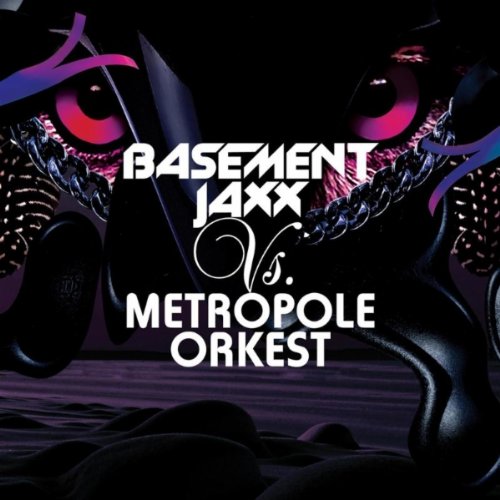 Basement Jaxx: Vs. Metropole Orkest
review
Basement Jaxx Vs. Metropole Orkest (Atlantic Jaxx) – wherein a seventy-strong Dutch symphony takes on the UK maximalist-house duo's catalog (plus bespoke offerings like "Mozart's Tea Party," which sounds precisely how you'd imagine) – is basically ludicrous in both concept and ultra-bombastic execution. In other words: roughly par for the Jaxxian course, but surprisingly fun even by that token, especially when spotlighting the group's forays into Samba, Balkan, swing jazz and Middle Eastern music. Who knew "Where's Your Head At?" could benefit from a good harpsichord solo?
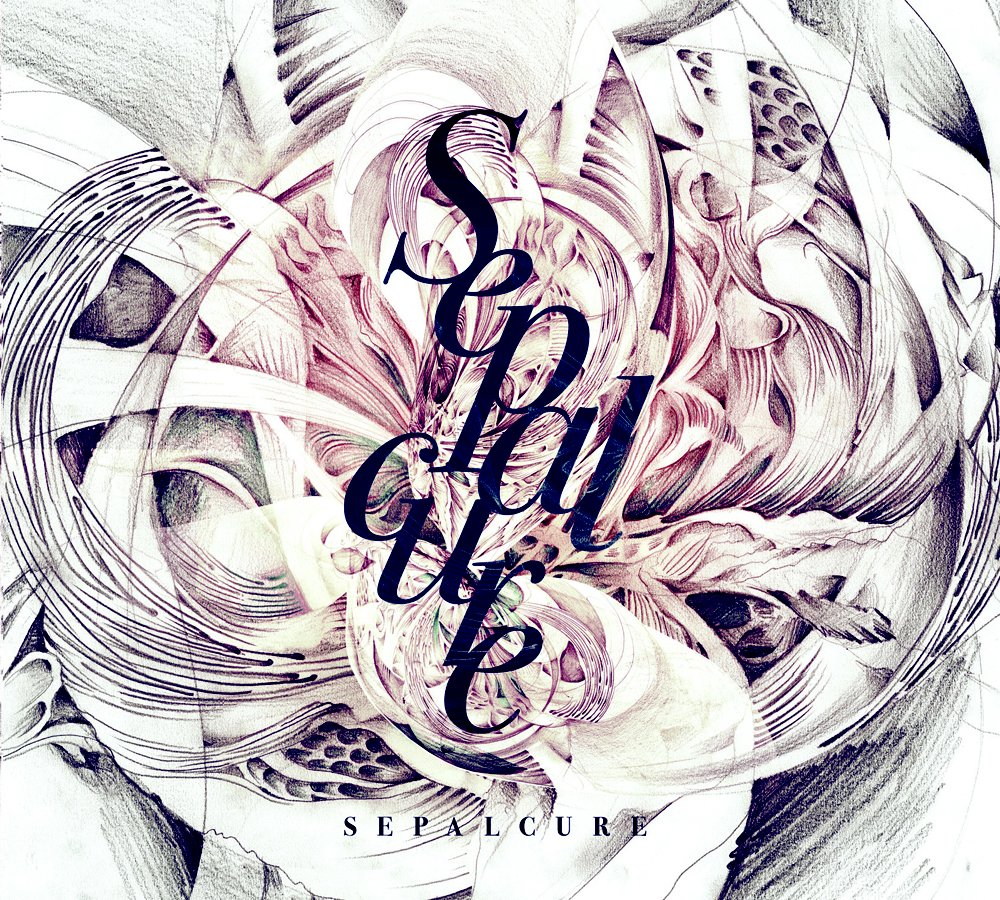 Sepalcure: Sepalcure
review
Much like last year's quietly enchanting debut by their Hotflush labelmates Mount Kimbie (and, to a lesser extent, that of Gold Panda), the eponymous bow from Brooklyn post-dubstep duo Sepalcure – polymathic beat luminaries Praveen Sharma (aka Braille) and Travis Stewart (aka Machinedrum) – filters the diffuse diaspora of UK-bass micro-genres into a focused, delicately detailed set of gently fluid, pointillistic grooves, frayed vocal fragments, and warmly woozy atmospheres, whose slightly faceless air of politeness and familiarity hardly diminishes its ample, unassuming charms.
 Elite Gymnastics: Ruin
review
Minnesota-by-way-of-Tumblr duo Elite Gymnastics – rare Stateside inhabitants of that fertile breeding-ground of Balearic dance beats and indie-pop sweetness (plus a healthy dollop of new age kitsch) pioneered by St. Etienne and lately colonized by Swedes like Air France (both bands are seemingly referenced in the title of their "Minneapolis Belongs to You") – get viscerally physical on Ruin (Acephale), which consolidates a pair of web-issued mirror-image EPs; one side's glitzy, jungle-tinged breakbeats sanded down and repurposed for side two's lumberous, mood-enhancing slow jams.
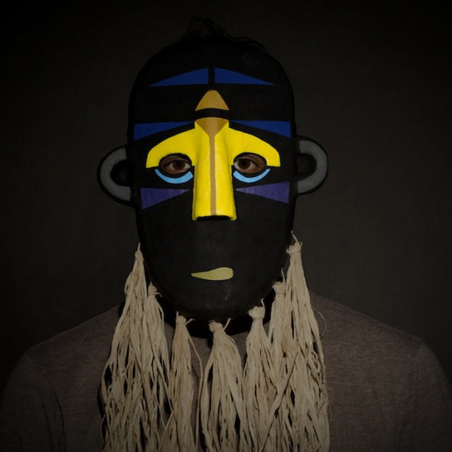 SBTRKT: SBTRKT
review
The South London-based SBTRKT isn't quite as reductionistic in his approach to production as he is about spelling, but his eponymous first LP (Young Turks) is frankly straightforward, even workmanlike, in its pursuit of palatable yet fully contemporary electronic pop. Enlisting a bevy of future-soul vocalists, and drawing more on two-step and smooth R&B than dubstep's jaggeder edge, this set is friendlier (and livelier) than James Blake but just as gently majestic, even if its coloring stays mainly within the lines.
 Zomby: Dedication
review
Zomby's somber, suitelike 4AD debut finds the inscrutable dubstepper squeezing sixteen fleeting tracks into thirty-five minutes riddled with frustratingly premature fades and abrupt breaks. He makes the seconds count though: Dedication (named in tribute to his deceased father) offers enough evocation and invention; pathos and dread – bleary 8-bit bleeps, burnt-out riddims, spectral alien ambience – that it could have been just as satisfying and intriguing at twice this length.
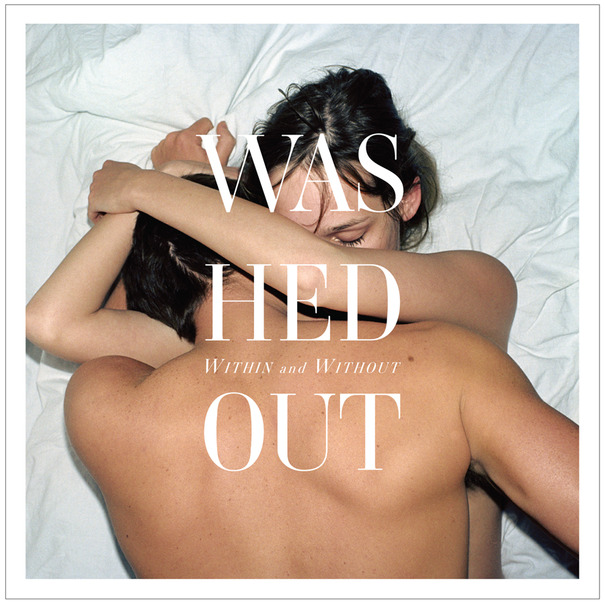 Washed Out: Within and Without
review
Arriving, in suitably leisurely fashion, two years after the much-buzzed "summer of chillwave" he was instrumental in touching off, Ernest Greene's luxuriantly lush full-length debut as Washed Out comes across as resolutely classicist (or, said otherwise, impeccably generic); delivering all the requisite fluttery warmth and thrumming daydream grooves, slightly shellacked of their wobbly analog charm. It's not that Within and Without (Sub Pop) is boring – at least, not in a bad way – but there's such a thing as being too well washed.

 Miguel
 The Chemical Brothers
 Laura Marling/Marika Hackman
 Happyness

 Ducktails
 Girlpool
 Mr. Twin Sister
 Skylar Spence
 Tanlines/Mas Ysa
 Memory Tapes/School Dance