
some more of my favorite 2010 musics, as featured in the occasional citypaper tidbit "one track mind," which is not too bad a pun. including my holy trinity -of-the-year (-so-far): j. newsom, v. weekend, h. chip, [l. system are angling for that coveted tier too, but it's not happening, not quite yet], none of which i have written about in album-review format, so i slip a bit of that in too, not all of which made the print edition. meanwhile i've softened (just a bit) on jj's new album since i reviewed it for amg, but that's probably because i haven't been listening to Nº 2 very much: It’s hardly the most representative moment on JJ Nº 3 – the downshifted but still worthy sophomore outing (Nº 1 was a single, cotton on?) from these often sophomorically inscrutable Swedes – but there’s something hauntingly resonant about this cover (of a 2008 single by The Game) that makes it more than just a jokey album-opening WTF keeping us from the typically blissy electronic indie-pop that rounds out the disc. Continuing with their well-established Lil’ Wayne fascination (exhibit A: the “Lollipop”-sampling Nº 2 standout “Ecstasy”), JJ strip Weezy’s auto-tuned chorus down to nothing but sparse, brooding piano and Elin Kastlander’s laconic, heavily reverbed dream of an alto, zeroing in on the bluesy pathos at its death-obsessed core – and it’s startlingly, legitimately chilling. Of course, in the track’s final seconds, they just had to throw in a tease of ATC’s c. 2000 bubble-house hit “Around the World (La La La La La)” (which happens to have the same chord progression), and trick us into thinking it was an impishly ironic bastard-pop gag all along. Spoilsports. funny story: none of the three songs above were actually performed in the concerts by the respective artists which these blurbs were ostensibly promoting. not too big a surprise in the case of jj, who were possibly even more befuddling in person than i would have predicted (though i should have thought more about what their bosses the tough alliance were like live.) joanna only had time for a "reduced version" of her album – though the setlists of her two-day stand could definitely have included more variety – but surely she could have squeezed this one in? not that i minded hearing most of the set again the second day...would happily have continued for many days more. as for the v-dubs, kind of amazingly, they played every single song on both albums (plus one obscurity) except for the respective last track on each album. of course, the hot chippy chippers broke the spell...damn straight they played "brothers." and with a trumpet too! other than that, total dance party!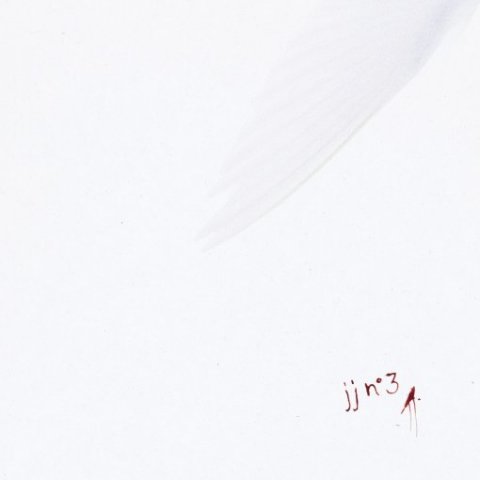 JJ, “My Life”
 Joanna Newsom, "On A Good Day"
Have One on Me, Joanna Newsom's tremendous third, is unambiguously big business: a lavish triple-set brimming with multi-minute epics; a breathtaking and idiosyncratic monument to her ever-mounting ambition. But it's also big-hearted and bountiful enough to be more than a simple extension of (its predecessor) Ys' fancifully lofty, esoteric myth-making – it glances back at least as frequently to the humbler, human scale and (relative) simplicity Newsom first wooed us with on The Milk-Eyed Mender. "On A Good Day," just shy of two minutes, is the shortest song in her catalog and easily the simplest thing here (just that inimitable voice – which has matured and mellowed marvelously in three years – and her utterly glorious harp playing) but none of that makes it any slighter a work than, say, the daunting nine-minute "Baby Birch." In four brief stanzas, sharing a single, unspeakably sweet melody, Newsom nimbly but lucidly sketches the emotional arc of her whole two-hour opus – essentially, a tender resignation to love's loss coupled with a recognition of its ultimate perseverance – complete with a characteristically striking nature metaphor and an ever-so-subtly snide sign-off line. Oh Jo, we missed you so. Vampire Weekend, "I Think Ur A Contra"
One of the surest clues to Vampire Weekend's staying power, to my mind, is that they really know how to end an album. Much as the elegantly restrained "Kids Don't Stand a Chance" wound down their debut on its most invitingly leisurely (and arguably most tuneful) moment, Contra's semi-titular closer wafts in like the gentlest of breezes, a seductively soothing respite after nine frolicsome tracks of restlessly inventive kitchen-sink pep. For the first time in half an hour, "Contra" (which they should totally release as, like, the seventh single) feels in no hurry to get anywhere in particular, letting that initial cotton-candy shimmer linger as a wispy tropical lilt emerges gradually through the haze. Meanwhile, our boy Ezra sets his memory and his melody adrift over a bygone love affair, linking romance and revolution (with a vague Clash nod) in one of his more lucid lyrics, sung as pretty as you please. Hot Chip, "Brothers"
Hot Chip's glorious new album is full of unassumingly simple, earnest, starry-eyed songs about the primacy and profundity of love and human connection; songs about monogamous commitment and domestic contentment and taking care of stray cats. It's a total sudser, in the best possible way. But the part that really makes me well up, every time, is when Joe Goddard sings about playing video games with his friends. Despite its thumping synth-house underpinnings, "Brothers" has the austerity and hushed intimacy of a hymn. Melody-wise (and especially harmonically), the song could hardly be more trivial, but that just makes its statement of wild, death-defying brotherly love (likely written about his bandmates – even if there are five of them, not, as he sings, four – but instantly, obviously, universal regardless) ring all the more sweetly, heartbreakingly true.
saw these guys last night, alongside true o.n.e.-track o.n.e.ders yeasayer. my concert-going buddy complained that she couldn't tell from reading this whether or not i like the song. that's a good point: that isn't really what i'm talking about here, is it.
Sleigh Bells, "A/B Machines"
Talk about boom boom pow. This week's Rolling Stone features Will.i.am blathering about the hidden avant-garde qualities of his group's world-conquering one-note-wonder: "Fool, it's the most complex s--t you could even fathom." I doubt you'd catch Brooklyn duo Sleigh Bells – one former hardcore punker, one erstwhile girl-group pop tart – claiming anything of the sort about their own equally giddy, bombastic racket, which is just as pea-brained, if a good deal more black-eyed. Beyond its bruising, preposterous levels of overdrive, "A/B Machines" actually has three notes (at least some of the time), though it only has one lyric: Alexis Krauss, on that next-level digital spit, explaining the locations of her machines. Actually, it's a bit stupefying to think that there could be any more than one (barely functioning) set of machines involved here. Must be complex.
bonus One Track [exclusive!]: La Roux, "Bulletproof"
La Roux sure do lead a thrilling, treacherous life. Well, so the titles of their singles would have you believe: the well-coiffed dance-pop duo debuted with "Quicksand" and assailed the UK charts with the ferocious "In For The Kill." Even if it's all metaphorical (yeah, they're pretty much just love songs), there's enough real menace and fierceness in their tracks for the violent conceits to hit home. Nowhere is that more true than on "Bulletproof," their finest achievement and the most urgent, insistent, and utterly invincible sliver of synth-pop from a decade of unabashed retro-wonkery. Call it an '80s-retread if you must; you can’t shoot it down. Ben Langmaid's gritty keyboards pierce like tiny neon shards, and Elly Jackson's spitfire vocal delivery (she of the Tilda Swinton-esque androgyny and opinionated, dubiously-reasoned public statements) offer nothing but glisteningly sharp edges. That is, until the song's gleaming chorus – the sort that's simply one line repeated four times, because that's all it needs to be. "This time I'll be bulletproof," Jackson wails, betraying the slightest hint of vulnerability. More likely, we're the ones who need protection.
06 May 2010
tracks of my ears


21 April 2010
AMG review round-up, volume XIX: 2010 first quarter
2010...2010... (oh sorry, i was just quoting cornelius.) i love 2010! just a few weeks late: my album reviews from the first three months of this amazing year. in the order they currently appear on my hotly-contested best of 2010 list (except the bottom five or so, which are not making any kinda list of mine...): Alphabeat: The Beat Is... review
When the pristine power pop of Alphabeat's eponymous domestic debut was buffed up and made over into the even shinier, synthier version of itself that became their gleamingly fluorescent international debut (retitled This Is Alphabeat), it sure seemed like the Danish sextet had hit some kind of insurmountable limit, an ultimate pinnacle of pure pop that just couldn't get any brighter or peppier. That turned out not to be the case, however: The Beat Is... (which, like its predecessor, sports a different title from its Danish counterpart, The Spell, as well as a marginally revised track sequence) is an even glossier, more unabashedly poptastic affair than their first album. Continuing in the overtly dancy direction signaled by the tracks added to their debut's re-release (in particular "Touch Me Touching You") and the popular Pete Hammond remix of "Boyfriend," and slightly updating the band's oh-so-'80s touchstones, Beat takes its cues from turn of the '90s club music: Hi-NRG, Euro-beat, hip-house, and the Scandinavian synth-reggae of Ace of Base. Leading the way is a clutch of undeniable floor-fillers boasting just about every era-appropriate production trick imaginable: the chunky piano riffs and Styrofoam string hits of the instantly infectious "The Spell" (a better, sleeker leadoff than the rather quizzical, vocoder-heavy title track), the filtered rush and gleefully superfluous turntable scratches of "DJ," the swelling snares and kinetic popcorn synths of "Heatwave" -- all of them colossal earworms that also happen to showcase Stine Bramsen's impressively gritty, soulful house-diva vocals. There's nothing remotely approaching a ballad -- the darkly dramatic "Heart Failure" comes closest to the moody fare that slightly sank the latter half of their debut, but even that features a bumptious disco beat -- but the album does mellow a bit for the winningly slinky "Q&A" and "Chess" (which earns points for an unusual if clunky lyrical conceit and a genuinely playful arrangement featuring timpani, marimbas, and amusingly adulterated vocals). While the stylistic dictates of this material may have made Alphabeat's songwriting a bit more simplistic this time out (not that their earlier work was exactly overflowing with structural complexity), their knack for melodic hooks is as sharp as ever. Some listeners may pine for the less streamlined, less electronic, arguably more personable style of their debut, which after all peddled a distinctly different shade of retro-pop nostalgia, but those willing to move with the times (or rather, the 20-year revival cycle) will agree that the 'Beat have crafted another winner. Malachai: bio and Ugly Side of Love review
There may indeed be nothing new under the sun, but the cunningly crafty Bristol duo Malachai have hit on some fairly novel and idiosyncratic ways of reinvigorating the sounds of bygone days, while drawing their proudly retrogressive sonic cues from a surprisingly under-plundered patch of the pop-history dustbin. Ugly Side of Love is a rambunctious pastiche of classic British AOR, circa 1968-1973 -- a pastiche in the sense of unabashed stylistic mimicry -- steeped deep in the grooves of psychedelic and progressive rock, sunny power pop, high-octane blues, gritty white boy soul, and even early metal -- as well as a motley and often muddled hodge-podge, structurally and sonically. Unlike other nostalgia-fueled, sample-driven aural patchwork quilts, however -- the Go! Team's Thunder, Lightning, Strike and Jason Forrest's Unrelenting Songs of the 1979 Post Disco Crash are both useful reference points, although this album isn't anywhere near as giddily hyperactive -- this album presents Malachai less as cheeky post-everything ironists than as grinning but largely reverent revivalists, playing things surprisingly straight-faced behind their monkey masks. Even if their purposely murky working methods are clearly a good deal removed from your typical '70s psych-blues outfit, Ugly Side of Love would sound shockingly plausible if presented as a newly rediscovered artifact from four decades past. Virtually every sound here, including all sorts of rudimentary electronic manipulations -- backwards tape loops, vocal phasing, cavernous reverb, vinyl scratches, rhythmically slipshod looped drum breaks -- could conceivably have been heard on any number of the era's trippier platters, and apart from a couple of credited and/or recognizable sourcings (the Guess Who's "Hand Me Down Love" forms the basis for "How Long," and, apparently, a loop of sunny soft popster Daniel Boone powers the blisteringly righteous stomper "Snowflake"), it's confoundingly hard to tell how much of the album is composed of samples, even if Malachai are sometimes downright sloppy about leaving audible seams. Indeed, the ramshackle quality of the production is entirely in keeping with the loose, quasi-analog aesthetic, and given the psychedelic excesses of the period, the album's formal oddities (brief, inscrutable interludes; barely there song structures; one-off stylistic cul-de-sacs like the peppy beach-party strum-along "Moonsurfin'" or the gloom-soaked, Geoff Barrow-assisted lysergic dirge "Only for You") might not be so out of place either. As refreshing and intriguing as it is on a sonic level, though, Ugly Side of Love might remain no more than a curiosity if not for its copious, pervasive musicality: abundantly funky boogie rock grooves, broiling guitar licks, and subtle but deep-penetrating melodic hooks that, with repeated listens, threaten to strong arm even ear-candy confections like "Lay Down Stay Down" (with its propulsive, Can-like drumming and mariachi trumpets), thanks in large part to the compelling and versatile vocals of frontman Gee, whose grittily powerful pipes are uncannily well-suited to this particular stylistic potpourri, switching off handily between honeyed ("Another Sun"), menacing ("Blackbird"), and earnestly soulful ("Fading World.") Heady stuff, indeed. Eluvium: The Beat Is... review
For an artist whose primary emotional touchstones are stillness and serenity, Matthew Cooper refuses to stay in one place for very long. Right from the start, the ambient composer/producer has taken a departure, slight or striking, with each new release, seemingly making an exercise of finding continually new and different approaches to similar emotional terrain. Similes, Cooper's fifth full-length as Eluvium, and his first since 2007's sumptuous, symphonic Copia (discounting the like-minded, limited-release “solo album” issued under his birth name in 2008), is no exception: it's his first foray incorporating percussion and vocals. Hopefully that news hasn't prompted any undue consternation among the Eluvium faithful, though, because this is hardly the shift into beat-driven pop that some might have feared (or, for that matter, anticipated.) The “percussion” takes the form of soft, gentle clicks and pops (and a few distant, barely there thuds) which appear on about half of the album and bear only a casual resemblance to “beats” in the standard sense (save perhaps for “The Motion Makes Me Last,” whose soft, insistent pulse does indeed create a stirring, quietly exuberant sense of motion beneath the prevailing calm.) The vocals, though nearly as unobtrusive and relatively sparse (three of the eight cuts are instrumental), are a striking, almost magical development -– longtime listeners may find the emergence of Cooper’s voice after so many years to be particularly affecting and even revelatory, although it’s as understated an instrument as we might have expected all along: a sober, pensive, near-monotone, whose Ian Curtis echoes are tempered by the baritone richness and introspective, bruised-heart resonance of Lou Barlow and Bill Callahan. Cooper’s cerebrally abstract, insightful way with language, meanwhile, has long been evident in his well-turned if rather fussy song and album titles. Those qualities are certainly present in his lyrics, but hearing him intone his own words renders them somehow less ponderous, more yearning and introspective, and gently, wittily self-aware, especially since many of the lyrics here feel like glosses (similes, perhaps?) for the ineffable, absorbingly ruminative experience of listening to Eluvium’s music, or the perhaps not dissimilar sensation of creating it. And that experience has never been more absorbing, ineffable, or rewarding than it is here. Despite its innovations, Similes is firmly grounded in the ambient compositional techniques that Cooper has spent his career mastering. Copia’s lush, variegated organic textures, Accidental Memory in the Case of Death's tenderly tinkling pianos (albeit more heavily processed and ring-modulated than ever before), and even the softly whirring guitars of Lambent Material all turn up here, but the best reference point is the invitingly warm, expansive drones of Talk Amongst the Trees (whose title is referenced in one of this album’s first lyrics) which up until now was arguably Cooper’s zenith. With Similes, he’s made his most touching, certainly his most engaging work to date, and against the odds, somehow the most quintessentially Eluvium release yet. jj: Nº 3 review
The gentle waves of buzz surrounding JJ's curious marvel of a debut quickly lapped beyond the duo's native Gothenburg shores, creating considerable expectations for its follow-up, released jointly -- a mere nine months after JJ Nº 2 made its initial splash -- by Sweden's Sincerely Yours and landlocked Amerindie bulwark Secretly Canadian. Thus aptly adjectivally equipped, JJ Nº 3 takes few chances, very much offering more of the same from these sincerely secretive Swedes: it's virtually identical to its predecessor in titling strategy, length (nine songs in a fleeting 27 minutes), and sound. That sound -- lush, glassy, placidly grooving electronic indie pop with wispy tropical and new age undercurrents -- counts for a lot, and those won over by Nº 2's surreally syrupy vibe (equal parts childlike sweetness and narcotic haze), or by Elin Kastlander's lusciously lazy vocals, will find themselves woozily wooed once again. But listeners craving a bit more substance may find it a bit of a bum trip; songwise, Nº 3 falls sadly, decidedly short of its counterpart's dizzying highs. The opener, a spare, somber piano-and-vocals cover of the Game's "My Life" (more specifically, Lil Wayne's chorus hook) is oddly, bluesily effective, but it still feels like an arch, inscrutable goof (particularly given the unmissably cheeky interpolation of ATC's "Around the World") -- either way, it's easily the most incongruous and attention-getting thing here, and once you get past it the rest of the album just sort of drifts by. "And Now" sets the familiar, understated tone, and is a quiet highlight; "Let Go" is better, a wistful, breezily escapist daydream complete with lyrical references to beaches, suntans, and heroin. "Voi Parlate, Lo Gioco" suffers from a nagging similarity to Nº 2's "Masterplan," but it does offer a lovely moment of lyrical self-reference "when the music stops...then the music drops." Otherwise, there's plenty of sonic seductiveness to get lost in; there's just not a whole lot to hold on to -- a partial (but hardly crushing) letdown from an outfit that was previously firing hard on all fronts. Whether the dip in quality is the result of a rush to create new material or whether these are simply the lesser leftovers from the same sessions that produced Nº 2, here's hoping JJ take some time (and maybe one of those epically blissful vacations their music conjures so evocatively) to make sure Nº 4 comes out fully baked. Tindersticks: Falling Down A Mountain review
Eighteen years, and still they soldier on... After a somewhat revised version of Tindersticks broke their five-year recording silence with 2008's The Hungry Saw, it took less than two years for the group (again with a few modifications to the lineup) to compound that successful return with another new album -- their eighth overall -- which stands as perhaps even more of an achievement and pleasant surprise than its very fine predecessor. While Saw offered a few rare glimmers of positivity and sweetness from Stuart Staples and company, it was essentially business as usual for the perennially moody Britons. Falling Down a Mountain isn't exactly a major reinvention, either, but it does back up the golden-hued sky gracing its cover with some of their most upbeat and optimistic songs to date (keep in mind those are relative terms), and a liberal extension of the looseness they've been gradually settling into since 1999's Simple Pleasure. The six-and-a-half minute title track is immediately striking, with its simmering, asymmetrical, jazzy groove buoying a hypnotically simple vocal riff and some uninhibited soloing from trumpeter Terry Edwards. "Harmony Around My Table" is a bouncy soul-pop number that might hardly be recognizable as Tindersticks if not for Staples' inimitable quavering baritone (as always, an acquired taste, like fine wine), while the low-key lovers' duet "Peanuts" sports a charmingly simple, slightly silly lyric, and the twinkling ballad "Keep You Beautiful," though a typically mellow affair, is uncharacteristically, almost achingly sweet. Elsewhere, the album takes on a vaguely Western tinge (again echoing the dusty cover landscape), with the galloping, lustful "She Rode Me Down," Edwards' lonesome flügelhorn on the Morricone-esque instrumental "Hubbard Hills," and the gritty, downright driving "Black Smoke." Eventually -- this being Tindersticks, after all -- the darkness does creep in: the deceptively buoyant "No Place So Alone" seethes with the jealousy of a jilted lover, and by the penultimate "Factory Girls," we find Staples brooding alone, doused in melancholy, feebly asserting that "it's the wine that makes me sad, not the love I never had." It's a typically mournful, typically lovely Tindersticks moment, made all the more exquisite here in contrast to the increased stylistic range that came before it. Sometimes, it just takes a slight change in scenery to help you appreciate what you've always had. Pantha Du Prince: Black Noise review
Since his second full-length as Pantha du Prince, 2007's truly sublime, duly acclaimed This Bliss, Henrik Weber has gradually expanded his profile beyond the traditional confines of the minimal electronic realm, turning in remixes for the likes of Animal Collective, Bloc Party, and the Long Blondes and, in 2009, making the surprising shift from Hamburg's Dial Records to venerable indie rock label Rough Trade, hardly an imprint known for its electronica output. Black Noise, his first album for Rough Trade, bolsters those indie credentials further with a couple of guest spots: !!!'s Tyler Pope plays bass on one cut, and Noah Lennox (Panda Bear, Animal Collective) sings on another. "Why stick to the things that I've already tried?," Lennox muses in his drippy, hazily harmonized fashion on the typically lovely "Stick to My Side" -- and indeed, why shouldn't we expect Weber to branch out a bit? As it happens, though, Lenox's vocals are about the extent of the overt musical innovation on offer here. (For what its worth, Pope's bass on "The Splendour" fails to leave any impression, although the track manages to acquit itself of its rather aggrandizing title quite nicely.) Partisans of the Pantha of old needn't be too concerned (and, by the same token, those intrigued by the possibilities of a more indie-infused Pantha record may be disappointed) because Black Noise does overwhelmingly stick to the tried and true. Which is hardly a cause for complaint. Weber is truly a master of mood and texture, one of few techno/minimal/microhouse producers working with an unmistakable signature sound, and all of his hallmarks are present and accounted for: the shimmering chimes and bells, muffled clicks, woozily atmospheric synth, and deep, dubby bass, set against sturdy but subdued pulsing house grooves, all of which make his music, almost uncannily, equally well-suited to dancefloors and dreamscapes. He has a few slight sonic twists up his sleeve -- "Abglanz" introduces a figure played on what sounds like a steel drum, and "Behind the Stars" brings on the grinding electro keyboards and dark, distorted vocals, recalling the "micro-goth" tag sometimes applied to his earlier work, while the brief, beatless "Im Bann" is all languid guitar strums, thick hypnotic haze, and a muffled crunching sound like footsteps in the snow -- but nothing here would have sounded out of place on This Bliss, and a few tracks, like "Bohemian Forest," whose melodic twinklings feel a bit like Pantha-by-numbers here, could well have been standouts on that record. With its generally well-conceived but vaguely non-committal-feeling gestures toward expanding Pantha du Prince's musical range, Black Noise can't help but feel ever so slightly like a letdown after the consistently mesmerizing rapture of its predecessor. But make no mistake: Weber is still making some of the most enchanting electronica out there, and if this album brings him the increased exposure for which he seems well-poised, there are few producers more deserving. Bonobo: Black Sands review
Laid-back London groove maestro Simon Green (alias Bonobo) returns after a considerable absence (on the recording front, at least) with this fourth full-length helping of his masterfully mellow monkey magic. While it's not terribly divergent from the future-jazz cut-ups that made his earlier efforts such an instinctively natural fit with the turn-of-the-century Ninja Tune stable, Black Sands evidences a clear evolution into a more distinctive, sophisticated, and complex style, resulting in his most musically adventurous work to date, and certainly his most modern-sounding. Green's clearly been keeping his ear to the ground for a bit of rhythmic reinvigoration: the immediately striking "Kiara" reworks the hauntingly elegant string refrain that opens the album with submerged vocal splices and a halting, head-nodding left-field hip-hop beat á la relative Ninja Tune newcomer Flying Lotus, while cuts like the "Eyesdown" and "All in Forms" shade subtly toward the dubstep diaspora. Elsewhere, "We Could Forever" is a funky Afro-Latin workout riding an infectiously crisp guitar riff, and the scruffy, swing-inflected breakbeats that dominated Bonobo's earlier output crop up again on "Kong" and "El Toro." But while the grooves here serve quite nicely (and keep things consistently varied), it's the lush layers of unmistakably live instrumentation laid on top — most of it played by Green himself — that make the album really soar. That's especially true on the two closing cuts, both stretching toward seven minutes, which eschew electronics almost entirely and feel more than anything like dense, moody, compositionally intricate modern jazz. At the other end of Black Sands' polychromatic though tonally consistent spectrum are a clutch of cuts featuring the rather blandly breezy vocals of Andreya Triana — silky smooth electro-samba ("Wonder When") and neo-soul ("The Keeper") that make for more than passable mood fodder but can't quite match the musical inventiveness displayed elsewhere (though Green does weave her vocals quite deftly among the clustered woodwinds and sparse stutter-step of "Eyesdown.") For a style of electronica (chillout/downtempo) that's grown decidedly dusty over the past decade — even though Bonobo is clearly striving to move well beyond such staid genre divisions, and in many ways succeeding, that's probably still the best place to slot him if you gotta — Black Sands is a welcome infusion of life and warmth. Nneka: Concrete Jungle review
Concrete Jungle, a compilation of tracks from Nneka's first two European albums — eight are taken from 2008's No Longer at Ease; four from her 2005 debut Victim of Truth —serves as her introduction to American audiences. The child of a Nigerian (Igbo) father and a German mother who divides her time between Hamburg and Lagos, but takes most of her musical inspiration from American hip-hop and soul (and Jamaican reggae), Nneka comes across perhaps all too readily as an emblematic figure, an embodiment of certain familiar Pan-African tropes. Her compelling personal story seems to encapsulate many of the complexities and contradictions of African diasporic history, while her heterogeneous mix of funk, reggae, rap, R&B, Afro-beat, and pop feels like textbook culture-fusing eclecticism. The cover of Concrete Jungle seems designed to cast the singer as a sort of rainbow-hued "Mama Africa," superimposing her solemn face with a multi-colored map of the continent, curiously mislabeled with American state names (although it does downplay her impressively expansive afro.) It's an attractive reading and an apt persona, and Nneka does it some justice, although it obscures the extent to which she's a unique artist drawing on a singular set of life experiences which don't fit into a pat, familiar narrative. Still, the ambitious array of styles here does make it hard to put a finger on Nneka's distinct identity. There is a palpable (decidedly old-school) hip-hop undercurrent throughout, despite the lack of any traditionally styled boom-bap beats, and even though Nneka really only flexes her (entirely respectable) rap skills on two cuts (the somewhat gritty "Showin' Love" and the bombastic, rock guitar-fueled "Focus" ), "Africans" and "Kangpe" both offer fairly straight-ahead reggae vibes — authentically roots-flavored and mildly updated, respectively — but beyond that, the grooves are truly all over the map: "Uncomfortable Truth" is a horn-heavy 6/8 funk shuffle; "From Africa 2 U" is bubbly highlife-styled Afro-pop; "Walking" and "God of Mercy" nod towards Massive Attack's soulful brand of trip-hop; "Come with Me" is a bluesy acoustic number that calls to mind Tracy Chapman; "Heartbeat" (a 2009 Top 20 hit in the U.K.) is a tense, modern pop confection with buzzing strings and hyperactive double-time drums. On paper it sounds like a disjointed mess, even if there are certainly interconnections linking most of these styles, but somehow Nneka (along with her primary musical collaborator and producer, DJ Farhot) manage to make these disparate tracks succeed not only individually, but as a generally cohesive whole. Among the common elements tying it all together — apart from Nneka's slightly grainy voice, which is thin but versatile and potent — are a consistently organic sound palette (there are almost no overtly electronic elements), and a frequent political edge that's galvanizing without being aggressively militant, and remains uplifting while rarely lapsing into platitudes. Comparisons to the adventurous, populist neo-soul divas of the '90s — in particular Erykah Badu and Lauryn Hill — are both inevitable and absolutely warranted, which helps explain why Nneka's music sounds so refreshingly out of step: just about nobody (not even the revitalized Badu) is making music in this vein anymore with this level of intelligence, warmth, and accessibility.
----- Fredrik: Trilogi review
Trilogi, Fredrik's second full-length outing, is so named because its contents were originally issued as a series of the three limited-edition EPs, self-released by the band on 3" CDs with handmade origami packaging. Despite some flowery language in the accompanying press release about "contemporized viewpoints of the Lovecraftian dream passage," the knowledge that this music was at one point presented in three discrete installments in no way alters the effect of hearing it as a single 50-minute whole -- there are no appreciable musical distinctions to be made between the three segments, which were all recorded in the same six-month span. However, the image of those few delicate, distinctive objects that were initially created to hold these songs does resonate nicely with the particular character of Fredrik's music: intimate, tactile, small in scope, and lovingly crafted with careful attention to detail. These qualities, which made their debut album, Na Na Ni, such a charming and unassuming surprise, are very much still present on Trilogi, which treads similarly evocative sonic territory, blending a cornucopia of organic musical (and non-musical) sounds with sparse electronic touches to create a creaky, ancient-sounding, surreal sort of folk music. This time, though, the tone is notably darker -- right from the eerie, mildly menacing opening notes of "Vinterbarn" -- and the songs, while typically gorgeous and affecting sonically, aren't quite as memorable. It's hard to put a finger on what exactly has shifted, but the deft balance between melody and atmosphere that Fredrik achieved so exquisitely their first time out is not quite as compelling here, with only the uplifting, quietly anthemic "Flax" standing out as a clear highlight. Daedelus: Righteous Fists of Harmony review
Though Daedelus has never been one to follow any path but his own, his output over the years has traced a clear if gradual trajectory toward more overtly beat-driven and pop-oriented (or, at least, vocal-inclined) material. In that sense, Righteous Fists of Harmony – a mini-album released on Flying Lotus' Brainfeeder imprint – marks an abrupt retreat, a sharp departure from the candy-coated dance party of 2008's Love To Make Music To. In fact, it's closer to the gently wistful sepia-toned IDM of his 2002 debut, Invention, than virtually anything he's issued since. Longtime fans will appreciate the return to the familiar, distinctive timbral palette of his early releases; a lush, musty blend of organic elements (bass clarinet, flute, classical guitar, and creakily treacly strings – employed to especially dreamy effect on cinema-scope closer "Fin de Siécle") with electronics (reedy synths, muddled-up programmed percussion) that somehow feel just as fusty and antediluvian. True to his nature, Daedelus hasn't just gone about exhuming the sounds of the past (his own and otherwise) without a well-thought-out reason for doing so: Fists is a concept album, themed broadly around the modernist struggle between technology and imagination (which might have come across more strikingly if Daedelus' juxtaposition of organic and electronic sounds weren't so habitual and effortlessly fluid) but more specifically around the illustrative example of China's turn-of-the-20th-century Boxer Uprising, wherein a band of martial artists, believing themselves to have magical powers, rose up against British imperial rule only to be crushed by technologically advanced weaponry (the album's marvelous title is a translation of Boxers' name for themselves). It's not too hard to hear these ideas playing out in the music, over half of which is instrumental: Daedelus has no problem conjuring up a suitably nostalgic, wanly hopeful air or the sense of a distant historical setting (though it's too bad he didn't take the opportunity to experiment with Chinese instrumentation). "The Finishing of A Thing," in particular, is unmistakably programmatic, its measured, stately fanfare summarily swallowed in a chaotic surge of speed and sound. Three highly subdued vocal cuts don't necessarily augment the concept – "Order of the Golden Dawn" (named for a contemporaneous but unrelated British mystical society) finds Laura Darlington (the producer's wife and Daedelus/Flying Lotus vocal mainstay) sleepily intoning the words "Boxer Rebellion" – but they hardly disrupt the mood. While it may not rank among Daedelus' grandest or most musically distinctive works, Fists is a typically satisfying treatment of an inspired, intriguing premise. Josiah Wolf: Jet Lag review
Josiah Wolf is in a bad way. The drummer/multi-instrumentalist for indie pop-hop, odd-jobs Why? -- and brother of head Why? guy Yoni Wolf -- penned this debut album in the evidently rocky wake of an 11-year relationship, which makes it a solo effort in more ways than one. The lone Wolf also played every note of these lonely, vibe-heavy arrangements, which aren't a far cry from the textural warmth and inventiveness of his work with Why?, but trend toward more simple, if not necessarily sparse, downcast chamber folk. "The Trailer and the Truck" kicks things off with a bit of gusto -- its familiar loping marimba figure and dreamy synth pads offset by rapid-fire drums in martial, measured spurts -- but things stay pretty mellow from there on out, leaving the focus squarely on Josiah's often fragile vocals, which bear a clear familial resemblance to his brother's gruffly personable speak-singing. And that's a fine place for the focus to be: Josiah isn't quite as flashy a wordsmith as his notoriously loquacious sibling, but his more plain-spoken (if still poetic) style can be quite potent, particularly at its most unfiltered and direct. Jet Lag is unambiguously a break-up (well, post-break-up) record, through and through, with plenty of emotionally blunt appraisals of that situation ("Unused 'I love you's build up in my throat/And my apartment smells like divorce," "For eleven years, we didn't touch another/and now I can't sleep") that cut to the core. But Wolf also finds more interesting ways to explore his heartache than simply wallowing in it -- sifting through memories both fondly distant ("That Kind of Man") and bitterly fresh ("The New Car"); grappling with eternity in the shower on "Master Cleanse (California)"; struggling internally to move forward on "The Opposite of Breathing" -- that favorably recall his brother's intimately honest anecdotal approach. Yes, the shadow of his other band, and specifically of his (incidentally, younger) brother, may be hard to escape when hearing and contemplating this album -- the stylistic similarities are pretty undeniable, and not necessarily to Josiah's advantage -- but the elder Wolf has enough of a distinct voice (and enough to say with it) that Why?'s fans will definitely want to give it a listen -- and those who find Yoni a bit too dizzyingly cerebral might take more kindly to Josiah's sincerity and directness. The Bundles: The Bundles review
Jeffrey Lewis and Kimya Dawson can both boast back catalogs full of smart, funny, insightful, and touchingly direct punky folk tunes, but they've also each penned plenty of inane, inscrutable, and/or indulgently scrappy song-doodles that, at best, have served to flesh out each performer's personably idiosyncratic, warts-and-all appeal. The dividing line between these two types of songs is a subjective one, to be sure, but even devoted fans would probably agree that the bulk of The Bundles -- the first recorded output from a longstanding though intermittent collaboration between these two leading lights of anti-folk -- lands sadly but squarely in the latter category. From the shambling start of "A Common Chorus," with Dawson repeating "Don't forget about your friends" over crudely basic Casio and acoustic guitar bits, the album sets up an emphatically informal tone that ostensibly speaks to its low-key, friendly inclusiveness (to wit: minutes later, after a bunch of rambling overlapped vocals and a unison throwaway Hollies reference, the Dawson-led Olympia Free Choir pop up to sing the song's title en masse), but more often winds up feeling impenetrably haphazard, or merely lackadaisical and tossed-off. To its credit, The Bundles does play like a true collaboration, with the marquee twosome along with the band's other members (Lewis' bass-playing brother Jack and drummer Anders Griffin, and engineer/fifth Bundle Karl Blau) trading lines or simply singing simultaneously, and the fun they clearly had putting it together can't help but be a bit infectious. Lewis, in particular, spews prodigious strings of would-be witty absurdist wordplay, sung-spoken sham poetry, and non sequitur nonsense rhymes ("Shamrock Glamrock") that are chuckle-worthy when they're not utterly asinine. A few numbers are mildly musically compelling -- the gently melodic "In the Beginning," the Western-flavored travelog "Desert Bundles" -- and "Metal Mouth"'s bizarro ode to brace-face love is a decently inspired conceptual coup. But only one moment here resembles the big-hearted, unflinchingly personal straight talk of Lewis and Dawson's best work: midway through "Over the Moon" -- shortly after a bit of claptrap about "squirrel beards" -- Dawson issues a brief, singsongy defense of her anti-materialistic value system, culminating in a mantra that stands as the album's clear statement of purpose: "I just wanna sing with my friends." A laudable goal, sure, but hardly a surefire recipe for listenability. If the results are as witless as the hokey, painfully screeched parable "Ishalicious," these Bundles may be best left unwrapped. Everybody Was In The French Resistance...Now!: Fixin' the Charts, Vol. 1 review
Right from the get-go --with the brilliantly meta "Formed a Band" -- Art Brut's Eddie Argos has been obsessed with (and excelled about) writing songs about pop music, a preoccupation that's only become more pronounced with each of the group's albums. So it's hardly surprising that his first major venture outside of the band is a conceptual project of pop songs inspired by other pop songs. Specifically, Fixin' the Charts is an album of answer songs -- a long-standing pop institution (from "Roll with Me Henry" to "Roxanne's Revenge" to "Lloyd, I'm Ready to Be Heartbroken"), but one that's probably never been indulged to quite this extent. Here, we get to hear the other side of some familiar pop stories: a response to Martha & the Vandellas' "Jimmy Mack," the perspective of Michael Jackson's long-lost bastard son (q.v. "Billie Jean"), and a rebuttal to that would-be boy-stealer Avril Lavigne, which flips "Girlfriend"'s bratty cheerleader breakdown on its head ("he won't stray/so go away") and throws in a fitting, side-long allusion to Argos touchstone Jonathan Richman. Sometimes, the "answer" is a bit more oblique: "Creeque Allies," whose refrain provides the rather unwieldy name of this outfit, is quite literally a history of the WWII French Resistance movement, with no apparent connection to the Mamas and the Papas' "Creeque Alley," aside from a vague lyrical cadence and a rambling narrative style. In general, though, the re-imaginings are both witty and spot-on, down to anachronistic but entirely in-character details like the lovers of "Scarborough Fair" stalking each other on Facebook, and the Crystals' "Rebel" "handing out fliers for his electro night." Though they're obviously comical in intent -- if you thought Art Brut were a novelty act, there's certainly no escaping it here -- these aren't precisely parodies. For one thing, Argos and his partner-in-crime Dyan Valdés don't simply reuse the tunes of the songs they're skewering (admittedly, Argos can rarely be accused of using "tunes" at all); but instead create new musical settings that vaguely approximate the feel of the originals, sometimes to rather strange effect. Indeed, the album's skewed musical decisions can be just as much fun as the lyrical foolery: "Hey! It's Jimmy Mack" is a pleasantly amateurish pastiche not of Motown, but Phil Spector-style girl groups, complete with sleigh bells, handclaps, and swirling strings, and "Billie's Genes" warps Jacko's nimble pop into a kind of lumpen quasi-funk with some spirited synth trumpets, while "Superglue," a fairly direct counter proposal to Elastica's "Vaseline," glosses the original's punkish snarl into something that sounds closer to Stereolab (and maybe just a touch like "She Don't Use Jelly"), and the self-explanatory Dylan-response "Think Twice (It's Not Alright") is set to hesitant harpsichord and Valdés' nicely harmonized vocals. Still, Fixin' the Charts really comes down to the jokes and the concept -- how much you appreciate it will depend on how much the idea appeals to you in the first place, and how well you can tolerate Argos' sung/spoken/ranted vocal approach, but it's definitely good for at least a chuckle.
31 March 2010
AMG review round-up, volume XVIII: the rest of 2009
{didn't quite make the list}
Y∆CHT: See Mystery Lights review See Mystery Lights is YACHT's first album as a duo -- vocalist Claire Evans is now a full-fledged member alongside beatmaker/primary instigator Jona Bechtolt -- and their first for DFA Records. Though initially surprising, their shift from a tiny Portland indie to N.Y.C.'s premier independent dance label was in many ways eminently logical: YACHT's playful electronic beats, party-friendly eclecticism, off-kilter poppiness, and array of male/female, spoken/sung (mostly spoken) vocals already had a lot in common with the DFA sound, and particularly with the label's flagship act, LCD Soundsystem. (Their previous album's "Platinum," for instance, bore a more than passing resemblance to LCD's "Get Innocuous.") Musically speaking, the differences between See Mystery Lights and its predecessor are hardly dramatic: the songs are lengthier and fewer, the beats are tighter and more dance-oriented, but the same fundamental elements and energy are all still in place. And energy is key: if most of the DFA stable draws on a hip, wryly detached downtown aesthetic, YACHT's outlook is typically a good deal sunnier, embracing an ethos of childlike innocence and personal affirmation (with just a slight shading of artily ironic distance). Concurrent with this album (which was named for the paranormal optical phenomenon haunting their adopted home base of Marfa, TX), Bechtolt and Evans made things considerably more complicated (or, arguably, just more distracting) in that regard: declaring YACHT to be just a band, but also a Belief System; inviting anyone to "join" (via the online "YACHT trust"); issuing cryptic manifestos online and in print; displaying a conspicuous obsession with triangles; and propagating a series of aphoristic mantras (including one borrowed from Maharishi Mahesh Yogi and, perhaps the most worrisome, "YACHT is not a cult") -- all adding an inscrutable, somewhat sinister undertone to their positivity.
Despite the mass of verbiage and iconography, it's hardly clear what they're getting at with all the quasi-occult trappings, apart from creating some marginally intriguing art, but thankfully understanding it is completely unnecessary for enjoying the music. The only album cuts with an overt lyrical connection to this pseudo-spiritual business are the first two numbers (both built around repeated nursery rhyme-like incantations about the afterlife) and "Don't Fight the Darkness," which turns the Maharishi's mantra into a loopy bit of sparse, Timbaland-ish IDM. Despite some reasonably inventive beat programming, they're probably the least interesting things here, sounding dry and labored in comparison to the freewheeling fun of obvious party jams like the cheeky "I'm in a Love with a Ripper," with its T-Pain-jacking Auto-Tune hook, and the very-DFA "Summer Song," an affectionate if derivative disco-punk homage built on a solid foundation of cowbells, handclaps, and an all-mighty bassline. Though the album as a whole makes for an enjoyably unpredictable hodgepodge of summery, celebratory, and frequently quirky sounds, individual numbers often suffer from a sort of ambivalence of form, as though they couldn't decide whether they wanted to be pop songs or dance tracks -- it's telling that the two most effective moments both feature a clear and engaging structure, albeit very different approaches. The biggest earworm is "Psychic City," a laid-back groover that borrows the curious verse lyrics (and linear song form) of a 1987 song-poem by K Records' Rich Jensen, adding the self-evident refrain "Ay-Ya-Ya-Ya!"
But See Mystery Lights' biggest leap, and most surprising success, is the two-parter "It's Boring/You Can Live Anywhere You Want," which abandons pop linearity altogether in favor of an extended, expansive beat workout, kicking off with unprecedented guitar-driven punk-funk intensity, then delving into a hypnotic, Afro-tinged groove powered by frenetic drumming and swirling, chanted vocals. It's by far the album's longest cut and also the clearest indication of why DFA is an appropriate home for YACHT -- to the extent that it could almost be written off as a mere LCD Soundsystem/Juan Maclean ripoff (which, perhaps, if you want to be a real killjoy, makes it in turn an Arthur Russell/Brian Eno ripoff...) if it weren't so compelling and enjoyable in its own right. YACHT focus most of their (musical) energies on making goofy, offbeat pop in the frivolously fun vein of good-vibes heroes Tom Tom Club, and there is absolutely nothing wrong with that -- it's their best quality, and that certainly remains true on See Mystery Lights -- but this track in particular demonstrates that, when they so choose, they can be equally adept at channeling the fearlessly adventuresome spirit of Talking Heads, and there's definitely nothing wrong with that either. OMO: bio and The White Album review
The London/Berlin-based duo Omo have a good deal in common with their willfully weird Lo Recordings labelmates the Chap, which comes as little surprise considering that one-half of the duo, Berit Immig, also serves as a vocalist and keyboardist in that band (and, in fact, both members of Omo previously played with Chap main man Johannes Von Weizsäcker in the group Karamazov). The two outfits share a deliciously warped sensibility, characterized by a wry, steely-eyed humorousness that seems at once decidedly English and also rather incongruous and alien, as though something were being lost (or deliberately mangled) in translation. Whereas the Chap typically deliver a fairly muscular, mutant electro-rock sound, Omo's musical approach on this debut LP is calmer and gentler but perhaps even quirkier, combining cheap-sounding synths and beatboxes with languidly plucked guitars and an array of electronic burbles, whistles, wordless vocalizing, and other odd noises to craft sparse but amiable compositions recalling the retro-minded stylings of groups like Plone and Stereolab as well as the strangely lucid sonic abstractions of the Books. As curious and endearing as Omo's music might be, however, its primary function is clearly to serve as a backdrop for the duo's vocal and lyrical shenanigans. Typically delivered in spoken or half-sung phrasing (bearing out occasionally cited comparisons to Laurie Anderson) and often subjected to electronic vocal manipulations whose effect is, on the whole, more whimsical than off-putting, The White Album's lyrics focus in on the minutia of various facets of everyday life: the hours of the clock ("2 PM"), a tennis game ("Advantage"), some fish in a tin ("Fish in the Tin"), and, of course, teatime ("Tea Break"), along with occasional forays into biology ("Her Body," a found-text description of a bird laying an egg) and fantasy ("König," sung by a theramin-voiced queen with a crown of "real stars"). There's an occasional whiff of overarching commentary on the culture of consumerist consumption -- in the general preoccupation with material objects and in more specific instances like the music industry vignette "Live Show," the bland ad-copy language of "ROV," and especially standout track "Oversized," which features some folderol about eating tarts (over a perky, chintzy bossa-nova beat) followed by the comically unsettling refrain "Will you be surprised when I'm oversized?" By and large, though, Omo offer arch absurdism of an elemental and purely conceptual stripe, rendering any inklings of interpretation more or less gleefully futile. Caspa: Everybody's Talking, Nobody's Listening! review
Highly touted dubstep scenemaker (DJ, producer, label head, ostensible great white hope) Caspa opens his debut album, Everybody's Talking, Nobody's Listening!, with, ironically enough, some talking: the legendary U.K. reggae DJ David Rodigan asserting that "it's all about the music" and sketching an implied sonic and cultural lineage leading directly back to "King Tubby's echo chamber in western Kingston." It's an odd choice for a keynote, and a rather dubious connection, because the music that follows lands pretty squarely on the least roots-oriented end of the dubstep continuum. Despite a vague Jamaican flavor imparted by guest MCs on a few cuts (most notably Roni Size compatriot MC Dynamite, always a likable presence, though he's more of a grime/hip-hop hypeman than a true ragga toaster) and the genre's de facto half-time skank undergirding about two-thirds of the set, there's relatively little reggae influence discernible here, and almost none of the organic, reverberant, dubby haze favored by producers like Burial. Instead, Caspa's productions are cold and mechanical, often strident and occasionally somewhat sterile-feeling, but nonetheless brutally effective dance music, albeit dance music of a curiously sluggish strain. There may be hints of heat and humanity in these grooves, and moments of woozy intoxication, but they derive strictly from the interplay of rhythms themselves, while the textures remain resolutely forbidding and industrial. Caspa's sound is presented at its most potent, elemental form in the instrumental cuts: the spare, ominous "Low Blow," with its trademark midrange wobbles and pummeling bass; the strobed, colorless zapping of "Marmite." The bleepy "I Beat My Robot" and "The Terminator" hit just as hard while offering just slightly more musical range, which could almost be taken for playfulness. Elsewhere, the vocal cuts are decent if fairly undistinguished musically (though "The Takeover" does amusingly feature its own screwed-and-chopped remix outro), while a handful of stylistic experiments reaching beyond Caspa's comfort zone (slick R&B on "Lon-Don City," downtempo acid jazz on "Victoria's Secret") are passable in themselves but feel out of place. He leaves listeners with a final pair of curiosities: the jittery, obnoxious Streets-like pop-grime-house oddity "Disco Jaws" and an evidently nostalgic tribal-ambient excursion titled "Back to '93," which is the album's longest and probably most incongruous cut. Taken together with the aggrandizing intro track, it seems there is some attempt being made here at a statement about U.K. urban dance culture/history, and, presumably, Caspa's place within it. The album itself is hardly strong enough of a musical statement to make much of that premise (notwithstanding the foolhardiness of historicizing yourself on your own debut album), but it's certainly got a lot of energy. Hanne Hukkelberg: bio and Blood From A Stone review
Is Blood from a Stone Hanne Hukkelberg's difficult third album? Actually, on the surface it may be her most direct work so far, slotting more neatly and readily into a recognizable genre type -- call it dark, shoegazey, post-punk-derived art rock -- than either of her previous albums, and making prominent and comparatively conventional use of electric guitars, without abandoning her distinctive found-object approach to orchestration. Hukkelberg's music has always been difficult, requiring repeated and attentive listening for the nuances of its elliptical melodies and intimate sound-worlds to seep through. She's always been an artist who works in shades of gray. But if Little Things was silvery: blithe, wispy, evanescent; Rykestraße 68 more of a wizened, smoky charcoal, mottled and murky; Blood is closer to a gunmetal smear: drab, dense, and frequently oppressive. Drawing explicit inspiration here from the likes of Sonic Youth, Siouxsie and the Banshees, and PJ Harvey, Hukkelberg seems less interested in those artists' visceral urgency than their sonic grittiness. Blood gestures toward post-punk's primal edginess, particularly in its brutalist percussion tactics (freezers and stoves, clogs and rocks, no traditional drum kits), but it fails to approach the traction and immediacy of, for instance, the previous album's gripping, revelatory Pixies cover. Part of the trouble is that her remarkable voice is put to notably less expressive use this time around. More to the point, though: most of the songs just aren't that compelling. Things start out strong, with the lush, gauzy "Midnight Sun Dream," the swaggering title track, and the driving "Bandy Riddles," which boasts the album's most sprightly melody. From there on it's heavy going, as the songs seem to devolve into a dreary, largely undistinguished mass, respectable and even potent on a tonal and textural level, with some undeniable moments of beauty and strangeness, but weirdly laborious to actually listen to. No one should have expected getting Blood from a Stone to be easy, but it's a shame it had to be this much of a chore. Sally Shapiro: Miracle review
If the most striking feature of Disco Romance, Sally Shapiro's utterly charming debut album, was its uncannily meticulous evocation of early-'80s Italo disco in all its fragile, intimate glory, the most notable thing about this follow-up set may be how fully and faithfully it replicates its predecessor. Save for an occasionally perceptible updating and subtle toughening of their sound, and a marginally poppier writing approach (thanks largely to the increased involvement of Nixon/Cloetta Paris songsmith Roger Gunnarsson), Johan Agebjörn and his still-secretive chanteuse have hardly altered their working template, so album number two feels mostly like a déjà vu whirlwind of glistening synths and icily insistent beats, laden with sweetly cooed romantic disclosures and hushed spoken asides. It's a rather less uncanny feat the second time around, certainly, and My Guilty Pleasure can't help but feel like something of a letdown after the starry-eyed singularity and surprise of Shapiro's initial appearance, but more of the same is, in this case, far from a horrible thing. To some extent, it's hard to say what else could have been expected -- the two discs' worth of largely reverent remixes that followed Disco Romance were surprisingly scant on potential new directions (that said, the one remixer who crops up again here, Tensnake, does provide a loose, poppy highlight in "Moonlight Dance," even if it's less distinctive than his dubby, percussive mix of "I'll Be By Your Side"). Excepting perhaps wholesale retreads like "Looking at the Stars" and "My Fantasy" (dead ringers for the first album standouts "Hold Me So Tight" and "I Know"), the sameness of the sound isn't necessarily such a problem in itself; more disappointing is that nothing here follows up on the charismatic songwriting promise of the stellar inter-album singles "He Keeps Me Alive" and "Jackie Jackie" (which appeared on the North American release of Disco Romance and the European edition of this album) -- even with Gunnarsson aboard, nothing here approaches the personable nature of those songs or of his work for Cloetta Paris (whose overlooked 2008 debut is a far more worthy next step for Shapiro admirers). The closest are probably "Love in July" (featuring an almost imperceptible vocal cameo from Paris), whose electro-tinged warmth does indeed inject a bit of summer into Shapiro's decidedly wintry vibe, and "Save Your Love," a simple but touching blast of quasi-Hi-NRG dance. The lushly arranged album closer, (and first single), "Miracle" is a nicely effective piece of overwrought emotionalism, complete with fake thunderstorm. A little variety goes a long way -- here's hoping the next album will continue to explore further afield. In the meantime, this may be a holding pattern, but it's one worth holding on to. Diminishing results are, after all, still results. Montt Mardié: Skaizerkite review
By the time of his third album -- fourth if you count the disparate double-set Clocks/Pretender as two; fifth if you include the half-re-recorded compilation Introducing...The Best Of (whose several new tunes are very much in keeping with his work here) -- Montt Mardié, still only 25, had long since left behind the endearing adolescent idiosyncrasy of his debut for a distinctly sophisticated brand of classically inflected indie pop. That's not to suggest that he's abandoned his deep-seated sentimental streak (a sensibility which feels at once youthfully idealistic and somewhat improbably nostalgic and wistful) or his penchant for giddy exuberance. On the contrary, Skaizerkite is packed full of peppy, danceable, and dramatically heartfelt soul-pop, from trumpet-blaring opener "Welcome to Stalingrad" to the Motown-ish groover "Bang, Bang," the tense New Romantic fashionista strut "Click, Click," the string-laden stomper "I Love You Annie," and the majestically melancholy lead single "Dancing Shoes," a perfectly pitched ode to dancing through your tears. Mardié's familiar lyrical concerns, including (most chiefly) lovesickness and (as a glance at the track list suggests) European travel, are all here, and the album is practically dripping with schmaltzy romanticism, inflated both by his impassioned falsetto delivery and by lavish semi-orchestral arrangements that hearken in equal measure to the '40s, the '60s, the '80s, and the more recent likes of Camera Obscura. It's accomplished stuff, to be sure -- fans of Mardié's past work or the chamber pop genre in general are likely to be pleased -- but it can feel fairly overwrought and overwhelming when taken as a whole, so the handful of gentler, more stripped-down numbers (including the tender portrait-ballad "Elisabeth by the Piano" and geek-love farewell "Dungeons and Dragons") come as a welcome change of pace, even if the latter's combination of nerdy references and heart-on-sleeve emotionalism verge on parody. It may not have quite as many obvious stand-out songs as his past work, but Skaizerkite still stands as a consolidation of Mardié's many strengths, and the most self-assured and unified statement thus far from one of Sweden's finest young popsmiths. Thunderheist: bio and Thunderheist review
An admirable attempt to shake up hipster dance music formulas that doesn't quite come off, Thunderheist's self-titled debut combines the decent if derivative talents of Isis -- a real-deal MC who mostly limits herself here to dumbed-down good-times party rhymes -- and Grahm Zilla, whose synth-laced productions take in Moroder-esque disco, old-school electro, stuttering crunk and B-more club, and brittle tech-funk. It's a promising merger, but the results are frustratingly uneven. While the blank-voiced Isis occasionally makes for an intriguing presence on the mic, as on the minimal, electro-flavored "Slow Roll" and "Cruise Low," too many of her ostensible hooks come off as tired and oddly dispassionate rehashes of the frank sex rap perfected by the likes Peaches and Spank Rock, not to mention Missy and Lil' Kim. That's particularly true of the duo's early singles ("Jerk It," "Bubblegum") and several of the other tracks packed towards the front of the album, where Zilla's beats are too plodding and one-note to provide much spark, either. Things get somewhat more colorful, or at least varied, in the album's latter half, with "The Party After"'s curiously murky booty-groove and "Space Cowboy"'s gleaming disco/R&B, which demonstrates -- along with the surprisingly soulful early standout "Nothing 2 Step 2" -- that Isis is far more engaging as a singer than as an MC. A few notably weak tracks notwithstanding, most of this material would be pretty enjoyable, or at least reasonably effective, in a club context -- taken as an album, though, it's an unfortunately tepid, shruggable listen with a small handful of highlights. Black Devil Disco Club: In Dub, Eight Oh Eight and The Strange New World of Bernard Fevre reviews
"What could be more devilish than a decently atmospheric but insipidly monotonous and ultimately fairly tepid techno record? How about that same record again...twice! That's not exactly what Bernard Fevre is offering here on this companion release to his 2006 "comeback" album, 28 After, but it's distressingly not far off."
Bernard Fevre may have been largely inactive in the quarter-century between the little-heard initial release of his 1978 Black Devil opus Disco Club and its 2004 re-release (and attendant critical plaudits), but he's certainly been making up for lost time since then. In the ensuing years, he's toured, cut a handful of remixes, issued a follow-up LP of uncertain provenance (28 After), a remixed version of same (In Dub), and another similarly styled album (Eight Oh Eight) of evidently new material, which was presented as the third and final item in the Black Devil oeuvre. Honoring that notion (at least for the time being) while still keeping the ball rolling, Fevre has now turned to his pre-1978 output -- several albums of electronic library music (i.e., generic-use soundtrack cues) -- for source material. Neither a wholly new outing nor a straight reissue, this release is a curious amalgam: it contains about half of the tracks from 1975's The Strange World of Bernard Fevre -- two of which had surfaced more recently on the crate-trawling library music compilations Further Nuggets and Space Oddities -- all of them newly spruced up with richer, fuller production and extended a good minute or more past their original one- to two-minute snippet length. The remaining half of the tracks are previously unreleased, though it's hard to know for sure whether they're wholly new or just salvaged from '70s scraps. It's certainly an unorthodox approach to constructing an album, but it's a sensible one for this material, which benefits from the expanded focus. The results are enjoyably old-fangled but not overbearingly so, making for an engaging, immersive experience and arguably a more rewarding one than the latter-day Black Devil efforts. The sound palette is familiar -- nothing but deliciously musty analog synths -- but the emphasis is on mood-alteration rather than dancefloor incitement, spanning an emotional range from seedy to spacy to spooky and, of course, campy. Strangely delightful.
also reviewed for AMG:
Baby Teeth, Fanfarlo, Fischerspooner, Nite Jewel, Throw Me The Statue, John Vanderslice, Susumu Yokota
also previewed/reviewed for CP:
The Field, Issa, Junior Boys, Lady Sovereign, Micachu, NOMO, Paramore, Sian Alice Group, Telekinesis, Keith Urban
{reissued '09} The Boy Least Likely To: The Best B-Sides Ever review
The Boy Least Likely To were one of the most delightful indie pop outfits of the 2000s, but hardly one of the most prolific, so it's a great boon to fans of their ramshackle twee to have the loose ends of their output to date compiled here -- especially so since most of it is first-rate stuff, entirely in keeping with the style and quality of their albums. As its title suggests, this disc (which was initially bundled with pre-ordered copies of their sophomore album, The Law of the Playground, and later made available at independent record shops) collects the B-sides of the singles from their debut, The Best Party Ever, with one perhaps wise omission: the highly improbable Armand Van Helden remix of "Monsters" (it's more listenable than you might expect, but it would certainly disrupt the flow here). There's also "Faith," a rendition of the George Michael chestnut that first appeared on a Q magazine freebie disc of '80s covers -- it might sound a bit funny on paper but it works marvelously, a sweet and relatively straight reworking (albeit swapping the original's Bo Diddley groove for a simple plodding two-step), at least until the recorders, glockenspiel, and toy percussion kick in for an instrumental bridge. The other cover here, of the Field Mice's somewhat dour acoustic ballad "Between Hello and Goodbye" (itself a B-side to begin with) is more reverent and less revelatory, though nice enough. The originals, however, are all prime Boy, deploying the full arsenal of banjos, xylos, synthesizers, and assorted kiddie instrumentation; spanning the spectrum from bouncy ("Oddballs") to tender ("Cuddle Me"); and boasting melodies that in some cases rank among their finest work -- particularly the jubilant "Rock Upon a Porch with You" and wistful "When I Grow Up I Want to Be a Boy Again," both of which seek to shortcut the gap between childhood and old age, though working from opposite ends of the equation. Simply put, anybody who has treasured the Boy Least Likely To's superb albums will find there's that much more to love on this brief but satisfying collection. Pax Nicholas and the Nettey Family: bio and Na Teef Know De Road Of Teef review
A virtually unknown Afro-funk rarity, deservedly rescued from obscurity by the good people of Daptone Records, Na Teef Know de Road of Teef is the work of Fela Kuti sideman Nicholas Addo Nettey, featuring several of his Africa 70 bandmates and recorded at the same Lagos studio (run by Cream's Ginger Baker) where Kuti cut many of his prime '70s sides. It's no great surprise, then, that Kuti's output of this era is the obvious touchstone here, and Fela fans will find this material immediately familiar, right down to the format of the album: four lengthy, intricately rhythmic, jam-heavy grooves, alternating between gritty call-and-response vocals and extended instrumental passages. That said, these recordings feel particularly raw and stripped-down, sacrificing some of Fela's horn-heavy punch (even though there are certainly horns here, along with plenty of percussion) for a slinkier, burbling vibe, dominated throughout by a reedy organ that recalls the chicken-shack jazz-funk of Jimmy Smith and the Meters. Soulfully grooving, if sometimes more hypnotic than danceable, and handsomely presented with the eye-popping original sleeve art intact, Na Teef Know de Road of Teef makes a welcome addition both to the Daptone catalog and to the shelf of any discerning Afro-beat collector.
{release date confusion: '08 France, '09 UK, '10 US} The Dø: A Mouthful review
The Dø -- the Parisian duo of Dan Levy and Olivia B. Merilahtin, whose moniker (pronounced like "dough") derives from both member's initials, but also refers to the first (and last) note of the solfege scale, as well as the Norwegian and Danish words for "die" -- stake out their unconventional indie folk-hip-pop territory with A Mouthful. It's all over the map, both musically and emotionally, and can be a lot to take in ("A Handful" might have been more appropriate), but they manage to strike a quirky yet affecting through-line that mediates between their frisky playfulness, fiery brashness, and tenderly sentimental sincerity, and helps to integrate the album's stylistic hodge-podge so that its eclecticism feels improbably natural rather than forced or gimmicky (or simply schizophrenic.) To be sure, the album's success rests largely on the duo's high-caliber musicianship -- in particular, multi-instrumentalist Levy's dextrous, sophisticated arrangements (which reflect, among other things, both his jazz influences and the pair's past collaborations on a handful of film soundtracks), and Merilahtin's distinctive, versatile singing voice -- which allows them to tackle an idiosyncratic assortment of genres with uncanny ease and coherence.
For the bulk of its running time -- roughly two-thirds of the tracks, give or take -- A Mouthful doesn't stray terribly far from relatively familiar, primarily guitar-centric folk/pop/rock fare, with a particular focus on breezy balladry (including the autumnal "Song for Lovers" and the sublime, elegantly bluesy "At Last") and a few tougher-edged roots-pop nuggets ("On My Shoulders," "The Bridge Is Broken.") Often, especially on the more aggressive cuts toward the album's end, this material recalls the artier side of '90s alternative and indie rock -- a comparison brought home by Merilahtin's passing vocal resemblance to prettily gritty singers like PJ Harvey, Liz Phair, and Nina Persson (specifically her work with A Camp). Even on these comparatively pedestrian offerings, the Dø offer far more compositional and instrumental nuance than your typical songwriterly outfit. Elsewhere, they hop through genres with gleeful abandon, calling to mind the infectious precocity of early Nellie McKay, the capriciousness of Beck, and perhaps even Björk's limitless ingenuity. Not that anything here feels remotely like a derivative genre exercise. "Stay (Just a Little Bit More)" is a cute bit of retro-pop whimsy polka-dotted with ukulele, whistling, strings, and carnivalesque organ; "Queen Dot Kong" is a shockingly credible but utterly demented stab at hip-hop with a swaggering horn section, all manner of cartoonish musical left turns, and its own expansively grooving instrumental-fusion coda. And the album's hidden gem is "Unissassi Laulelet," an all-too-brief curiosity that blends bewitchingly harmonized a cappella vocals (sung in Finnish) with polyrhythmic, quasi-ethnic "tribal" percussion to truly enchanting effect. Then there's the downright off-the-wall opener, "Playground Hustle," a sort of nursery rhyme-war chant by an army of disgruntled, gender-norm-disrupting youngsters, set to a spasmodically funky found-sound beat, which sounds like the Go! Team skirmishing with Le Tigre in a schoolyard scrap-heap with Matmos (circa The Civil War) providing the arsenal. Or something. Anyway, it doesn't really sound like anything else out there, or for that matter like anything else on this album -- which makes it a pretty appropriate calling card. The Dø's debut may be a mouthful, but it's deliciously sweet, tangy, and zestful, and definitely well worth biting into.
{#7 - songs list} The Sound of Arrows: Danger! and M.A.G.I.C. review
If the Sound of Arrows' debut single "Danger!" described the world as a dark and scary place (not that it necessarily sounded that way), this follow-up presents entirely the opposite outlook -- instead of the exhortations of a neurotic parent, it's an unbridled expression of lightness and childlike wonder: "The W.O.R.L.D. is full of M.A.G.I.C." That utterly exuberant chorus (with definite shades of Justice's "D.A.N.C.E.") is even chanted by a bunch of kids -- conveniently or confusingly, "W" is pronounced in Swedish like "V," which may make them seem like a bunch of kid vampires. Rarely has a song's message been so perfectly suited to its sound; a giddy, gushy confection of synths, strings, twinkles, and beats that launches this Swedish duo right into the forefront of prime 2000s regressionist-pop, alongside the Go! Team and Architecture in Helsinki. A trio of glitchified electronic reworkings -- Let's Get Invisible's jumpy, '80s-happy take (subtitled "Reading Is Fundamental"), a spastic synth pop slice-up by Spain's Cof Cof, and a muted breakbeat infusion from Alaska's Curtis Vodka -- do interesting but inessential things, diluting the song's primal innocence somewhat without entirely obscuring its joyful essence, nor making it necessarily any better or worse for the dancefloor, whereas Japan's Ice Cream Shout manage to re-envision the song entirely (this time with harp, glockenspiel, a plodding tuba, and a battery of marching-band percussion) for a fittingly tender and warmhearted new reading. The mellow, meandering "Smalltown Lullaby," a somewhat Christmas-y quasi-instrumental which comes complete with storybook narration, closes out this entirely delightful EP.
AMG review round-up, volume XVII: the second best of 2009
carrying on down the list...
{#26} Fuck Buttons: Tarot Sport [CP concert preview]
Fuck Buttons have a way with paradox, an uncanny aptitude for smoothing over uncomfortable juxtapositions. Just check that improbably cuddly band-name, for instance (or is that just me?) On last year’s majestically visceral Street Horrrsing, the U.K. duo made borderline-abrasive swaths of droning, monotonous electronic noise feel downright warm and cozy, yet also awesomely epic. Their nifty new Tarot Sport replicates that trick and adds a few new ones too, toning down the demonic shrieks and amping up the tribal/triumphal drumming, for maximal adrenalized pummeling hypnotic techno-bliss.
{#28} Fool's Gold: Fool's Gold [+ bio]
In a similar spirit to artists like Extra Golden and NOMO, the music of L.A.'s Fool's Gold is fundamentally rooted in – not merely inspired by – international (and more specifically, African) sounds and styles, even if they essentially emerged within the context of American indie rock (for one thing, three of the band's members overlap with the more straight-ahead indie outfit Foreign Born.) This self-titled debut finds the group – a twelve-strong cohort led by bassist/vocalist Luke Top and lead guitarist Lewis Pesacov, featuring a pair of saxophonists and a full four members devoted to percussion and chant-like auxiliary vocals – delving energetically into eight spicy, polyrhythmic, highly danceable compositions whose emphasis is firmly on groove and riff, as opposed to song per se. Top's curiously resonant, commanding vocals do provide a focal point (he sings primarily in Hebrew, a significant personal distinction for the Israeli-born vocalist, but one which non-Hebrew-speaking listeners will find merely adds another subtle layer to the general ethnic ambiguity at play here), but they are interspersed throughout to give equal weight to the rest of the ensemble, and especially to Pesacov's deliciously nimble fretwork, which is central to the album's idiomatic credibility (cementing, in particular, the buoyant opener/lead single/instant standout "Surprise Hotel.") To some listeners, the stylistic accuracy and pan-ethnic eclecticism of the group's highly informed cross-cultural homages/borrowings (an Ethiopiques-styled number here, a Tuareg blues-informed one there) may come off as somewhat glib and generic, and indeed the album has a bit of the faceless feel of, say, a Putomayo: Africa compilation. But that in itself is, all things considered, an impressive feat for a motley crew of Angelenos; the fact that, far from dry mimicry, Fool's Gold offers up an abundance of joy and soul makes it both a significant statement – further testament to the limitless potential of global musical cross-pollination – and, much more importantly, a hell of a party record.
{#29} Anna Ternheim: Leaving On A Mayday
For her third album -- which would become her second U.S. full-length, following the compilation release Halfway to Fivepoints -- Swedish songbird Anna Ternheim enlisted the assistance of Björn Yttling, best known as one-third of Peter Bjorn and John but increasingly prominent in his own right via production work for Lykke Li, Shout Out Louds, Primal Scream, and others. It was a savvy move -- for one thing, the collaboration netted Ternheim a Swedish Grammy for Album of the Year -- and the results were a modest but significant step away from the accomplished but slightly faceless and overstuffed jazzy lounge-folk of her earlier work, toward an edgier, more distinctly pop direction. While hardly as gritty as Yttling's work on Lykke Li's Youth Novels, or his own band's 2009 album Living Thing, Leaving on a Mayday shares with those records an inventive sparseness -- achieved more through a spacious openness in the sound than a reduction in the number of instruments, per se -- and in particular a relative paucity of guitars in favor of, among other things, surprisingly prominent percussion. That's especially true of the album's first half, where the pulsing, stripped-down grooves are colored by majestically thick string arrangements (penned by Yttling, who also contributed his multi-instrumental talents throughout.) For all its sonic distinctiveness, though, this is still fundamentally a singer/songwriter album -- the arrangements may sometimes be more initially striking than the songs they are designed to serve, but with further listening, they emerge as well-conceived if unconventional complements to a fine slate of lyrical compositions steeped in the autumnal melancholy favored by so many Scandinavians (Ane Brun, Stina Nordenstam, Britta Persson, Sarah Assbring,etc.), with an especial tinge of romantic desperation (Ternheim sometimes seems just as distraught and unsettled by the prospect of an actual romantic connection as she is over the absence of bygone and unattained lovers.) That said, several of Mayday's finest and most striking moments are at least musically upbeat, as with gloriously harmonized choruses of the sweeping opener "What Have I Done" and especially the thundering, Fleetwood Mac-ish "Make It on My Own" (one of two Yttling co-writes, and a key track added to the album for its U.S. release.) The tail-end of the disc finds Ternheim in a folkier vein, with the simply, sweetly strummed "Summer Rain," the tense, fingerpicked "Off the Road," and the foreboding, folkloric dirge "Black Sunday Afternoon" offering a nice reminder of her stylistic breadth.
{#31} Naomi Shelton & The Gospel Queens: What Have You Done, My Brother? [AMG review]
{#36} El Perro Del Mar: Love Is Not Pop [CP Interview]
{#38} Hynotic Brass Ensemble: bio and Hynotic Brass Ensemble review
"Hypnotic" may be somewhat misleading: the word suggests something lulling and gently soothing, but the music made by this band of brothers is fiery and dynamic, anything but sleepy. While occasionally reminiscent of more established brass band traditions (Balkan, New Orleans), with a hint of soul and a dash of Afro-beat's frenzied intensity, their music is best described as jazzy instrumental funk: compositionally sophisticated, highly contrapuntal, and infused with thorny harmonics undoubtedly picked up from their father -- avant-jazz notable Kelan Phil Cohran -- but always rhythmically direct and unfailingly tight. Anchored by sturdy, simple drum parts and Tycho Cohran's supple, syncopated sousaphone basslines, the Hypnotic Brass Ensemble blow dense chord clusters, indelibly soulful unison melodies, and tuneful interlocking counterlines, with only occasional focused soloing and emphasis on accessibility and groove. The album -- their first widely released full-length, which features re-recordings of many selections from their earlier self-released CD-Rs -- is consistently strong though fairly stylistically homogenous, containing mostly upbeat, party-ready tunes with either straight-ahead funk or Afro-inflected grooves, but there are a couple of curve balls in the lush, languorous (and yes, plausibly hypnotic) "Jupiter" and the especially manic, Balkan-esque Moondog cover "Rabbit Hop" (which reappears at the end with the addition of some spacy, wobbly electronic sounds). The only notable flaw in the flow comes toward the end of "Party Started," with some crowd-hyping chants that come off as moronically fratty -- though the group shouldn't necessarily avoid vocals altogether: by contrast, the street-corner scatting that closes the slinky "Ballicki Bone" is a special highlight. As a whole, it makes for an exceedingly spirited and largely unique listening experience.
{#39} Hot Leg: Red Light Fever [AMG review]
{#41} Hess Is More: Hits [AMG review]
{#43} Jill Sobule: California Years [CP concert preview]
{#44} Kikumoto Allstars: House Music [AMG review]
{#46} Two Fingers: bio and Two Fingers review
Through the late '90s and beyond, drum'n'bass cut-up maestro Amon Tobin was widely hailed as one of electronica's most exciting and innovative artists. His popularity and critical cachet have waned somewhat since the early '00s, as his output slowed and electronic trends drifted elsewhere, but the late-decade collaborative project Two Fingers should shoot him right back to the center of attention for anybody interested in forward-thinking, urban-inflected electronic beats and pieces. Working together with U.K. producer Joe "Doubleclick" Chapman, the now-Montreal-based Tobin has crafted his most thrilling and visceral work in ages, if not his entire career, freely borrowing elements of grime, dubstep, dancehall, and Dirty South hip-hop, among other styles, to fashion a sound that, while often only tangentially connected to his earlier output, ultimately sounds like little else out there. Two Fingers interpolates jittery, junglesque beat programming, a junkyard barrage of unpredictable percussive sounds and textures, and a sly, omnivorous approach to sampling ("Straw Men" opens the album with a woozily distorted riff that sounds like a refraction of the Turtles' "Happy Together," while "Jewels and Gems" coasts atop a slew of blazing sitar licks), all combined in a whirl of dark, edgy intensity -- evoking dubstep's curious ability to sound simultaneously spacious and impenetrably dense -- with relentlessly gritty, kinetic energy. Equally crucial to the album's impact are the solid contributions of several MCs; most prominently the London-based rapper Sway, who graces seven of these twelve tracks. Mostly setting aside the waggish wordplay and somewhat mawkish tendencies of his own recent work, Sway is a revelation here, sounding thirstier than ever and imbuing his typically breakneck delivery with a markedly tougher stance, without entirely excising his wry wit. The sparser, slinkier cuts tend to be the domain of female MCs, with dancehall diva Ce'Cile adding the requisite ragga flava to the simmering "Bad Girl"; Philly's Ms. Jade turns up for some stone-faced tough talk on "Better Get That," and coyly coos over the Neptunes-style minimalism of "Doing My Job." And the pair of instrumental cuts -- the eastern-tinged "Keman Rhythm" and broodingly twitchy, blasted "Moth Rhythm" -- are menacing and compelling, easily among the album's highlights. If there's a relevant contemporary reference point for Two Fingers, it's probably the Bug's London Zoo, another broadly synthesizing opus helmed by a veteran electronic producer whose post-industrial urban soundscapes draw on a similar array of styles and make comparably vital use of guest MCs, but whereas Zoo was often oppressively, crushingly bleak, hardly a party record despite its insistent dancehall riddims, Tobin and Doubleclick (and Sway) inject enough glimmers of levity and spirited playfulness -- rhythmic, sonic, and verbal -- into their often foreboding murkiness that Two Fingers should manage to engage a wide swath of movers and listeners.
{#48} Permanent Vacation records: Selected Label Works Nº 1 review
This lavishly abundant selection -- two and a half hours over two discs -- of prime modern disco and lush Balearic house represents the cream of the first few years of output from the Munich-based Permanent Vacation label. The focus is entirely on the imprint's original offerings rather than its laudable reissue efforts. Of the 22 tracks here, half of them remixes (three are also included in their original form), the vast majority are culled from the label's 2008 12" releases, and most are appearing for the first time on CD. Simply put, this is a treasure trove, not only for DJs and collectors (who should be glad to note that the compilation is unmixed) but for listeners of any stripe whose tastes run to fluid, funky, slightly spacy disco-doused grooves. The whole affair is remarkably consistent in terms of both quality -- singling out favorites is a daunting proposition -- and sound: plenty of languid acoustic strums, free-floating synths, buzzy melodics, and the occasional bit of low-grade prog-lead pyrotechnics, with an assortment of tasty vocal turns, always tethered to cozy midtempo 4/4 cadences ranging roughly from torrid to torpid, strutting to sultry. A star-studded list of contempo-disco remixers (among them Aeroplane, Todd Terje, Holy Ghost!, Superpitcher, and Hercules & Love Affair) work their distinctive brands of magic to typically lovely effect without deviating terribly far from the prevailing vibe, while the original tracks offer plenty of their own delights, from the quirky-jerky Italo-squelch of Bostro Pesopeo's "Communquis" to the slow-building, woozily anthemic filter-disco of Good Guy Mikesh & Filburt's "Someone Told Me" to the wispy acoustic noodling and dubby phasing of Dølle Jolle's "Balearic Incarnation" (made only all the more lavish in Terje's electro-kinetic Extra Doll Mix) to the classic congas'n'piano vocal house of "Tic Toc," an exclusive cut laid down by label heads Tom Bioly and Benjy Frölich with assistance from the ever-winsome Kathy Diamond. You could fault Permanent Vacation for their lack of range, or perhaps for their excessive generosity, but taken on its terms this is one solidly classy offering, right down to the intriguing, thoughtful package design, and nigh-on impeccable.
{#49} Obi Best: Capades review L.A. singer/songwriter Alex Lilly, Obi Best's frontwoman, also tours and records as a backing vocalist for the Bird and the Bee, whose retro-inflected sophisti-pop makes an almost too handy reference point for her own work. It's an apt one, though, both in terms of Lilly's light-spirited, keyboard-based songwriting and, especially, her jazzy, mellifluent, and playfully nuanced voice, which is uncannily reminiscent of Inara George. But she's got her own distinctive style to offer as well, an infectious, wide-eyed freshness particularly evident in her curious approach to writing melodies. Fluid but quirky, swooping and sauntering with conspicuous pleasure through unexpected intervals and off-kilter rhythms, her melodic lines sometimes take on an otherworldly, vaguely oriental cast, as on "Origami" (fittingly enough) and the bouncy, carnivalesque "Swedish Boy" (perhaps more incongruously -- though the song is about "a made-up country" -- but to superbly catchy effect). The melodies mostly connect up well with Lilly's similarly ruminative, charmingly colloquial lyrics: the merger isn't always completely natural, as the words can come off clunky and half-formed (like on the somewhat perplexing rant "It's Because of People Like You"), but her beguiling voice and prevailing sweetness go a long way toward smoothing things over. Elsewhere, along with some touchingly ambivalent relationship songs, "Days of Decadence" and "Green and White Stripes" deal quite nicely with, respectively, nostalgia and ineffability. Songwriting aside, plenty of Capades' appeal lies in its playfully inventive soundscape. Lest one forget, Obi Best are, at least ostensibly, a band, comprised of L.A. studio vets (whose credits include work with Beck and Jenny Lewis) who adorn Lilly's guitar and piano stylings with all manner of fizzy, dreamlike sounds and lush, offbeat electronic effects, underscoring the warmth and whimsy that make this such a welcome, winsome debut.
{#52} Hervé: Cheap Thrills, Vol. 1 review
Beneath the suitably massive, trashy-looking, superhero-sized letters of the title -- which create the somewhat misleading if perhaps not unintentional impression of a disposable mass-market club comp -- Cheap Thrills, Vol. 1 promises to provide "The Sound of the U.K.'s Leading Dance Label: A Mix of Ghetto Bass, House, Dubstep, Electro, B-More Club and Bassline." The accuracy of the first claim may be up for debate, but there's no question that this compilation is every bit as wide-ranging, heavy-hitting, and fist-poundingly, well, thrilling as advertised. Offering no shortage of sirens, fidgety electro breaks, and gloriously corny vocal interludes, and veering wildly (sometimes within a single track) from the grittiest, rawest throbbing dubstep bass to the glossiest, unabashedly poppy stadium-trance synths with no regard for the niceties of subgenre demarcations, the only constant among these tracks -- apart from their compulsive, beats-forward danceability -- is their utter lack of restraint. It's an approach to dance music that's been sorely underexploited since the big beat heyday of the late '90s, and the lack of subtlety here is marvelously refreshing, particularly since it never comes at the expense of accessibility and tunefulness. Effectively a showcase for the imprint of the same name headed up by DJ/producer Joshua Harvey (aka Hervé, the Count, Action Man, Speaker Junk, etc., etc.), who has his hand as producer, remixer, or otherwise in nearly half of these tracks, Cheap Thrills is culled from the label's first two years (2008-2009) of output, with eight additional exclusive cuts thrown in. Only ten tracks overlap (sometimes in remixed form) between the two discs (the first is unmixed, the second a relentlessly high-energy DJ mix by Hervé -- obviously each has its place and purpose, but the mix is unquestionably the best way to experience this material), which means there are a generous 25 distinct tracks included across the 35 cuts. The quality remains impressively high throughout (though even the considerable variety may not stave off listener fatigue over two-plus hours of both discs), but definite standouts include Fake Blood's bouncy, pouncy "Fix Your Accent," Jack Beats' cannily deployed dubstep wobbles on both "U.F.O." and "Labyrinth," the pounding filter-house of His Majesty André's "Puppets," and the cartoonish "tribal" drums and incessant builds of Hervé and Jack Beats' "Rainstick."
{#56} Matthew Sweet & Susanna Hoffs: Under The Covers, Vol. 2: The 70s [CP live review}
{#59} Etienne Jaumet: Night Music review Despite having one album of Kraut-horror-disco (as half of the duo Zombie Zombie) and one well-received 12" (Repeat Again After Me) under his belt, Etienne Jaumet came to his debut solo full-length still a relative newcomer and a self-described outsider to the world of electronica. Perhaps that explains why it stands out as such a fresh and distinct piece of work, well removed from any obvious contemporary electronic trends. Historical reference points for the album, sonically and structurally, include early Detroit techno, the "kosmische musik" of Manuel Göttsching and Klaus Schulze, and perhaps, on a more fundamental, conceptual level, the minimalism of Steve Reich -- of course, these are seminal and inevitable touchstones for all electronic music, certainly including the entire minimal techno wave of the 2000s and especially the late-decade revival of cosmic (neo-)disco and the like. But Jaumet manages to incorporate these influences in a refreshingly pure, direct way, crafting a sincere homage to oft-elided originators while avoiding the pitfalls of mere stylistic mimicry, in part, through his unusual use of organic instrumental sounds and elements of free jazz. Night Music is a significant title, appropriately evocative yet non-specific: this is unquestionably dark music, redolent in particular of urban and somewhat seedy nocturnal activity, and it would lose much of its power and cogency if exposed to sunlight.
The track names do suggest a more precise programmatic conceit of a single night's journey through sleep and dreams, but this is hardly a restful affair. As hypnotic as it is, "For Falling Asleep" -- the album's 20-minute opener, centerpiece, and statement of purpose -- would be nearly impossible to actually sleep to, and would seem to portend, at best, highly troubled dreams. The track, built on a constant yet constantly shifting arpeggiated analog synth figure, sometimes accompanied by hissy, wobbly beatbox percussion, glides through a gradually evolving soundscape populated by unobtrusively ominous synth pads, eerie wordless female voices, and a haze of noodly saxophones -- only giving way in its final minutes to a curious, beatless liminal space where, of all things, a deftly plucked harp crops up, coexisting somewhat queasily with still-menacing synth swells. It's a small moment of repose after an exhausting but majestic journey of seemingly endless unfolding, but it's a necessary palate-cleanser, because from there we plunge directly into "Mental Vortex," which rides a sturdier, robotic Detroit groove and a taut, entrancing four-note synth riff into progressively squelchier territory. The album grows marginally calmer, if not necessarily gentler, as it proceeds -- the briefer "Entropy" once again features an insistent synth bass ostinato, but it's more spacious, almost funky, while "Through the Strata," a disquieting drone-based piece dominated by the unexpected and not entirely harmonious sound of a hurdy-gurdy, is propelled only by an intermittent kick drum pulse. Finally, "At the Crack of Dawn" is beatless but throbbing, a study in vague but unremitting tension generated primarily by a clutch of dense, sleazy saxes. It's striking stuff -- definitely not easy listening, but well worth the effort, even if it feels like a slightly lopsided affair, with the final four tracks overshadowed by one terrifically effective and truly inventive epic.
{#62} Here We Go Magic [CP concert preview]
Part breakout debut, part third-times-the-charm rebranding for indie-folkster Luke Temple, Here We Go Magic (Western Vinyl) swirls a kinda-'90s lo-fi approach with a whole host of late-'00s hipster-hippie tropes: hazy electronics, ethnic-y polyrhythms, submerged platitudinous chants and sunny Afro-pop guitar lines, along with a generous side helping of blank drone.
{#63} Nosaj Thing: Drift [AMG review]
